Industry report · Logistics and Supply Chain
The State of Logistics and Supply Chain Business Development, 2026
Where new logistics business comes from right now: who buys, who signs, what makes them take the call and what a qualified first meeting looks like. Then a 6-tool kit to put it to work at your company this month.
- 5account types worth calling first
- 5people who sign or shape the decision
- 7events that open the door
- 6working tools in the kit at the back
What this guide covers, counted from our logistics talk track and industry page.
Executive summary Read this if nothing else
5 things to know about logistics business development
Call first
Freight that fits your modes and lanes
Truckload, LTL, intermodal, refrigerated, flatbed, drayage or international. A shipper whose freight sits outside your network is a referral, not a prospect.
Who signs
VP or director of supply chain
Signs for: Network strategy, provider mix and the bid calendar.
Best reason to call
An upcoming RFP or bid
Many shippers bid contract freight on a recurring schedule. Getting invited means being known before the bid opens. Learn the month.
Why deals stall
You can't get in front of shippers who are shopping
We reach supply-chain decision-makers on a steady cadence so you're in the RFP.
From a client program
$499,000
111 Appointments and $499,000 in Proposals for a Fuel Management Partner
Sources: Abstrakt logistics talk track and industry page; named client case study, linked in the results section.
Chapter 01 The market
Where new logistics business comes from
We put freight, warehousing and 3PL teams in front of the shippers and supply-chain leaders actively shopping their lanes and providers.
The work worth booking meetings for
- Freight & brokerageMeetings with shippers evaluating capacity.
- Warehousing & 3PLReaching companies needing fulfillment and storage.
- Dedicated & managed transportMeetings for dedicated and managed programs.
- Cross-border & specializedReaching specialized and cross-border needs.
Shippers whose freight, storage or fulfillment needs match the lanes, modes and capabilities you run well. A freight broker, an asset carrier and a fulfillment 3PL need very different lists, so the profile starts with what you do best and then finds shippers whose volume looks like it.
Chapter 02 The buyer
Who to call, and who signs
Whoever owns the freight budget or the building, plus the people who feel service failures. At larger shippers that is a logistics or transportation team, with procurement running the bid. At smaller ones it is the operations manager or the owner.
The accounts worth calling first
- Freight that fits your modes and lanesTruckload, LTL, intermodal, refrigerated, flatbed, drayage or international. A shipper whose freight sits outside your network is a referral, not a prospect.
- Recurring volumeContract freight and committed warehouse space are worth more than spot loads. Recurring volume is what a bid awards and what keeps the account profitable.
- Product you handle wellTemperature control, hazmat, oversize, high-value or food-grade freight narrows the field of providers and raises switching costs once you win.
- Someone who owns logisticsShippers with a transportation or logistics manager run formal bids. Smaller shippers decide through the owner or operations manager and are often underserved by large providers.
- Growth or network changeNew distribution centers, new customers, e-commerce launches and new plants change freight patterns, and the current provider mix rarely fits the new one.
The people who sign
VP or director of supply chain
Signs forNetwork strategy, provider mix and the bid calendar.
WantsTotal landed cost, service levels and supply risk.
Gets involvedStrategy reviews and periodic bids.
Transportation or logistics manager
Signs forDaily carrier selection, the routing guide and spot freight.
WantsTenders getting covered, on-time pickups and accurate tracking.
Gets involvedEvery day. The best source of lane detail and service pain, and the person who can give you a trial load.
Warehouse or DC manager
Signs forDock scheduling, inbound and outbound flow, overflow space.
WantsCongestion, labor and carriers who miss appointments.
Gets involvedWhen capacity runs short or carriers keep missing.
Procurement or sourcing
Signs forThe RFP process, contracts, rates and insurance requirements.
WantsPrice, compliance and a clean onboarding.
Gets involvedAt bid time and onboarding.
Owner or COO at mid-size shippers
Signs forAll of the above.
WantsCost, and not losing customers to late deliveries.
Gets involvedThroughout.
Chapter 03 The timing
What opens the door
Most logistics buyers are not shopping on the day you call. These are the changes that make them start.
Service failures, network changes and the bid calendar. A shipper whose providers are performing does not want a new vendor, so the meeting comes from a problem or a planned review.
- An upcoming RFP or bidMany shippers bid contract freight on a recurring schedule. Getting invited means being known before the bid opens. Learn the month.
- Peak season planningRetail and consumer goods shippers plan peak capacity well ahead. A shortfall last peak is an opening for this one.
- Service failuresMissed pickups, damaged freight, rejected tenders and poor tracking make the transportation manager open to a backup.
- A new facility, customer or marketNew lanes need coverage the current routing guide does not have.
- A provider changeWhen a carrier or 3PL is acquired, raises rates sharply or exits a lane, shippers re-source.
- A warehouse lease ending or space running outFor 3PLs, the clearest sign a shipper will evaluate outsourced space.
- New logistics or supply chain leadershipNew leaders review the provider mix in their first year.
Chapter 04 The friction
Why logistics pipelines stall
Where logistics pipelines lose momentum, and what changes when they are fixed.
The problemYou can't get in front of shippers who are shopping
What changesWe reach supply-chain decision-makers on a steady cadence so you're in the RFP.
The problemSales cycles are long and relationship-led
What changesWe keep the funnel full and multi-threaded so pipeline stays predictable.
The problemReferrals can't scale your book
What changesOutbound adds qualified shipper conversations every month.
The problemReaching the right buyer is hard
What changesWe map and reach supply-chain, logistics, and procurement owners.
How the sale closes
Around bids, trials and peak season. Contract freight and warehouse business is usually awarded through an RFP or a structured review, and new providers often earn trust on spot or overflow freight first.
For freight, the usual path is an introductory conversation, getting set up as an approved carrier or broker, spot or backup loads, performance on those loads, then lanes in the next bid. For warehousing and fulfillment, it is a requirements conversation, a site visit, pricing built on volume and handling profile, and a transition plan. Transitions are planned around peak season, not during it.
There is rarely a new budget to find. Freight spend already exists, and the bid calendar and contract terms decide when it can move. Warehouse agreements often run for multiple years, so learn the end date.
Shippers rarely move everything at once. You win a lane, a region or an overflow role, perform, and expand in the next bid.
"We're set for this year" tells you when the next bid is. Record the bid month, the incumbent providers, the lanes discussed and any service complaints, then reach out ahead of the next RFP so you are on the invite list. National Outbound BDR keeps those accounts in a phone, email, LinkedIn and direct mail cadence, and Growth clients get nurture for up to 18 months, long enough to span a bid cycle.
Chapter 05 The meeting
What a qualified logistics meeting looks like
A qualified meeting is with the person who awards freight or warehouse business, at a shipper whose lanes, volume and product fit your network, with a bid date, a service problem or a network change that gives them a reason to talk.
- Right company. Modes, lanes, volume and product requirements match what you run.
- Right contact. A transportation or logistics manager, a supply chain leader, or the operations owner at a smaller shipper.
- Right timing. An RFP window, peak planning, a service failure or a new facility.
- A useful handoff. Lanes and volumes discussed, incumbent providers, the bid month, the service issue and what they want to see next.
Every meeting is then graded on our 25-point 5 Star Scorecard before it reaches a client. Use the same test on your own calendar: if you could not answer each line above before the meeting, it was not qualified yet. More on what counts as a qualified appointment.
Part two Apply this
The Logistics and Supply Chain toolkit
6 working tools built from the chapters above. Tick the boxes as you go (they stay ticked in this browser), copy the scripts into your CRM, or save the whole guide as a PDF and print this part as a worksheet.
- 01Account scorecardScore an account before anyone dials it.
- 02Discovery question bankThe questions that qualify a meeting.
- 03Objection cheat sheetWhat they say, what it means, what to do next.
- 04Trigger watchlistThe changes that make a buyer take the call.
- 05Follow-up cadenceWhat to send after the call, and what to skip.
- 0630-day action planFour weeks of steps you can start Monday.
Tool 01
Account scorecard
Before an account goes on the call list, check every line that fits. Call the accounts with the most ticks first, and leave the ones with none for later.
Tool 02
Discovery question bank
Ask fewer, better questions. Pick three or four for the call and save the rest for the meeting. Each one comes with the reason it earns its place.
Finding the timing
One question per trigger on the watchlist. A yes is your reason to meet now.
- An upcoming RFP or bid: is this happening at your company, or coming up this year?
- Peak season planning: is this happening at your company, or coming up this year?
- Service failures: is this happening at your company, or coming up this year?
- A new facility, customer or market: is this happening at your company, or coming up this year?
- A provider change: is this happening at your company, or coming up this year?
Any first meeting
Plain practice that works in every industry.
- How are you handling this today, and what would you change about it?The gap between today and what they want is the whole reason to meet.
- What happens if nothing changes this year?Tells you whether there is a cost to waiting, or only curiosity.
- Who else would need to agree before anything moves?Names the people who can stall the deal, while you can still invite them.
- When does the current contract or budget come up for review?Gives you the date to plan around, even when the answer today is no.
- What would make a first meeting worth your time?Lets the buyer set the agenda, which is the agenda they will show up for.
Listen for what each buyer cares about
- VP or director of supply chain: Total landed cost, service levels and supply risk.
- Transportation or logistics manager: Tenders getting covered, on-time pickups and accurate tracking.
- Warehouse or DC manager: Congestion, labor and carriers who miss appointments.
- Procurement or sourcing: Price, compliance and a clean onboarding.
- Owner or COO at mid-size shippers: Cost, and not losing customers to late deliveries.
Tool 03
Objection cheat sheet
A first no is usually information, not a decision. Read what it tells you, then make the next move instead of arguing.
They say"Our carriers are covered."
What it tells youA structured shipper with a routing guide and an approved provider list.
Next moveAsk how to get on the list and which lanes see tenders rejected. Offer to be the backup on problem lanes.
They say"Send me your rates."
What it tells youEither they see you as a commodity, or a specific lane is in trouble.
Next moveAsk which lanes and volumes, and quote those instead of sending a rate sheet. Ask what service level they need.
They say"We just finished our RFP."
What it tells youThe timing.
Next moveAsk when the next one is and how to be included, and which lanes were hard to award.
They say"We use one 3PL for everything."
What it tells youSingle-provider risk, or a consolidated relationship they value.
Next moveAsk what happens at peak and whether they have a backup if the 3PL runs out of space or labor.
They say"Your price is higher."
What it tells youThey are comparing linehaul rates, not claims, detention, accessorials and missed deliveries.
Next moveAsk what last quarter's misses cost them. If price is the only measure, qualify out.
Tool 04
Trigger watchlist
Each of these changes gives a buyer a reason to take the call this month instead of next year. Tick the ones you will track, and set a news alert or CRM field for each so you hear about it first.
Tool 05
Follow-up cadence
Most deals are won or lost after the first meeting. Use these stages as your template: every touch carries a reason, and none of them is "just checking in".
After the first call
Send a short recap in the buyer's own words: the problem they named, who else is involved and the next step you agreed. Write it so they can forward it to the transportation or logistics manager without editing.
Skip: A brochure attachment that never mentions what they told you.
Before the meeting
Confirm the time and the attendees the day before. Ask whether the transportation or logistics manager should join the VP or director of supply chain. Bring one example that matches their kind of account.
Skip: Showing up with a generic deck and no questions written down.
After the meeting
Send what you promised, when you promised it, with the next step and a date on it. If a proposal is next, confirm who reads it and when they decide.
Skip: Ending on "let me know if you have questions", which leaves the next move to them.
When the answer is "not now"
Ask when the current contract, budget or plan comes up for review. Put that date in your calendar and call before it, not after.
Skip: Checking in with nothing new to say. Every touch should carry a reason.
When a trigger fires
Watch for an upcoming RFP or bid, peak season planning and service failures. Any one of them is a reason to call back with something specific to that change.
Skip: Waiting for the buyer to remember you when the change happens.
Tool 06
30-day action plan
4 weeks, 16 steps, nothing you need to buy. Tick each one off as you finish it; your progress stays in this browser.
Week 1Pick the accounts
Week 2Build the talk track
Week 3Make the calls
Week 4Follow up and measure
Appendix If you want it done for you
How a logistics program runs
Results from logistics programs
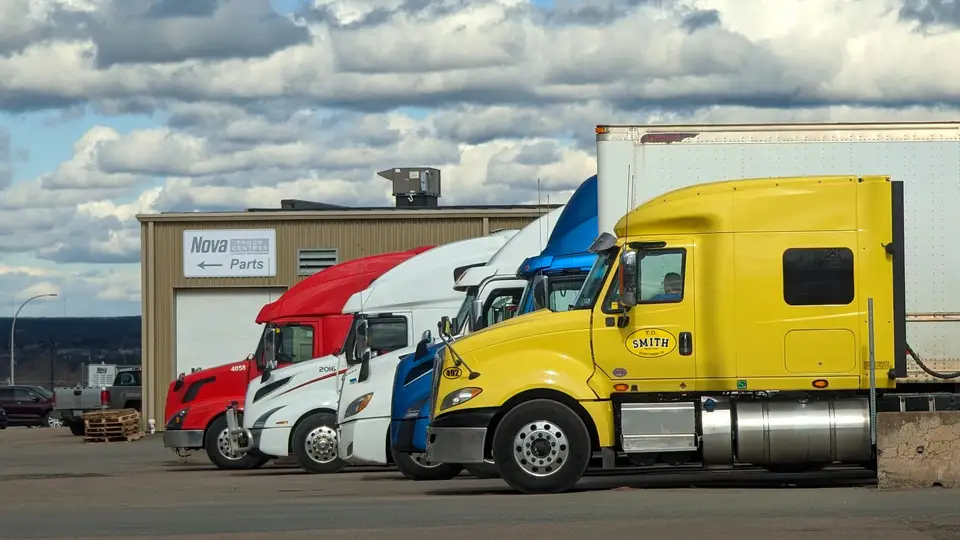
$499,000 · 111 appointments
111 Appointments and $499,000 in Proposals for a Fuel Management Partner
Link2Pump modernizes fuel management with real-time monitoring and transaction tracking.

Logistics Company Goes From 140 to 450 Keywords in Less Than a Year
About Our Partner: Our logistics partner, headquartered in St. Louis, Missouri, is a leading provider of logistics services across North America, offering…
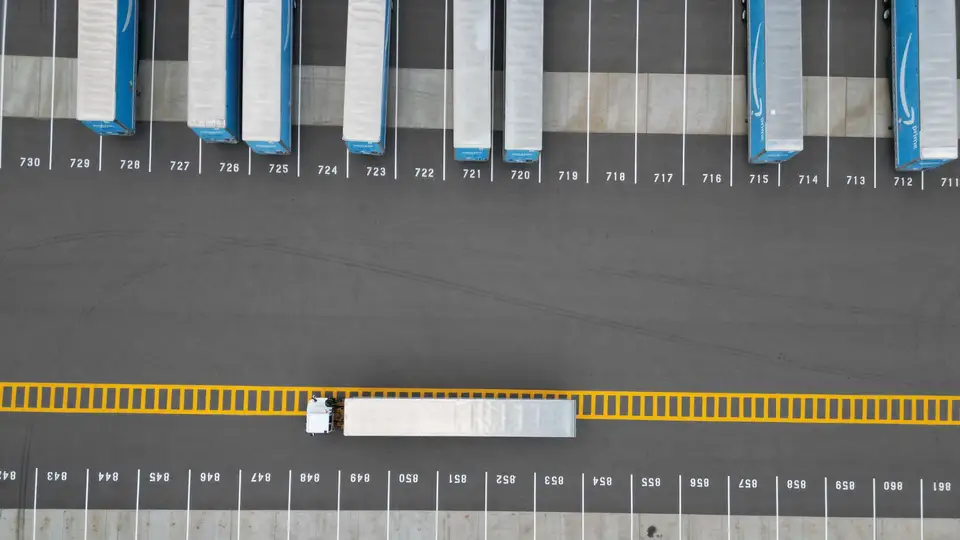
Compelling Collateral Moves Logistics Company Forward
Nate Schwandt, Director of Marketing, Sheer Logistics
Results from named client programs, written up in full. Results vary by program. All case studies.
Sources and notes
- Abstrakt logistics talk track, target accounts, decision-makers, triggers and qualification standards, as published on our Logistics and Supply Chain page.
- Case studies: named client programs, linked above.
- The toolkit's general advice (scorecard, core questions, follow-up stages and the 30-day plan) is sales practice, not data.
