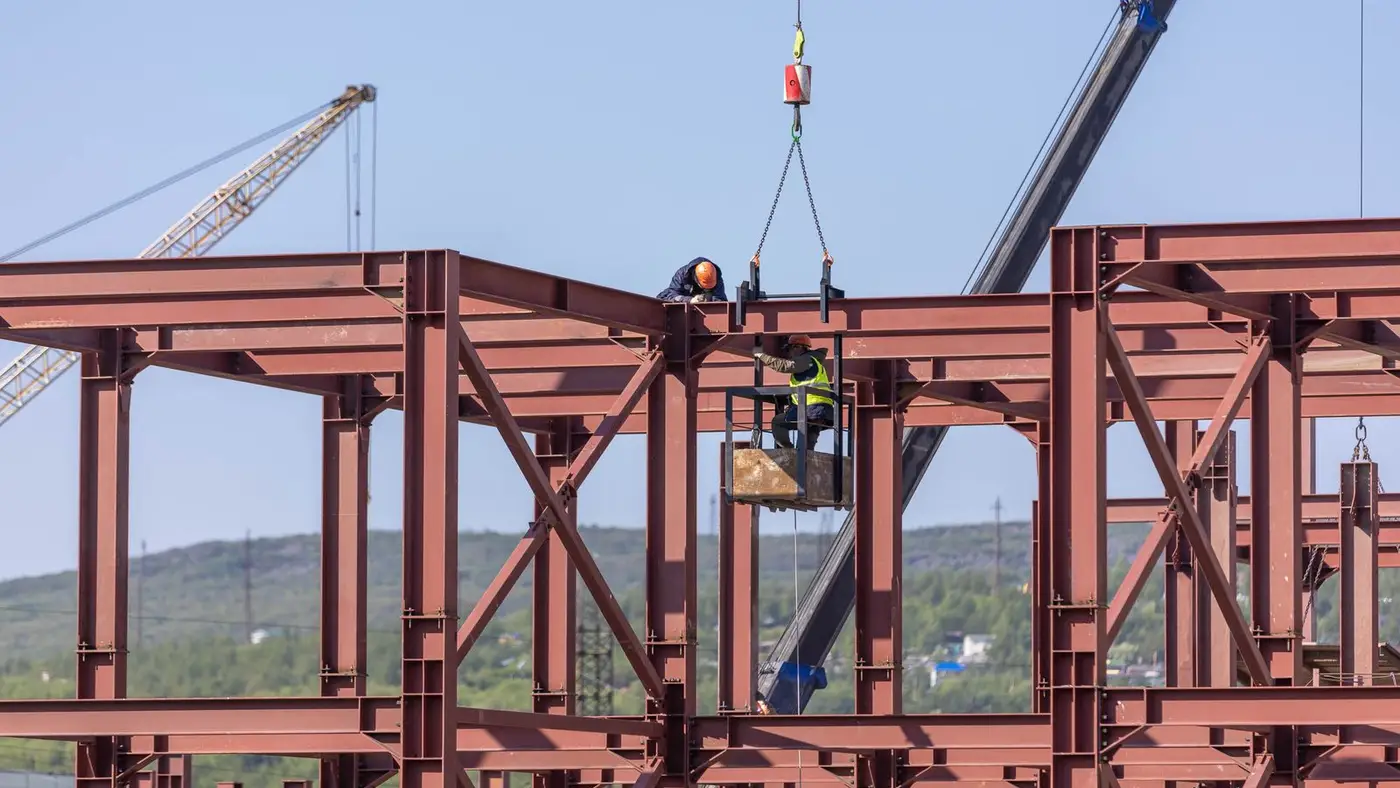
Industry report · Commercial Construction
The State of Commercial Construction Business Development, 2026
Where new commercial construction work comes from right now: who buys, who signs, what makes them switch. Then a 7-tool kit to put it to work at your company this month.
- 160,208buyer sites with 20+ employees across our 99 metros
- 35,187commercial and institutional building contractors competing for them
Sites: U.S. Census Bureau, County Business Patterns 2023. Contractors: U.S. Bureau of Labor Statistics, Quarterly Census of Employment and Wages, private ownership, 2026 Q1. Totals cover the 99 metros on our market pages, with Palm Beach County (in both the Miami and West Palm Beach pages) counted once.
Executive summary Read this if nothing else
4 things to know about commercial construction business development
Lead with
Negotiated and design-build projects
The work worth chasing. Owners choose the builder before plans are complete, so the conversation has to happen while the project is still an idea in a capital plan.
Biggest buyer pool
Manufacturing companies: 53,710 sites
with 20 or more employees across our 99 metros. Building around live operations and hitting a production start date. Ask what growth is planned and where.
Who signs
Owner / developer
What lands: Pre-construction help that sets a real budget and a builder who protects it.
Best reason to call
Capital plan and fiscal year budgeting
Projects are funded before they are designed. Knowing when an owner sets its capital plan tells you when to be in the room.
Sources: U.S. Census Bureau, County Business Patterns 2023; Abstrakt commercial construction talk track, reviewed 2026-09-30.
Chapter 01 The business
How commercial construction work pays, and what to sell first
Commercial general contractors live on two kinds of work. Hard-bid work is public and open: you see the plans, price them and compete on number, often against a long bid list. Negotiated and design-build work is private and relationship-driven: an owner picks a builder early, often before drawings are done, and the builder helps shape scope and budget in pre-construction. Negotiated work carries better margin and repeat business, and it goes to builders the owner already knows. The outbound job is to reach owners, developers and facility leaders before a project is on a plan room, learn what is in their capital plan and earn a seat in pre-construction or on the private bid list.
Recurring work
Repeat owners: a manufacturer, healthcare system, school or property firm that builds or renovates regularly and keeps calling the same builder. Facility service and small-projects work where a GC offers it.
Project work
Ground-up buildings, expansions and additions, interior renovations, tenant improvements, design-build projects, pre-construction services that lead to the construction contract.
Emergency work
Storm, fire or water damage restoration and urgent repairs. Less common for GCs, but a fast response can start an owner relationship.
What to lead with on the phone
Not every service earns a cold call. The one you open with has to be small enough to say yes to and useful enough that the buyer remembers you when the bigger job comes up. This is how we sort commercial construction services for outbound:
Lead with itEasy to say yes to on a first call
- Negotiated and design-build projectsThe work worth chasing. Owners choose the builder before plans are complete, so the conversation has to happen while the project is still an idea in a capital plan.
- Pre-construction servicesBudgeting, scheduling and constructability help is a low-risk way for an owner to try a builder. A paid or modest pre-construction engagement often turns into the construction contract.
- Tenant improvements and interior renovationsFrequent, faster to award and driven by property managers and occupiers who need a builder they can call again. Good for building repeat relationships.
Second conversationOpens up once you are in the door
- Expansions and additions for existing facilitiesPlants, campuses and healthcare operators grow in phases. Getting in on one phase positions you for the next.
- Private bid listsMany owners and developers invite a short list of builders. Getting prequalified onto that list is a sales goal in itself.
Rarely outboundComes from relationships and referrals
- Public hard-bid workAwarded on price through a formal process. Outbound does not change the outcome; estimating does. Use outbound to build private relationships instead.
Relevant experience, budget discipline and communication, not low price. Owners pick builders they trust to protect the budget and schedule.
Chapter 02 The buyer
Who to call, and who signs
Private owners and developers who build or renovate repeatedly, in building types and project sizes that match your portfolio, inside the area your superintendents can cover.
The accounts worth calling first
- Owners who build or renovate repeatedlyHealthcare systems, manufacturers, schools, senior living operators and property firms come back to builders who did the last job well. One win can become a long relationship.
- Private owners who can negotiatePrivate owners can select a builder by relationship and qualifications. Public owners are often bound to formal bidding.
- Projects that fit your size and typeOwners pick builders who have done similar work at a similar scale. Target the building types in your portfolio.
- A capital plan or known growthExpansions, new locations and deferred renovations show up in budgets before they show up as projects. A call can learn what is planned and when.
- Inside your self-perform and supervision rangeSuperintendents and trades have to reach the site. Projects outside that range cost more to run and are harder to win.
Where the buyers are
160,208 buyer sites with 20 or more employees sit across the 99 metros we publish. This is how they split by the buyer types we call, largest first. The bigger the pool, the longer a program can run before it repeats a call.
| Buyer type | Sites |
|---|---|
| Manufacturing companiesLargest pool | 53,710 |
| Commercial building owners and developers | 25,589 |
| Senior living operators | 20,487 |
| Commercial property management firms | 14,515 |
| Hotel owners and management groups | 10,937 |
| Churches and religious organizations | 10,932 |
| Auto dealership groups | 10,113 |
| Private K-12 schools | 9,816 |
| Hospitals and health systems | 2,951 |
| Colleges and universities | 1,158 |
The people who sign
Start with the facilities or construction lead for project plans and selection process, then the owner, executive or finance lead who approves the builder.
Owner / developer
Signs forWhether the project happens, the budget and the final choice of builder
WantsCost certainty, schedule, return on the project
Reach themEarly, when the project is still being planned and financed
Pre-construction help that sets a real budget and a builder who protects it.
Director of facilities / construction
Signs forProject scope, builder shortlists and day-to-day management of construction
WantsBuilders who communicate, manage subs and finish on time
Reach themCapital planning and builder selection
Relevant past projects and how you manage schedule and change orders.
CFO / finance lead
Signs forCapital budget approval and contract terms
WantsBudget accuracy, payment terms, risk
Reach themCapital planning, fiscal year budgeting and contract approval
Clear budgets early and fewer surprises once construction starts.
Architect / design team
Signs forStrong influence on which builders are invited, especially before an owner has a GC
WantsBuilders who respect the design and give honest cost feedback
Reach themEarly design phases
Collaborative pre-construction and accurate cost input during design.
Property manager / tenant representative
Signs forTenant improvement builder selection for the buildings they run
WantsSpeed, tenant satisfaction, clean closeout
Reach themLease signings and tenant turnover
Fast tenant improvement turnarounds and a builder they can call again.
Chapter 03 The timing
When commercial construction buyers switch
Most commercial construction buyers are not shopping on the day you call. These are the moments when they start.
Most owners who build regularly already have builders they trust, so a no is usually a timing or relationship answer. The useful outcome of a first call is what is in the capital plan, when budgets are set, how builders are selected and who is on the current list. Recorded and revisited, that turns a no into a scheduled conversation before the next capital cycle, with a better chance of being invited to pre-construction or the private bid list.
What opens the door, by buyer type
- Manufacturing companiesNew product line, added capacity, consolidation, new site selection
- Commercial building owners and developersAcquisition, financing, new tenant commitments, repositioning plans
- Senior living operatorsNew community plans, acquisitions, renovation programs
- Commercial property management firmsTenant turnover, lease signings, owner capital plans, management takeover
- Hotel owners and management groupsBrand-mandated renovation (PIP), acquisition, brand conversion
- Churches and religious organizationsCapital campaign, growth, property purchase
Timing note
Commercial construction sales do not follow the weather much. They follow owners' capital planning and fiscal years. Projects get funded when budgets are set, so the conversation that matters happens before an owner's budget is final, not when drawings are out. Fiscal years differ by owner, so outbound runs every month.
Watch for new owners
New owners and developers start without a builder they trust in the market.
Chapter 04 The conversation
The call that books the meeting
A good call earns the next sentence, qualifies the account and closes on two specific times. Here is the path, tagged with each step of our ENGAGE Sales Process.
Sample call · Commercial construction
- OpenerSDRHi Dana, this is Chris with Keystone Builders on a recorded line. I know I'm catching you in the middle of the day, so I'll keep this short. How are you today?
- ProspectOkay. Go ahead.
- Reason for the callSDRThe reason for my call, we build and renovate commercial space across the metro, and your company came up at about 120 employees with revenue around $20 to $50 million. I wanted to see whether there's a build-out, expansion, or refresh on the horizon and who handled the last one.
- PushbackProspectWe already have a contractor.
- Feel, felt, foundSDRI understand. A lot of the people I talk to felt the same way at first, and what they found is that a second look cost them nothing. When your contractor prices the next project, that covers their number. Ours is a written budget range for the same scope. It's a second document at no cost, and if they've got everything handled it will say so.
- ProspectOkay, that makes sense.
- QualifySDRTwo quick things so I send the right estimator out. Are you at roughly 120 employees on site, and are you the one who signs off on construction projects, or does that go somewhere else?
- ProspectAbout that, yes, and it's tight. The break room's an office now. Projects come through me.
- Decision-making questionSDRBesides you, who else is usually involved when a decision like this gets made?
- ProspectOur CEO signs the check. But he leaves the call to me.
- TimelineSDRAnd when are you looking to have this sorted out?
- ProspectWe're looking at the suite next door. That lease would start in the spring.
- DifferentiatorSDRWhat we do differently is the pre-construction walk. We scope the space and hand you a written budget range at no charge, before anyone asks you to sign anything. And our carpentry and concrete crews are our own people, so the schedule holds.
- ProspectThe schedule's the part that worries me.
- Consideration questionSDRIf what we show you makes sense, is Keystone Builders a company you'd consider working with down the road?
- ProspectYes. I'd consider it.
- Close for the meetingSDRLet's put it on the calendar. I have Tuesday the 15th at 10, or Thursday the 17th at 2. Which is better? I'll send the invite while we're on the line, and I'll add Warren Doyle's mobile to it.
- Meeting setProspectThursday at two.
- Recap the agendaSDRGreat. So that's Thursday the 17th at 2 o'clock, in person at your office, and we'll keep it to thirty minutes. Warren Doyle, our project manager, will walk the space with you, capture the scope, and leave you the written budget range. When he gets there, where should he check in?
- ProspectReception on the second floor.
- Confirm detailsSDRLet me confirm your details: your title, the best email for the invite, and that we're meeting at your office address.
- ProspectVP of operations. It's dana dot ellis at our company dot com. And yes, the main office.
- Invite sentSDRPerfect. I'm sending the invite now. Could you accept it when it comes through, so the time is held? Thanks, Dana. Warren will see you Thursday.
Why it works
The rep never argues with the first no. The pushback gets agreement, a reason the next step costs nothing, and two quick qualifying questions before any meeting time is offered.
Make it yours
The call opener template in the toolkit is this script with the names taken out.
We already have a GC we use.
Every objection a commercial general contractor hears on the phone, with what it tells you and the next move, is on the objection cheat sheet. The questions worth asking are in the discovery question bank.
Chapter 05 The territory
Where the work is least crowded
Buyer sites per commercial general contractor is a rough read on how crowded a market is. More sites for each contractor means more doors nobody else is knocking on.
The 10 least crowded metros
| Metro | Sites per contractor | Buyer sites | Contractors |
|---|---|---|---|
| Milwaukee-WaukeshaMost room | 12 | 1,849 | 153 |
| South Bend-Mishawaka | 10 | 290 | 30 |
| Buffalo-Cheektowaga | 10 | 1,012 | 105 |
| Allentown-Bethlehem | 9 | 710 | 76 |
| Worcester | 9 | 705 | 82 |
| Rochester | 8 | 984 | 116 |
| Minneapolis-St. Paul | 8 | 3,478 | 424 |
| Greensboro-High Point | 8 | 746 | 91 |
| Madison | 8 | 661 | 81 |
| Springfield | 8 | 405 | 50 |
Chapter 06 The meeting
What a qualified commercial construction meeting looks like
A meeting only counts if the right person shows up with a real reason to talk. Every commercial construction meeting we book clears these checks first.
- A private owner or developer inside your operating area and in a building type you build
- A project or capital plan with real timing, not just interest
- Project size and type that fit your portfolio and bonding
- The person in the meeting picks or strongly influences the builder
- Delivery method, current builders and selection process captured
- A confirmed date and time for a sales conversation
Every meeting is then graded on our 25-point 5 Star Scorecard before it reaches a client. Use the same test on your own calendar: if you could not answer each line above before the meeting, the meeting was not qualified yet.
After the meeting is where most commercial construction deals are won or lost. Re-contact ahead of budget cycles and after milestones like financing or campaign goals; share relevant project experience; offer early budgeting help. The follow-up cadence in the toolkit lays out each stage.
Walk in knowing
The project scope, the owner's usual contractors, the delivery method and the start window. Our clients get all of it with every meeting.
Case study · A design-build general contractor in Texas and Oklahoma
Landed a $900,000 project by month three of its outbound program.
Read the case studyPart two Apply this
The Commercial Construction toolkit
7 working tools built from the chapters above. Tick the boxes as you go (they stay ticked in this browser), copy the scripts into your CRM, or save the whole guide as a PDF and print this part as a worksheet.
- 01Account scorecardScore an account before anyone dials it.
- 02Discovery question bankThe questions that qualify a meeting.
- 03Objection cheat sheetWhat they say, what it means, what to do next.
- 04Trigger watchlistThe changes that make a buyer take the call.
- 05Call opener templateA fill-in-the-blanks script, step by step.
- 06Follow-up cadenceWhat to send after the call, and what to skip.
- 0730-day action planFour weeks of steps you can start Monday.
Tool 01
Account scorecard
Before an account goes on the call list, check every line that fits. Call the accounts with the most ticks first, and leave the ones with none for later.
Tool 02
Discovery question bank
Ask fewer, better questions. Pick three or four for the call and save the rest for the meeting. Each one comes with the reason it earns its place.
Manufacturing companies
Building around live operations and hitting a production start date. Ask what growth is planned and where.
- What growth is planned, such as new lines, added capacity or a new site?Planned growth defines the project and the timeline.
- What production start date does the project have to hit?A fixed start date changes how the owner weighs schedule against price.
- How will construction work around live operations?Your answer to this is often the deciding factor for plant managers.
- Who is involved in the decision: operations, engineering, finance or corporate?Manufacturing projects often need several approvals, which affects your timeline and audience.
Commercial building owners and developers
Budget certainty and schedule. Ask how they choose builders and who is on their list today.
- What projects are in your plans for the next couple of years, and where do they stand?Project stage tells you whether to pursue now or position for the next one.
- How do you choose builders, and who is on your list today?This tells you whether you need to displace someone or join the list.
- Do you prefer hard bid, negotiated, construction management or design-build?Delivery method decides how and when you get involved.
- Is financing in place, or does it depend on leasing or approvals?Projects waiting on financing or tenants can move suddenly or stall for months.
Senior living operators
Building in occupied communities and keeping residents safe. Many operators build in multiple markets.
- Where are your capital plans for new communities, additions or renovations, and what is the timing?Capital plan timing decides when you need to be in the conversation.
- How will the project work around residents who stay in the building?Phased occupancy constraints shape the schedule, cost and your pitch.
- What licensing or inspection requirements does the project need to pass before residents move in?State and life-safety inspections set real deadlines and tell you what experience matters.
- Do you prefer design-build, construction management or hard bid?Delivery method decides how and when you get involved.
Commercial property management firms
Fast, clean tenant improvement turnarounds. A property manager who trusts you can send work across a portfolio.
- How many tenant improvements do you expect over the next year?Volume shows whether this is a steady relationship or occasional work.
- Who builds your tenant improvements now, and how do they perform on schedule?Slow turnovers cost rent, which gives you a reason to be chosen.
- Does the owner approve contractors, or do you have authority?Knowing where approval sits keeps the deal from stalling.
- Are common-area renovations or capital repairs planned?Larger capital projects often follow the owner's budget cycle.
Qualifying the meeting
From our talk track, in the order a good call asks them.
- Are you at roughly 120 employees on site, and are you the one who signs off on construction projects, or does that go somewhere else?Confirm the fit and that you are talking to the person who decides, in two short questions.
- Besides you, who else is usually involved when a decision like this gets made?Learn who else weighs in before you book, so nobody is missing from the meeting.
- And when are you looking to have this sorted out?Find out when they want it solved. A date turns interest into a reason to meet.
- If what we show you makes sense, is [your company] a company you'd consider working with down the road?Ask whether they would consider working with you. A yes here makes the close easy.
Any first meeting
Plain practice that works in every trade.
- How are you handling this today, and what would you change about it?The gap between today and what they want is the whole reason to meet.
- What happens if nothing changes this year?Tells you whether there is a cost to waiting, or only curiosity.
- Who else would need to agree before anything moves?Names the people who can stall the deal, while you can still invite them.
- When does the current contract or budget come up for review?Gives you the date to plan around, even when the answer today is no.
- What would make a first meeting worth your time?Lets the buyer set the agenda, which is the agenda they will show up for.
Know these before you hang up
- Upcoming projects and timing
- Project type and rough size
- Delivery method (negotiated
- Design-build or bid)
- Current builders
- Selection and prequalification process
- Architect involvement
- Who decides
Tool 03
Objection cheat sheet
A first no is usually information, not a decision. Read what it tells you, then make the next move instead of arguing.
They say"We already have a GC we use."
What it tells youRepeat owners usually do. Ask whether they always use the same builder or invite several, and what would make them add one.
Next moveRecord the incumbent and selection process; ask to be considered for the next bid list or a smaller project.
They say"We don't have any projects right now."
What it tells youProjects live in capital plans before they become projects. Ask what is being discussed for the next budget year.
Next moveCalendar a follow-up ahead of their capital planning and note any growth signals.
They say"Everything goes out to bid."
What it tells youLearn how the bid list is built and how builders get prequalified. Getting invited is the first goal.
Next moveAsk for the prequalification process and the right contact to get on the list.
They say"Our architect handles that."
What it tells youThe architect is often the gatekeeper for builder selection. That is a name to add, not a dead end.
Next moveGet the architect's name and introduce your firm there as well.
They say"Send me your qualifications."
What it tells youSometimes a brush-off, often a real step in selection. Ask what kind of project they are thinking about so you can send relevant work.
Next moveSend project examples that match their building type, then follow up with a specific question.
Tool 04
Trigger watchlist
Each of these changes gives a buyer a reason to take the call this month instead of next year. Tick the ones you will track, and set a news alert or CRM field for each so you hear about it first.
Tool 05
Call opener template
Our construction talk track with the names taken out. Keep the order of the steps; put the words in your own voice. The note under each step says what it has to do.
- OpenerYour name, your company and a reason to keep listening. Admit you are interrupting; it buys you the next sentence.
Hi [first name], this is [your name] with [your company] on a recorded line. I know I'm catching you in the middle of the day, so I'll keep this short. How are you today?
- Reason for the callOne sentence about their building or business, not your company history. End on a question they can answer.
The reason for my call, we build and renovate commercial space across the metro, and your company came up at about 120 employees with revenue around $20 to $50 million. I wanted to see whether there's a build-out, expansion, or refresh on the horizon and who handled the last one.
- Feel, felt, foundAgree first. Say others felt the same, then what they found. Never argue with a first no.
If they say: "We already have a contractor."
I understand. A lot of the people I talk to felt the same way at first, and what they found is that a second look cost them nothing. When your contractor prices the next project, that covers their number. Ours is a written budget range for the same scope. It's a second document at no cost, and if they've got everything handled it will say so.
- QualifyConfirm the fit and that you are talking to the person who decides, in two short questions.
Two quick things so I send the right estimator out. Are you at roughly 120 employees on site, and are you the one who signs off on construction projects, or does that go somewhere else?
- Decision-making questionLearn who else weighs in before you book, so nobody is missing from the meeting.
Besides you, who else is usually involved when a decision like this gets made?
- TimelineFind out when they want it solved. A date turns interest into a reason to meet.
And when are you looking to have this sorted out?
- DifferentiatorOne thing you do differently, in one sentence. Stop talking after it.
What we do differently is the pre-construction walk. We scope the space and hand you a written budget range at no charge, before anyone asks you to sign anything. And our carpentry and concrete crews are our own people, so the schedule holds.
- Consideration questionAsk whether they would consider working with you. A yes here makes the close easy.
If what we show you makes sense, is [your company] a company you'd consider working with down the road?
- Close for the meetingOffer two specific times. Never ask whether they would like to meet.
Let's put it on the calendar. I have Tuesday the 15th at 10, or Thursday the 17th at 2. Which is better? I'll send the invite while we're on the line, and I'll add Warren Doyle's mobile to it.
- Recap the agendaRestate the day, the place, the length and what they walk away with.
Great. So that's Thursday the 17th at 2 o'clock, in person at your office, and we'll keep it to thirty minutes. Warren Doyle, our project manager, will walk the space with you, capture the scope, and leave you the written budget range. When he gets there, where should he check in?
- Confirm detailsTitle, email and address. A meeting with a wrong email is a meeting that does not happen.
Let me confirm your details: your title, the best email for the invite, and that we're meeting at your office address.
- Invite sentSend the invite while they are still on the phone and ask them to accept it.
Perfect. I'm sending the invite now. Could you accept it when it comes through, so the time is held? Thanks, [first name]. Warren will see you Thursday.
Tool 06
Follow-up cadence
Most deals are won or lost after the first meeting. This is the follow-up our talk track calls for at each stage, and the mistake to skip at each one.
After the first meeting or site walk
Send a recap within a day covering the project as you understand it, the timeline, the decision makers and how they prefer to select builders. Confirm the next step, whether that is a preconstruction meeting, a budget estimate or an introduction to the architect. Ask who else should be in the next conversation.
Skip: Do not send a generic company brochure instead of a recap of their project.
After the proposal or bid is sent
Schedule a review meeting to walk through the scope, schedule, assumptions and exclusions, since those are where bids differ most. Ask how they will compare proposals and what would make yours the clear choice. Offer value-engineering options if budget is the concern.
Skip: Do not follow up only to ask whether they have made a decision.
When the answer is no decision yet
Find out what the project is waiting on: financing, approvals, a board vote, a campaign or a tenant. Set your next touch to that milestone and offer something useful in the meantime, such as a budget update or a schedule scenario. Keep the project, stage and decision makers in the CRM.
Skip: Do not drop your number to push a decision that is waiting on financing or approvals.
When the project goes to another builder
Ask what decided it and whether there are smaller projects, other sites or future phases you could be considered for. Stay in touch through the project and check in after it finishes. Ask to be added to their builder list for the next one.
Skip: Do not disappear until the next capital plan.
Before the next capital or bid cycle
Call before capital plans and budgets are set, and ask what projects are being considered. Offer early budget input or a preconstruction conversation so you are part of planning, not just bidding. For institutions, confirm prequalification is current and ask who is writing the next scope.
Skip: Do not wait until the project is already out to bid.
Tool 07
30-day action plan
4 weeks, 16 steps, nothing you need to buy. Tick each one off as you finish it; your progress stays in this browser.
Week 1Pick the accounts
Week 2Build the talk track
Week 3Make the calls
Week 4Follow up and measure
Sources and notes
- U.S. Census Bureau, County Business Patterns 2023: buyer establishments by industry and size, 100 metros.
- U.S. Bureau of Labor Statistics, Quarterly Census of Employment and Wages, private ownership, 2026 Q1: commercial and institutional building contractors (NAICS 236220).
- Abstrakt commercial construction talk track, objections, follow-up stages and qualification standards, reviewed 2026-09-30.
- Sample call: a dramatized example written from that talk track; names and figures are samples.
- The toolkit's general advice (scorecard use, core questions, 30-day plan) is sales practice, not data.
