
Industry report · Paving & Asphalt
The State of Commercial Paving Business Development, 2026
Where new paving & asphalt work comes from right now: who buys, who signs, what makes them switch and what one meeting takes in dials. Then a 8-tool kit to put it to work at your company this month.
- 86dials per booked appointment in our sales center
- 290,911buyer sites with 20+ employees across our 99 metros
- 6,372highway, street and paving contractors competing for them
- 7.4%of proposals won
Dials: Abstrakt sales center, Performance Intelligence, national, as of October 2026. Sites: U.S. Census Bureau, County Business Patterns 2023. Contractors: U.S. Bureau of Labor Statistics, Quarterly Census of Employment and Wages, private ownership, 2026 Q1. Totals cover the 99 metros on our market pages, with Palm Beach County (in both the Miami and West Palm Beach pages) counted once. Proposals won: Abstrakt sales center, Performance Intelligence, national, as of October 2026.
Executive summary Read this if nothing else
5 things to know about paving & asphalt business development
Lead with
Sealcoating and crack fill
The entry point for most commercial relationships. Lots need it on a cycle, the price is approachable, and it puts you on the property before the bigger repair conversation.
Biggest buyer pool
Retail stores: 109,700 sites
with 20 or more employees across our 99 metros. First impressions and liability. Many stores lease, so confirm who controls the lot before pitching.
Fastest to book
Organizations (Non-Profit): 51 dials per appointment
against 86 across all 153,847 of our paving & asphalt dials. Put these accounts at the top of the list.
Who signs
Property manager
What lands: A lot plan that spreads cost predictably and keeps tenants and owners happy.
Best reason to call
Lot not sealed in several years
The single most common opening. Ask when it was last sealcoated; often nobody knows, which is itself the answer.
Sources: U.S. Census Bureau, County Business Patterns 2023; Abstrakt sales center, Performance Intelligence, national, as of October 2026; Abstrakt paving & asphalt talk track, reviewed 2026-09-30.
Chapter 01 The business
How paving & asphalt work pays, and what to sell first
Commercial paving is sold on a maintenance cycle that most property owners do not track. Sealcoating, crack fill and striping come around every few years, and patching and resurfacing follow when that maintenance gets skipped. Property managers set lot budgets a year ahead, and the contractor who walked the lot and left a clear proposal is usually the one who gets the work. The outbound job is to get that walk-through scheduled before the budget is written.
Recurring work
Sealcoating and crack fill on a cycle, restriping, annual lot maintenance agreements across a property manager's portfolio, sweeping and pothole patching where offered.
Project work
Mill and overlay resurfacing, full-depth repair and reconstruction, new lots and expansions, concrete curbs and ADA ramps, drainage corrections.
Emergency work
Potholes and trip hazards after a hard winter. They create urgency and a reason to walk the whole lot, not just the hole.
What to lead with on the phone
Not every service earns a cold call. The one you open with has to be small enough to say yes to and useful enough that the buyer remembers you when the bigger job comes up. This is how we sort paving & asphalt services for outbound:
Lead with itEasy to say yes to on a first call
- Sealcoating and crack fillThe entry point for most commercial relationships. Lots need it on a cycle, the price is approachable, and it puts you on the property before the bigger repair conversation.
- Striping and ADA complianceFaded lines and out-of-date accessible parking are visible problems that property managers want fixed. A walk-through that points out accessibility issues gets attention.
- Patching and repairPotholes and failed sections are liability and tenant complaints. Easy to find on a call, easy to book a walk-through around.
Second conversationOpens up once you are in the door
- Resurfacing and overlayLarge tickets that are planned in the capital budget. Outbound learns which lots are past maintenance and when the budget opens.
Rarely outboundComes from relationships and referrals
- New construction and reconstructionMostly bid through general contractors and developers. Outbound helps more by getting you on the right bid lists than by booking owners.
Maintain the lot on a schedule so it does not become a reconstruction bill. Lead with the walk-through and a clear plan.
Chapter 02 The buyer
Who to call, and who signs
Professionally managed commercial, retail, multifamily and institutional properties with parking lots, inside the area your crews can reach efficiently.
The accounts worth calling first
- Large customer or tenant-facing parking lotsRetail centers, medical buildings, office parks, hotels and churches care how the lot looks and who might trip on it.
- Professionally managed propertyProperty and HOA managers budget for lots on a schedule and hire outside contractors for all of it.
- A lot with visible wear and no recent maintenanceFading, cracking and patches tell you a sealcoat or repair conversation is due, and the contact usually knows it.
- Heavy truck or delivery trafficDistribution sites, trucking yards and dealerships wear pavement faster and need repair more often.
- Multiple properties under one decision-makerPortfolios let you schedule crews efficiently and bid a season's worth of lots at once.
Where the buyers are
290,911 buyer sites with 20 or more employees sit across the 99 metros we publish. This is how they split by the buyer types we call, largest first. The bigger the pool, the longer a program can run before it repeats a call.
| Buyer type | Sites |
|---|---|
| Retail storesLargest pool | 109,700 |
| Ambulatory health care offices and clinics | 57,714 |
| Apartment property management firms | 45,807 |
| Commercial building owners and lessors | 25,589 |
| Commercial property management firms | 14,515 |
| Hotels | 10,937 |
| Churches and religious organizations | 10,932 |
| Truck transportation companies | 10,150 |
| Auto dealerships | 10,113 |
| Warehousing and distribution | 5,567 |
The people who sign
Start with the property manager or maintenance coordinator for site facts, then the regional director, owner or association board who approves spend.
Property manager
Signs forLot maintenance budget and vendor contracts for the property
WantsTenant complaints, liability, budget accuracy, owner reporting
Reach themBudget season and after complaints or incidents
A lot plan that spreads cost predictably and keeps tenants and owners happy.
Regional facilities director
Signs forVendor selection and capital priorities across a portfolio
WantsConsistency, fewer vendors to manage, predictable spend
Reach themAnnual planning and new acquisitions
One contractor and one schedule across their properties.
Owner / asset manager
Signs forCapital approval for resurfacing and reconstruction
WantsAsset value and cost over the life of the pavement
Reach themCapital planning, sale and refinance
Maintenance now costs less than reconstruction later, with clear options for each lot.
HOA or community association manager
Signs forCommon-area paving budget, bid process, board recommendations
WantsBoard approval, resident complaints, reserve study items
Reach themBudget preparation and board meeting cycles
Clear, comparable proposals the board can approve, timed to the reserve plan.
Facility or operations manager
Signs forDay-to-day site needs and work scheduling
WantsNot disrupting customers, deliveries or shifts
Reach themBefore planned work and after damage
Scheduling around operations, including nights and weekends.
Chapter 03 The timing
When paving & asphalt buyers switch
Most paving & asphalt buyers are not shopping on the day you call. These are the moments when they start.
Most commercial paving is bid property by property, and a lot of it goes to whoever is in front of the property manager when the budget is set. A no on a first call usually means the lot is not on this year's list. The useful outcome is the last sealcoat date, visible problems, the number of properties the contact manages and the month the budget is built. Recorded and revisited before budget season and at the end of winter, that turns a no into a walk-through and a proposal in the budget.
What opens the door, by buyer type
- Retail storesRemodel, customer complaints, slip and trip incidents
- Ambulatory health care offices and clinicsPatient complaints, accessibility review, building sale
- Apartment property management firmsAcquisition and renovation, resident complaints, budget season
- Commercial building owners and lessorsRefinancing or sale, tenant turnover, capital planning
- Commercial property management firmsBudget season, new property under management, tenant complaints
- HotelsBrand-required renovation, ownership change, guest complaints
Timing note
Paving work runs on temperature: asphalt and sealcoat need warm, dry conditions, so crews are busiest in the warmer months. Selling runs every month. Each property manager builds the budget and bids the work on their own dates, so the SDR records the budget month and last sealcoat date and calls ahead of them, and in-season calls reach owners who can see the cracks and potholes for themselves.
Watch for new owners
New owners inherit a parking lot and a maintenance schedule that nobody wrote down.
Chapter 04 The conversation
The call that books the meeting
A good call earns the next sentence, qualifies the account and closes on two specific times. Here is the path, tagged with each step of our ENGAGE Sales Process.
Sample call · Facility trades
- OpenerSDRHi Dana, this is Chris with Summit Facility Services on a recorded line. I know I'm catching you in the middle of the day, so I'll keep this short. How are you today?
- ProspectSure. What's going on?
- Reason for the callSDRThe reason for my call, we handle facility maintenance across the metro, and your building came up at about 120 people on site. I wanted to see how repairs and upkeep are handled right now and whether anyone has documented what's been deferred.
- PushbackProspectWe already have a maintenance vendor.
- Feel, felt, foundSDRI understand. A lot of the people I talk to felt the same way at first, and what they found is that a second look cost them nothing. When your vendor fixes what you called about, that covers the repair. Ours is a written report on everything else the building is carrying. It's a second document at no cost, and if they've got everything handled it will say so.
- ProspectOkay, that makes sense.
- QualifySDRTwo quick things so I send the right technician out. Is it roughly 120 people on site, and are you the one who signs off on repairs and maintenance, or does that go somewhere else?
- ProspectThat's right on headcount. And repairs come through me.
- Decision-making questionSDRBesides you, who else is usually involved when a decision like this gets made?
- ProspectOwnership approves the annual budget. But the vendor decisions are mine.
- TimelineSDRAnd when are you looking to have this sorted out?
- ProspectWe start in about two months. Which means I start panicking in about six weeks.
- DifferentiatorSDRWhat we do differently is the walk-through itself. We document everything worn, leaking, or failing and hand you a written deferred-maintenance report at no charge either way. After that it's one agreement and one number to call for every trade.
- ProspectOne number would be nice. I've got six vendors right now.
- Consideration questionSDRIf what we show you makes sense, is Summit Facility Services a company you'd consider working with down the road?
- ProspectYeah. I'd consider it.
- Close for the meetingSDRLet's put it on the calendar. I have Tuesday the 15th at 10, or Thursday the 17th at 2. Which is better? I'll send the invite while we're on the line, and I'll add Warren Doyle's mobile to it.
- Meeting setProspectThursday at two.
- Recap the agendaSDRGreat. So that's Thursday the 17th at 2 o'clock, in person at your property, and we'll keep it to thirty minutes. Warren Doyle, our project manager, will walk the property with you, document the deferred maintenance, and leave you the written report. When he gets there, where should he check in?
- ProspectManagement office, first floor.
- Confirm detailsSDRLet me confirm your details: your title, the best email for the invite, and that we're meeting at your property address.
- ProspectProperty manager. Email's dana dot ellis at our company dot com. Yes, that's the one.
- Invite sentSDRPerfect. I'm sending the invite now. Could you accept it when it comes through, so the time is held? Thanks, Dana. Warren will see you Thursday.
Why it works
The rep never argues with the first no. The pushback gets agreement, a reason the next step costs nothing, and two quick qualifying questions before any meeting time is offered.
Make it yours
The call opener template in the toolkit is this script with the names taken out.
The lot looks fine.
Every objection a paving contractor hears on the phone, with what it tells you and the next move, is on the objection cheat sheet. The questions worth asking are in the discovery question bank.
Chapter 05 The numbers
What one paving & asphalt meeting takes
From 153,847 dials and 1,780 booked appointments on our floor: what the effort turns into, and which buyers book fastest.
What 10,000 paving & asphalt dials turned into on our floor
- 10,000dialsCalls placed to the right buyers
- 116appointmentsAt 86 dials per booked appointment
- 37proposals32.2% of opportunities reached a proposal
- 2.8new clients7.4% of proposals were won
Who books fastest, by the buyer's industry
Same trade, very different effort. Fewer dials per appointment means the list pays back sooner. The line marks the average across every paving & asphalt call.
| Prospect industry | Dials per appointment | Proposals won |
|---|---|---|
| Organizations (Non-Profit)Fastest | 51 | 5.2% |
| Healthcare Services | 52 | 2.3% |
| Education | 78 | 11.4% |
| Wholesale | 88 | 8.7% |
| Real Estate | 89 | 4.2% |
| Hospitals & Physicians Clinics | 90 | 5.6% |
| Hospitality | 90 | 17.6% |
| Manufacturing | 95 | 6.7% |
All paving & asphalt calls: 86 dials per appointment
Who books fastest, by the title you reach
| Prospect title | Dials per appointment | Proposals won |
|---|---|---|
| Maintenance DirectorFastest | 43 | 3.4% |
| Maintenance Supervisor | 55 | 0.0% |
| Chief Engineer | 55 | 0.0% |
| Facilities Director | 57 | 5.0% |
| Property Manager | 57 | 4.2% |
| Maintenance Manager | 66 | 9.3% |
| Facilities Manager | 71 | 6.4% |
| Plant Manager | 88 | 0.0% |
All paving & asphalt calls: 86 dials per appointment
Who books fastest, by size (company revenue)
| Company revenue | Dials per appointment | Proposals won |
|---|---|---|
| 1-9.99MFastest | 82 | 9.5% |
| 10-49.99M | 90 | 8.5% |
| <1M | 90 | 4.5% |
| >=500M | 111 | 0.0% |
All paving & asphalt calls: 86 dials per appointment
Chapter 06 The territory
Where the work is least crowded
Buyer sites per paving contractor is a rough read on how crowded a market is. More sites for each contractor means more doors nobody else is knocking on.
The 10 least crowded metros
| Metro | Sites per contractor | Buyer sites | Contractors |
|---|---|---|---|
| Los Angeles-Long BeachMost room | 105 | 18,567 | 176 |
| San Jose-Sunnyvale | 86 | 2,414 | 28 |
| Harrisburg-Carlisle | 86 | 942 | 11 |
| San Francisco-Oakland | 79 | 6,261 | 79 |
| Tucson | 75 | 1,206 | 16 |
| Las Vegas-Henderson | 72 | 2,814 | 39 |
| San Diego-Chula Vista | 69 | 4,832 | 70 |
| Indianapolis-Carmel | 67 | 2,998 | 45 |
| New York-Newark | 66 | 27,244 | 410 |
| Milwaukee-Waukesha | 66 | 2,230 | 34 |
Chapter 07 The meeting
What a qualified paving & asphalt meeting looks like
A meeting only counts if the right person shows up with a real reason to talk. Every paving & asphalt meeting we book clears these checks first.
- Inside your service area and a lot size and type your crews handle
- The person in the meeting manages, owns or approves spend on the property
- A stated condition issue, a known last-maintenance date, or a budget window with timing
- Property list and site access details captured for the walk-through
- Incumbent and decision process noted
- A confirmed date and time for a walk-through or sales conversation
Every meeting is then graded on our 25-point 5 Star Scorecard before it reaches a client. Use the same test on your own calendar: if you could not answer each line above before the meeting, the meeting was not qualified yet.
After the meeting is where most paving & asphalt deals are won or lost. Re-contact before the budget is built and after visible lot damage; share a simple lot maintenance schedule. The follow-up cadence in the toolkit lays out each stage.
Walk in knowing
The lot condition, the last sealcoat date and the budget timing. Our clients get all of it with every meeting.
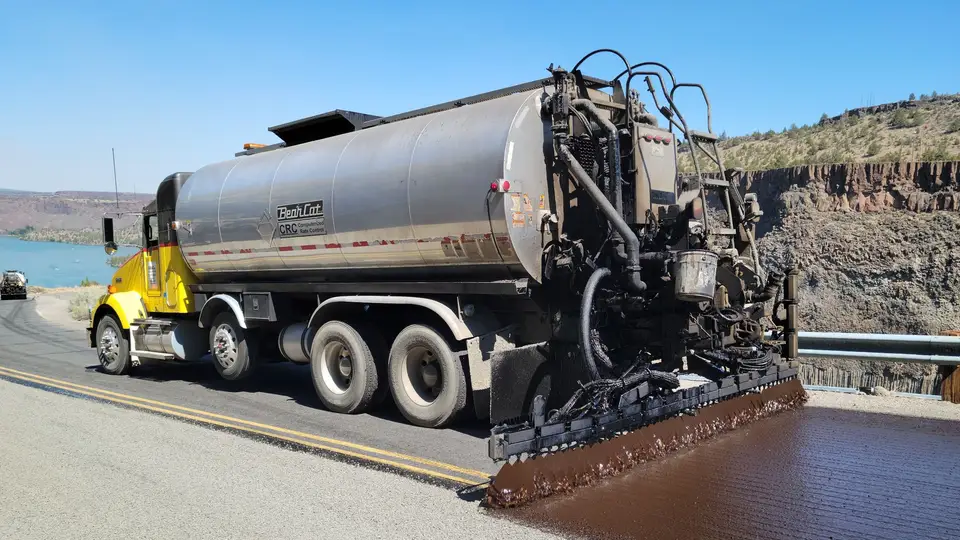
Case study · TruSeal America
Booked 129 appointments and closed $344,440 in commercial revenue over 15 months.
Read the case studyPart two Apply this
The Paving & Asphalt toolkit
8 working tools built from the chapters above. Tick the boxes as you go (they stay ticked in this browser), copy the scripts into your CRM, or save the whole guide as a PDF and print this part as a worksheet.
- 01Account scorecardScore an account before anyone dials it.
- 02Discovery question bankThe questions that qualify a meeting.
- 03Objection cheat sheetWhat they say, what it means, what to do next.
- 04Trigger watchlistThe changes that make a buyer take the call.
- 05Call opener templateA fill-in-the-blanks script, step by step.
- 06Follow-up cadenceWhat to send after the call, and what to skip.
- 0730-day action planFour weeks of steps you can start Monday.
- 08Goal calculatorWork back from revenue to dials.
Tool 01
Account scorecard
Before an account goes on the call list, check every line that fits. Call the accounts with the most ticks first, and leave the ones with none for later.
Tool 02
Discovery question bank
Ask fewer, better questions. Pick three or four for the call and save the rest for the meeting. Each one comes with the reason it earns its place.
Retail stores
First impressions and liability. Many stores lease, so confirm who controls the lot before pitching.
- Does the store control the parking lot, or does the landlord or shopping center manage it?This is the first qualifying question, since many retail lots belong to the landlord.
- Are there potholes, cracks or faded striping customers have complained about?Visible problems in front of customers drive action and point to a first job.
- Is a remodel or refresh planned for this location?Remodels are when lot work often gets funded and scheduled.
- Are your accessible parking spaces and ramps up to current requirements?Accessibility updates are a common reason for striping and concrete work.
Ambulatory health care offices and clinics
Patient safety and accessibility. Many practices lease, so the landlord or property manager is often the buyer.
- Does the practice lease the building, and if so, who manages the lot?Many practices lease, so this tells you whether the landlord or property manager is the real buyer.
- Have patients mentioned trip hazards, potholes or trouble with accessible parking?Patient safety concerns and accessibility issues drive action quickly at medical offices.
- Are your accessible spaces, ramps and curb cuts in good condition and up to current requirements?Accessibility updates are a common, well-defined scope for paving and concrete work.
- When was the lot last sealcoated and restriped?The last maintenance date tells you whether the lot is due.
Apartment property management firms
Curb appeal for leasing and trip hazards. Portfolio pricing across communities matters.
- How many communities do you manage, and are the lots handled by one paving contractor or several?This tells you whether portfolio pricing across communities is the right pitch.
- Which communities have the most potholes, drainage problems or resident complaints about the lot?Problem lots are where to start and give the regional manager a concrete reason to act.
- When were the lots last sealcoated and striped?The last maintenance date tells you which communities are due.
- Are you renovating any communities to improve leasing?Renovations often include lot work to improve curb appeal for prospective residents.
Commercial building owners and lessors
Asset value and liability. Ask how they budget lot maintenance across their buildings.
- How do you budget lot maintenance across your buildings, on a schedule or when problems show up?Reactive budgeting is an opening for a multi-year lot plan.
- Which lots worry you most, and why?The owner's own concerns tell you where to start and what will get attention.
- Are you planning to refinance, sell or buy any properties soon?Transactions bring due diligence and tenant expectations that can put lot work on a deadline.
- Under your leases, who pays for lot maintenance and resurfacing?Lease terms determine whether you sell to the owner, the property manager or the tenant.
Qualifying the meeting
From our talk track, in the order a good call asks them.
- Is it roughly 120 people on site, and are you the one who signs off on repairs and maintenance, or does that go somewhere else?Confirm the fit and that you are talking to the person who decides, in two short questions.
- Besides you, who else is usually involved when a decision like this gets made?Learn who else weighs in before you book, so nobody is missing from the meeting.
- And when are you looking to have this sorted out?Find out when they want it solved. A date turns interest into a reason to meet.
- If what we show you makes sense, is [your company] a company you'd consider working with down the road?Ask whether they would consider working with you. A yes here makes the close easy.
Any first meeting
Plain practice that works in every trade.
- How are you handling this today, and what would you change about it?The gap between today and what they want is the whole reason to meet.
- What happens if nothing changes this year?Tells you whether there is a cost to waiting, or only curiosity.
- Who else would need to agree before anything moves?Names the people who can stall the deal, while you can still invite them.
- When does the current contract or budget come up for review?Gives you the date to plan around, even when the answer today is no.
- What would make a first meeting worth your time?Lets the buyer set the agenda, which is the agenda they will show up for.
Know these before you hang up
- Lot size and condition
- Last sealcoat and striping
- Known problem areas
- Accessibility concerns
- Current contractor
- Number of properties
- Budget month
- Who approves
Tool 03
Objection cheat sheet
A first no is usually information, not a decision. Read what it tells you, then make the next move instead of arguing.
They say"The lot looks fine."
What it tells youFrom the office window, it often does. Ask when it was last sealed and whether there are any trip hazards or complaints.
Next moveOffer a walk-through and a written condition summary; record the last sealcoat date.
They say"We already have a paving company."
What it tells youMany properties use whoever did the last job, without a schedule. Ask whether that company maintains the lot on a plan.
Next moveRecord the incumbent and position a second proposal before the next budget.
They say"It's not in the budget this year."
What it tells youThat tells you when to come back and that the budget is the gate.
Next moveAsk when next year's budget is built and offer a proposal they can submit for it.
They say"We only do work when it's needed."
What it tells youReactive owners pay for reconstruction later. They respond to cost comparisons, not schedules.
Next moveShare how sealcoat and crack fill protect the surface, and ask about the last pothole repair.
They say"Send me a quote."
What it tells youA quote without a site visit is a price, not a plan, and it often loses on price alone.
Next moveBook a walk-through so the proposal reflects the actual lot, and learn who else is quoting.
Tool 04
Trigger watchlist
Each of these changes gives a buyer a reason to take the call this month instead of next year. Tick the ones you will track, and set a news alert or CRM field for each so you hear about it first.
Tool 05
Call opener template
Our paving talk track with the names taken out. Keep the order of the steps; put the words in your own voice. The note under each step says what it has to do.
- OpenerYour name, your company and a reason to keep listening. Admit you are interrupting; it buys you the next sentence.
Hi [first name], this is [your name] with [your company] on a recorded line. I know I'm catching you in the middle of the day, so I'll keep this short. How are you today?
- Reason for the callOne sentence about their building or business, not your company history. End on a question they can answer.
The reason for my call, we handle facility maintenance across the metro, and your building came up at about 120 people on site. I wanted to see how repairs and upkeep are handled right now and whether anyone has documented what's been deferred.
- Feel, felt, foundAgree first. Say others felt the same, then what they found. Never argue with a first no.
If they say: "We already have a maintenance vendor."
I understand. A lot of the people I talk to felt the same way at first, and what they found is that a second look cost them nothing. When your vendor fixes what you called about, that covers the repair. Ours is a written report on everything else the building is carrying. It's a second document at no cost, and if they've got everything handled it will say so.
- QualifyConfirm the fit and that you are talking to the person who decides, in two short questions.
Two quick things so I send the right technician out. Is it roughly 120 people on site, and are you the one who signs off on repairs and maintenance, or does that go somewhere else?
- Decision-making questionLearn who else weighs in before you book, so nobody is missing from the meeting.
Besides you, who else is usually involved when a decision like this gets made?
- TimelineFind out when they want it solved. A date turns interest into a reason to meet.
And when are you looking to have this sorted out?
- DifferentiatorOne thing you do differently, in one sentence. Stop talking after it.
What we do differently is the walk-through itself. We document everything worn, leaking, or failing and hand you a written deferred-maintenance report at no charge either way. After that it's one agreement and one number to call for every trade.
- Consideration questionAsk whether they would consider working with you. A yes here makes the close easy.
If what we show you makes sense, is [your company] a company you'd consider working with down the road?
- Close for the meetingOffer two specific times. Never ask whether they would like to meet.
Let's put it on the calendar. I have Tuesday the 15th at 10, or Thursday the 17th at 2. Which is better? I'll send the invite while we're on the line, and I'll add Warren Doyle's mobile to it.
- Recap the agendaRestate the day, the place, the length and what they walk away with.
Great. So that's Thursday the 17th at 2 o'clock, in person at your property, and we'll keep it to thirty minutes. Warren Doyle, our project manager, will walk the property with you, document the deferred maintenance, and leave you the written report. When he gets there, where should he check in?
- Confirm detailsTitle, email and address. A meeting with a wrong email is a meeting that does not happen.
Let me confirm your details: your title, the best email for the invite, and that we're meeting at your property address.
- Invite sentSend the invite while they are still on the phone and ask them to accept it.
Perfect. I'm sending the invite now. Could you accept it when it comes through, so the time is held? Thanks, [first name]. Warren will see you Thursday.
Tool 06
Follow-up cadence
Most deals are won or lost after the first meeting. This is the follow-up our talk track calls for at each stage, and the mistake to skip at each one.
After the first lot walk
Send a short lot summary within a day with photos of problem areas marked on an aerial view or simple site sketch. Separate safety and liability items from routine maintenance so the property manager can prioritize. Confirm the next step and ask whether the owner or asset manager should see your notes.
Skip: Sending a price without explaining what you saw, which makes your proposal look like any other bid.
After the proposal or quote is sent
Call within a few days to walk through scope, phasing and timing rather than asking if they received it. Explain how the work will be scheduled around tenants, residents or operations, and how long each area will be closed. If the proposal is for a portfolio, ask which properties need to go first and who approves the rest.
Skip: Letting the proposal sit without a walkthrough, which turns it into a price-only comparison.
When the answer is "no decision yet"
Find out whether the work is waiting on next year's budget, owner approval or the end of the season. Set a follow-up just before that event, and send something useful in between, such as photos from after a freeze-thaw cycle showing how the cracks have changed. Offer to put a budget number in their plan even if the work will not happen until spring.
Skip: Discounting to force a decision when the real issue is budget timing.
When the account goes to the incumbent
Thank them, ask what made the difference and record the property count, last sealcoat date and budget month. Check back with a reason, such as new lot damage or the budget month you recorded. Stay in touch with the maintenance coordinator or community manager who hears the complaints.
Skip: Treating a lost bid as a lost account, when paving is bid property by property and year by year.
Re-engaging before the next budget cycle or season
Reach out ahead of the budget month you recorded, and offer an updated lot assessment with numbers they can plug in. Reference what you saw last time, such as the cracks that needed filling or the faded striping. Follow up again when new damage appears, such as potholes after a freeze.
Skip: Waiting until spring to call, when budgets are set and crews are already booked.
Tool 07
30-day action plan
4 weeks, 16 steps, nothing you need to buy. Tick each one off as you finish it; your progress stays in this browser.
Week 1Pick the accounts
Week 2Build the talk track
Week 3Make the calls
Week 4Follow up and measure
Tool 08
Goal calculator: what your number takes
Work backward from revenue. Wins needed, divided by the 7.4% proposal win rate, divided by the 32.2% proposal rate, gives the meetings. Times 86 dials per appointment gives the calling effort.
Rates: Abstrakt sales center, Performance Intelligence, national paving figures as of October 2026. Your close rate is yours; history, not a promise. For the full model, use the Business Growth Formula or the SDR cost calculator.
Sources and notes
- Abstrakt sales center, Performance Intelligence: 153,847 prospecting calls and 1,780 appointments in paving & asphalt, national, as of October 2026. Method.
- U.S. Census Bureau, County Business Patterns 2023: buyer establishments by industry and size, 100 metros.
- U.S. Bureau of Labor Statistics, Quarterly Census of Employment and Wages, private ownership, 2026 Q1: highway, street and paving contractors (NAICS 237310).
- Abstrakt paving & asphalt talk track, objections, follow-up stages and qualification standards, reviewed 2026-09-30.
- Sample call: a dramatized example written from that talk track; names and figures are samples.
- The toolkit's general advice (scorecard use, core questions, 30-day plan) is sales practice, not data.
