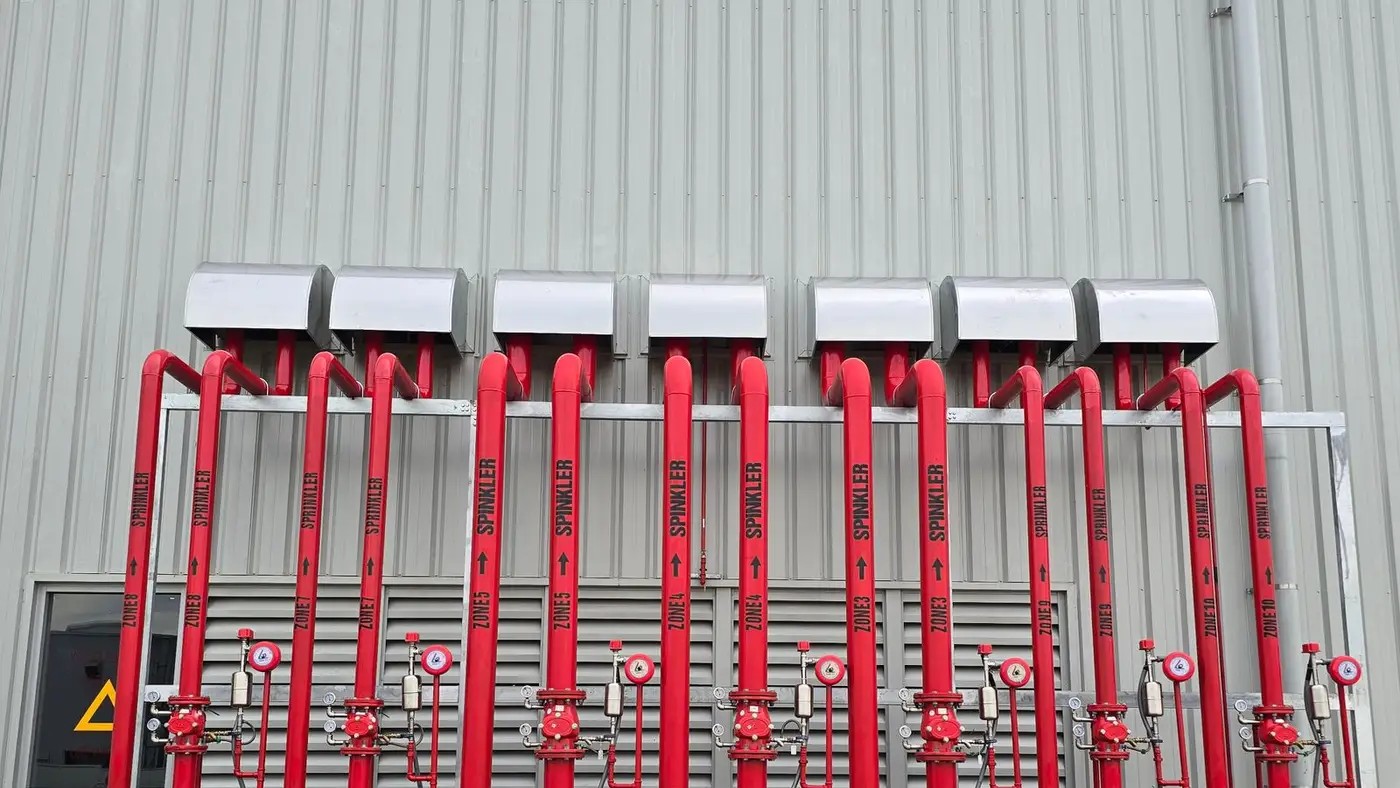
Industry report · Fire Protection
The State of Fire Protection Business Development, 2026
Where new fire protection work comes from right now: who buys, who signs, what makes them switch and what one meeting takes in dials. Then a 8-tool kit to put it to work at your company this month.
- 78dials per booked appointment in our sales center
- 315,512buyer sites with 20+ employees across our 99 metros
- 7,194fire alarm and security systems contractors competing for them
- 13.2%of proposals won
Dials: Abstrakt sales center, Performance Intelligence, national, as of October 2026. Sites: U.S. Census Bureau, County Business Patterns 2023. Contractors: U.S. Bureau of Labor Statistics, Quarterly Census of Employment and Wages, private ownership, 2026 Q1. Totals cover the 99 metros on our market pages, with Palm Beach County (in both the Miami and West Palm Beach pages) counted once. Proposals won: Abstrakt sales center, Performance Intelligence, national, as of October 2026.
Executive summary Read this if nothing else
5 things to know about fire protection business development
Lead with
Sprinkler inspection, testing and maintenance
Required, recurring and documented. Every sprinkled building has an inspection vendor and a due date, so there is always an incumbent to learn about and a date to work toward.
Biggest buyer pool
Restaurants: 150,564 sites
with 20 or more employees across our 99 metros. Staying open and passing inspection. Multi-unit operators are worth more than single locations.
Fastest to book
Healthcare Services: 62 dials per appointment
against 78 across all 50,060 of our fire protection dials. Put these accounts at the top of the list.
Who signs
Director of facilities / plant operations
What lands: Complete, readable reports and a plan to clear deficiencies before the next inspection or survey.
Best reason to call
Inspection due date and contract renewal
The most useful facts you can learn. Inspections run on fixed intervals, and a renewal is the moment an unhappy building can change vendors cleanly.
Sources: U.S. Census Bureau, County Business Patterns 2023; Abstrakt sales center, Performance Intelligence, national, as of October 2026; Abstrakt fire protection talk track, reviewed 2026-09-30.
Chapter 01 The business
How fire protection work pays, and what to sell first
Fire protection is the rare commercial trade where the work is required. Sprinkler systems are inspected, tested and maintained under NFPA 25, fire alarm systems under NFPA 72, and the local fire marshal or other authority having jurisdiction (AHJ) and the building's insurer both expect to see the reports. That makes the inspection contract the anchor account. The inspection finds deficiencies, the deficiencies become repair work, and the contractor who writes the report is first in line for the repair, the upgrade and the next system. The outbound job is to win the inspection, because every other dollar in the building follows it.
Recurring work
Sprinkler inspection, testing and maintenance; fire alarm inspection and testing; alarm monitoring; extinguisher service; kitchen hood and special-hazard suppression inspections; backflow testing where you hold it.
Project work
Deficiency repairs, alarm panel and device upgrades, sprinkler modifications for tenant improvements, fire pump work, new suppression systems, system replacements.
Emergency work
Impairments, leaks, freeze breaks and false alarms. They show whether the incumbent responds, and a bad response is often why a building starts looking.
What to lead with on the phone
Not every service earns a cold call. The one you open with has to be small enough to say yes to and useful enough that the buyer remembers you when the bigger job comes up. This is how we sort fire protection services for outbound:
Lead with itEasy to say yes to on a first call
- Sprinkler inspection, testing and maintenanceRequired, recurring and documented. Every sprinkled building has an inspection vendor and a due date, so there is always an incumbent to learn about and a date to work toward.
- Fire alarm inspection, testing and monitoringAlso required and recurring, and monitoring adds a monthly relationship. Alarm and sprinkler are often split between vendors, which gives you a way in on one side and a reason to consolidate later.
- Deficiency repairOpen deficiencies on an inspection report are the best door-opener in the trade. Asking whether last year's items got fixed tells you whether the building is happy with its vendor.
Second conversationOpens up once you are in the door
- Fire extinguisher serviceLow ticket but touches almost every business, and it gets a technician on site. Useful for entry into multi-site accounts; rarely the reason a larger customer switches.
- Kitchen hood and special-hazard suppressionConcentrated in restaurants, hotels, schools, data rooms and industrial sites. Recurring inspections, often handled by a separate vendor.
- System upgrades and new installsAlarm panel replacements, sprinkler modifications and fire pumps come from findings, renovations and occupancy changes. The inspecting contractor usually sees them first.
Rarely outboundComes from relationships and referrals
- Emergency and impairment responseNobody books a meeting for a future impairment. Position for it, and use the incumbent's slow response as a reason to talk.
Compliance and clean documentation, not price. Buildings change fire protection vendors over missed inspections, unclear reports and repairs that never get done.
Chapter 02 The buyer
Who to call, and who signs
Sprinkled and alarmed buildings with a facility, safety or property lead on site, inside the radius your inspectors and service technicians can cover.
The accounts worth calling first
- Sprinkled buildings with alarm systems on siteBoth systems carry recurring inspection requirements, which means a contract worth winning and a renewal to track.
- Occupancies that draw regulatory or insurer attentionHospitals, senior living, schools, hotels and industrial sites face surveys and audits, so documentation and response matter to them.
- Open deficiencies or an unhappy relationshipUnrepaired findings, missed inspections or poor reports are the most common reasons a building changes vendors.
- Multiple systems split across vendorsA building with one company for sprinklers, another for alarm and a third for extinguishers is a consolidation opportunity.
- Multiple locations inside your service areaOne inspection program across several sites builds route density and a bigger contract.
Where the buyers are
315,512 buyer sites with 20 or more employees sit across the 99 metros we publish. This is how they split by the buyer types we call, largest first. The bigger the pool, the longer a program can run before it repeats a call.
| Buyer type | Sites |
|---|---|
| RestaurantsLargest pool | 150,564 |
| Manufacturing plants | 53,710 |
| Apartment management companies | 45,807 |
| Senior living and skilled nursing | 20,487 |
| Commercial property management firms | 14,515 |
| Hotels | 10,937 |
| Private K-12 schools | 9,816 |
| Warehousing and distribution | 5,567 |
| Hospital campuses | 2,951 |
| College campuses and residence halls | 1,158 |
The people who sign
Start with the chief engineer or maintenance manager for system facts and open deficiencies, then the facility director, safety manager or property manager who signs.
Director of facilities / plant operations
Signs forInspection vendor selection, maintenance budget, repair approvals
WantsPassing inspections, closing deficiencies, predictable spend
Reach themContract renewals, after a poor inspection and during budget planning
Complete, readable reports and a plan to clear deficiencies before the next inspection or survey.
Safety, EHS or compliance manager
Signs forCompliance records, insurer and regulator relationships, often the life safety program
WantsDocumentation that holds up to the AHJ, the insurer and auditors
Reach themBefore surveys and audits, and after findings
Reports and records they can hand to an inspector without worry.
Chief engineer / maintenance manager
Signs forDay-to-day knowledge of the systems and strong influence on who gets called
WantsTechnicians who show up on schedule and do not leave the building impaired
Reach themAny time; they know the open deficiencies and the incumbent's habits
Responsiveness and clean work. Ask what the current vendor leaves undone.
Property manager
Signs forOperating budget and vendor contracts for the building
WantsCompliance for the owner, tenant safety, budget accuracy
Reach themBudget season, management takeovers and after findings
Clean compliance documentation and repair quotes that match the report.
Procurement / purchasing
Signs forBid process, approved vendor lists, insurance and licensing requirements
WantsLicensing, insurance, compliance, price
Reach themRebid cycles
Get on the vendor list early; procurement rarely starts the conversation but often ends it.
Chapter 03 The timing
When fire protection buyers switch
Most fire protection buyers are not shopping on the day you call. These are the moments when they start.
Every sprinkled building already has someone inspecting it, so a no is almost always a timing answer. The useful outcome of a first call is the incumbent's name, when the next inspection is due, when the contract renews and whether last year's deficiencies were repaired. Recorded and revisited, that turns a no into a scheduled conversation ahead of the next inspection or renewal, often with an offer to review the most recent report.
What opens the door, by buyer type
- RestaurantsNew opening, ownership change, failed inspection
- Manufacturing plantsInsurer loss-control visit, process change, expansion
- Apartment management companiesAcquisition, management takeover, fire marshal findings
- Senior living and skilled nursingState inspection findings, ownership change, fire marshal visit
- Commercial property management firmsNew property acquisition, management takeover, tenant turnover, budget season
- HotelsBrand-mandated renovation (PIP), new management company, fire marshal findings
Timing note
Fire protection has no strong weather season. Demand runs on inspection intervals, contract renewals, AHJ and insurer deadlines, and budget cycles, which fall throughout the year. The exception is cold climates, where freeze-ups in dry and wet systems bring calls in winter. Learn each building's due dates and call ahead of them.
Watch for new owners
New sites start without a fire protection inspection vendor.
Chapter 04 The conversation
The call that books the meeting
A good call earns the next sentence, qualifies the account and closes on two specific times. Here is the path, tagged with each step of our ENGAGE Sales Process.
Sample call · Fire protection and security
- OpenerSDRHi Dana, this is Chris with Sentinel Fire and Security on a recorded line. I know I'm catching you in the middle of the day, so I'll keep this short. How are you today?
- ProspectAlright. What's it about?
- Reason for the callSDRThe reason for my call, we handle fire protection and security systems for facilities across the metro, and your building came up at about 120 people on site. I wanted to see who's doing the annual fire inspections and whether the access control and cameras are on a service agreement.
- PushbackProspectWe already have a fire and security vendor.
- Feel, felt, foundSDRI understand. A lot of the people I talk to felt the same way at first, and what they found is that a second look cost them nothing. When your vendor tags the extinguishers or services the panel, that covers their scope. Ours is a written compliance report on the whole system. It's a second document at no cost, and if they've got everything handled it will say so.
- ProspectOkay, that makes sense.
- QualifySDRTwo quick things so I send the right technician out. Is it roughly 120 people on site, and are you the one who signs off on life-safety and security work, or does that go somewhere else?
- ProspectThat's about right. And life safety comes to me.
- Decision-making questionSDRBesides you, who else is usually involved when a decision like this gets made?
- ProspectOur risk manager reviews it. But the decision's mine.
- TimelineSDRAnd when are you looking to have this sorted out?
- ProspectOur insurance renewal is in the fall. I'd want it clean before then.
- DifferentiatorSDRWhat we do differently is the inspection itself. We walk the alarm, sprinklers, and access control against current code and hand you a written deficiency report at no charge either way. And it's logged the way the fire marshal and your insurance carrier ask for it.
- ProspectThat would make the renewal a lot easier.
- Consideration questionSDRIf what we show you makes sense, is Sentinel Fire and Security a company you'd consider working with down the road?
- ProspectSure, I'd consider it.
- Close for the meetingSDRLet's put it on the calendar. I have Tuesday the 15th at 10, or Thursday the 17th at 2. Which is better? I'll send the invite while we're on the line, and I'll add Warren Doyle's mobile to it.
- Meeting setProspectTuesday at ten.
- Recap the agendaSDRGreat. So that's Tuesday the 15th at 10 o'clock, in person at your building, and we'll keep it to thirty minutes. Warren Doyle, our project manager, will walk the panels and devices with you, check the inspection tags, and leave you the written deficiency report. When he gets there, where should he check in?
- ProspectSecurity desk in the main lobby. Fitting, right?
- Confirm detailsSDRLet me confirm your details: your title, the best email for the invite, and that we're meeting at your building address.
- ProspectDirector of facilities. Email's dana dot ellis at our company dot com. And yes.
- Invite sentSDRPerfect. I'm sending the invite now. Could you accept it when it comes through, so the time is held? Thanks, Dana. Warren will see you Tuesday.
Why it works
The rep never argues with the first no. The pushback gets agreement, a reason the next step costs nothing, and two quick qualifying questions before any meeting time is offered.
Make it yours
The call opener template in the toolkit is this script with the names taken out.
We already have a fire protection company.
Every objection a fire protection contractor hears on the phone, with what it tells you and the next move, is on the objection cheat sheet. The questions worth asking are in the discovery question bank.
Chapter 05 The numbers
What one fire protection meeting takes
From 50,060 dials and 641 booked appointments on our floor: what the effort turns into, and which buyers book fastest.
What 10,000 fire protection dials turned into on our floor
- 10,000dialsCalls placed to the right buyers
- 128appointmentsAt 78 dials per booked appointment
- 28proposals21.6% of opportunities reached a proposal
- 3.7new clients13.2% of proposals were won
Who books fastest, by the buyer's industry
Same trade, very different effort. Fewer dials per appointment means the list pays back sooner. The line marks the average across every fire protection call.
| Prospect industry | Dials per appointment | Proposals won |
|---|---|---|
| Healthcare ServicesFastest | 62 | 0.0% |
| Hospitality | 67 | 0.0% |
| Education | 82 | 5.9% |
| Wholesale | 87 | 36.4% |
| Manufacturing | 92 | 18.2% |
All fire protection calls: 78 dials per appointment
Who books fastest, by the title you reach
| Prospect title | Dials per appointment | Proposals won |
|---|---|---|
| Maintenance DirectorFastest | 39 | 12.5% |
| Safety Manager | 42 | 0.0% |
| Facilities Director | 71 | 0.0% |
| Facilities Manager | 94 | 0.0% |
| Maintenance Manager | 105 | 12.5% |
All fire protection calls: 78 dials per appointment
Who books fastest, by size (building square footage)
| Building square footage | Dials per appointment | Proposals won |
|---|---|---|
| 10,000-49,999Fastest | 75 | 11.9% |
| >=100,000 | 78 | 27.8% |
| 50,000-99,999 | 89 | 14.3% |
All fire protection calls: 78 dials per appointment
Chapter 06 The territory
Where the work is least crowded
Buyer sites per fire protection contractor is a rough read on how crowded a market is. More sites for each contractor means more doors nobody else is knocking on.
The 10 least crowded metros
| Metro | Sites per contractor | Buyer sites | Contractors |
|---|---|---|---|
| Grand Rapids-WyomingMost room | 160 | 2,077 | 13 |
| Minneapolis-St. Paul | 133 | 6,105 | 46 |
| Milwaukee-Waukesha | 107 | 2,889 | 27 |
| Greensboro-High Point | 79 | 1,341 | 17 |
| San Jose-Sunnyvale | 78 | 2,954 | 38 |
| San Diego-Chula Vista | 73 | 5,499 | 75 |
| Detroit-Warren | 73 | 5,951 | 82 |
| Worcester | 72 | 1,080 | 15 |
| Madison | 72 | 1,147 | 16 |
| Chicago-Naperville | 71 | 13,256 | 188 |
Chapter 07 The meeting
What a qualified fire protection meeting looks like
A meeting only counts if the right person shows up with a real reason to talk. Every fire protection meeting we book clears these checks first.
- Inside your service radius and in a building type you want
- Owns or manages the life safety systems, and the person in the meeting signs or shapes the decision
- Systems you are licensed and equipped to inspect and service
- A known inspection or renewal date, open deficiencies or another stated need
- Incumbents, system types and open items captured
- A confirmed date and time for a sales conversation
Every meeting is then graded on our 25-point 5 Star Scorecard before it reaches a client. Use the same test on your own calendar: if you could not answer each line above before the meeting, the meeting was not qualified yet.
After the meeting is where most fire protection deals are won or lost. Re-contact ahead of inspection dates and renewals; offer a review of the last inspection report as a reason to meet. The follow-up cadence in the toolkit lays out each stage.
Walk in knowing
The systems on site, the incumbent inspector, open deficiencies and the inspection due dates. Our clients get all of it with every meeting.
Case study · Harring Fire Protection
Booked 195 appointments and closed 16 deals worth $200,000 over a 28-month partnership, including a $104,000 electric fire-pump project.
Read the case studyPart two Apply this
The Fire Protection toolkit
8 working tools built from the chapters above. Tick the boxes as you go (they stay ticked in this browser), copy the scripts into your CRM, or save the whole guide as a PDF and print this part as a worksheet.
- 01Account scorecardScore an account before anyone dials it.
- 02Discovery question bankThe questions that qualify a meeting.
- 03Objection cheat sheetWhat they say, what it means, what to do next.
- 04Trigger watchlistThe changes that make a buyer take the call.
- 05Call opener templateA fill-in-the-blanks script, step by step.
- 06Follow-up cadenceWhat to send after the call, and what to skip.
- 0730-day action planFour weeks of steps you can start Monday.
- 08Goal calculatorWork back from revenue to dials.
Tool 01
Account scorecard
Before an account goes on the call list, check every line that fits. Call the accounts with the most ticks first, and leave the ones with none for later.
Tool 02
Discovery question bank
Ask fewer, better questions. Pick three or four for the call and save the rest for the meeting. Each one comes with the reason it earns its place.
Restaurants
Staying open and passing inspection. Multi-unit operators are worth more than single locations.
- When was your hood suppression system last inspected, and when is the next one due?Due dates tell you when to call and what to offer.
- Have you had a failed inspection or a citation recently?Failed inspections threaten the ability to stay open and create urgency.
- How many locations do you operate, and does each one use a different vendor?Multi-unit operators are more valuable and often want one vendor across locations.
- Who handles extinguishers and hood suppression today, and are you happy with the service?This identifies the incumbent and how open they are to a change.
Manufacturing plants
Insurer recommendations and process hazards. The safety manager often owns the relationship, not facilities.
- Who owns the fire protection relationship here, facilities, maintenance or the EHS manager?The safety manager often owns it rather than facilities, so this tells you who to meet.
- Has your insurer's loss-control visit produced any recommendations?Insurer recommendations create deadlines and defined scope.
- Do you have special-hazard suppression on any processes, and who services it?Special-hazard systems need specialized service and are often a separate opportunity.
- Have processes or materials changed in a way that might affect what the system needs to do?Process changes can require system evaluations and modifications.
Apartment management companies
Clean reports and repairs that get closed out. One management company can cover many communities.
- How many communities do you manage, and does each have its own fire protection vendor?Portfolio size and vendor mix show whether consolidation is a real opportunity.
- Have you had fire marshal findings at any communities recently?Findings create urgency and show where the current vendor is falling short.
- Are there deficiencies from past inspections still waiting on repair?Open deficiencies are defined work and a common complaint about incumbents.
- Are you acquiring or taking over management of any communities?New communities are where vendor decisions are most open.
Senior living and skilled nursing
Inspection findings and resident safety. Many are part of regional operators that buy across sites.
- Did your last state inspection or fire marshal visit turn up any findings?Inspection findings create a deadline and a reason to talk.
- Who inspects your sprinklers, alarms and kitchen suppression today, one company or several?Split vendors are an opening to consolidate under one program.
- Is the vendor chosen here or by the regional office?This tells you whether you are selling to one community or a regional operator buying across sites.
- Has ownership or management changed recently?New operators often review vendor agreements.
Qualifying the meeting
From our talk track, in the order a good call asks them.
- Is it roughly 120 people on site, and are you the one who signs off on life-safety and security work, or does that go somewhere else?Confirm the fit and that you are talking to the person who decides, in two short questions.
- Besides you, who else is usually involved when a decision like this gets made?Learn who else weighs in before you book, so nobody is missing from the meeting.
- And when are you looking to have this sorted out?Find out when they want it solved. A date turns interest into a reason to meet.
- If what we show you makes sense, is [your company] a company you'd consider working with down the road?Ask whether they would consider working with you. A yes here makes the close easy.
Any first meeting
Plain practice that works in every trade.
- How are you handling this today, and what would you change about it?The gap between today and what they want is the whole reason to meet.
- What happens if nothing changes this year?Tells you whether there is a cost to waiting, or only curiosity.
- Who else would need to agree before anything moves?Names the people who can stall the deal, while you can still invite them.
- When does the current contract or budget come up for review?Gives you the date to plan around, even when the answer today is no.
- What would make a first meeting worth your time?Lets the buyer set the agenda, which is the agenda they will show up for.
Know these before you hang up
- Which systems are on site
- Current vendor for each
- Inspection due dates
- Contract renewal
- Open deficiencies
- Monitoring provider
- Number of sites
- Who signs
Tool 03
Objection cheat sheet
A first no is usually information, not a decision. Read what it tells you, then make the next move instead of arguing.
They say"We already have a fire protection company."
What it tells youEvery sprinkled building does. Ask whether the same company handles sprinklers, alarm and extinguishers, and whether last year's deficiencies were fixed.
Next moveRecord each incumbent, the inspection due date and renewal; offer a second look at the latest report.
They say"We're under contract."
What it tells youThat is a date, not a no. The contract term and end month are what you need.
Next moveNurture to the renewal window and check in after their next inspection.
They say"We passed our last inspection."
What it tells youPassing does not mean no deficiencies. Ask what was noted and whether anything is still open.
Next moveOffer to review the report and quote any open items.
They say"Corporate or the landlord handles that."
What it tells youDecisions sit somewhere else. The local contact can still tell you who owns the vendor and when it renews.
Next moveGet the name of the corporate, regional or landlord contact and the renewal timing.
They say"Just send me a quote."
What it tells youInspection pricing depends on the systems and devices on site. A quote without a walkthrough or the last report is a guess.
Next moveAsk for the most recent inspection report or a short site visit to quote accurately.
Tool 04
Trigger watchlist
Each of these changes gives a buyer a reason to take the call this month instead of next year. Tick the ones you will track, and set a news alert or CRM field for each so you hear about it first.
Tool 05
Call opener template
Our fire protection talk track with the names taken out. Keep the order of the steps; put the words in your own voice. The note under each step says what it has to do.
- OpenerYour name, your company and a reason to keep listening. Admit you are interrupting; it buys you the next sentence.
Hi [first name], this is [your name] with [your company] on a recorded line. I know I'm catching you in the middle of the day, so I'll keep this short. How are you today?
- Reason for the callOne sentence about their building or business, not your company history. End on a question they can answer.
The reason for my call, we handle fire protection and security systems for facilities across the metro, and your building came up at about 120 people on site. I wanted to see who's doing the annual fire inspections and whether the access control and cameras are on a service agreement.
- Feel, felt, foundAgree first. Say others felt the same, then what they found. Never argue with a first no.
If they say: "We already have a fire and security vendor."
I understand. A lot of the people I talk to felt the same way at first, and what they found is that a second look cost them nothing. When your vendor tags the extinguishers or services the panel, that covers their scope. Ours is a written compliance report on the whole system. It's a second document at no cost, and if they've got everything handled it will say so.
- QualifyConfirm the fit and that you are talking to the person who decides, in two short questions.
Two quick things so I send the right technician out. Is it roughly 120 people on site, and are you the one who signs off on life-safety and security work, or does that go somewhere else?
- Decision-making questionLearn who else weighs in before you book, so nobody is missing from the meeting.
Besides you, who else is usually involved when a decision like this gets made?
- TimelineFind out when they want it solved. A date turns interest into a reason to meet.
And when are you looking to have this sorted out?
- DifferentiatorOne thing you do differently, in one sentence. Stop talking after it.
What we do differently is the inspection itself. We walk the alarm, sprinklers, and access control against current code and hand you a written deficiency report at no charge either way. And it's logged the way the fire marshal and your insurance carrier ask for it.
- Consideration questionAsk whether they would consider working with you. A yes here makes the close easy.
If what we show you makes sense, is [your company] a company you'd consider working with down the road?
- Close for the meetingOffer two specific times. Never ask whether they would like to meet.
Let's put it on the calendar. I have Tuesday the 15th at 10, or Thursday the 17th at 2. Which is better? I'll send the invite while we're on the line, and I'll add Warren Doyle's mobile to it.
- Recap the agendaRestate the day, the place, the length and what they walk away with.
Great. So that's Tuesday the 15th at 10 o'clock, in person at your building, and we'll keep it to thirty minutes. Warren Doyle, our project manager, will walk the panels and devices with you, check the inspection tags, and leave you the written deficiency report. When he gets there, where should he check in?
- Confirm detailsTitle, email and address. A meeting with a wrong email is a meeting that does not happen.
Let me confirm your details: your title, the best email for the invite, and that we're meeting at your building address.
- Invite sentSend the invite while they are still on the phone and ask them to accept it.
Perfect. I'm sending the invite now. Could you accept it when it comes through, so the time is held? Thanks, [first name]. Warren will see you Tuesday.
Tool 06
Follow-up cadence
Most deals are won or lost after the first meeting. This is the follow-up our talk track calls for at each stage, and the mistake to skip at each one.
After the first meeting or site walk
Send a recap within a day noting the systems you saw, any visible concerns and the next step you agreed on. If they shared a recent inspection report, summarize the open deficiencies in plain language and how you would close them out. Copy the safety or compliance manager if they were part of the conversation.
Skip: Criticizing the incumbent's report in writing before you have earned the contact's trust.
After the proposal or quote is sent
Call within a few days to walk through scope, inspection schedule and how you document results. Show how your reports will help them with fire marshals, insurers or surveyors. Ask who else needs to approve it and offer to meet them.
Skip: Competing only on inspection price, which ignores the deficiency repair and documentation that actually win accounts.
When the answer is "no decision yet"
Find out whether the decision depends on a contract renewal, a budget cycle or the next inspection due date. Set your follow-up ahead of that date, and offer to review their most recent report in the meantime. Keep the conversation focused on their compliance and documentation.
Skip: Pushing for a switch mid-contract when the realistic window is the renewal.
When the account goes to the incumbent
Thank them, ask what made the difference and record the incumbent's name, renewal month and next inspection date. Check in after their next inspection to ask whether deficiencies were closed out. Stay in touch with the maintenance or safety lead who sees the reports.
Skip: Writing off the account when every sprinkled building needs recurring inspections and the contract comes up again.
Re-engaging before the next renewal or inspection
Reach out ahead of the renewal or inspection date you recorded and reference what you learned last time. Offer a review of their latest report or deficiency list. In cold climates, check in before winter about freeze protection on dry and wet systems.
Skip: Calling after the inspection is done or the contract has auto-renewed.
Tool 07
30-day action plan
4 weeks, 16 steps, nothing you need to buy. Tick each one off as you finish it; your progress stays in this browser.
Week 1Pick the accounts
Week 2Build the talk track
Week 3Make the calls
Week 4Follow up and measure
Tool 08
Goal calculator: what your number takes
Work backward from revenue. Wins needed, divided by the 13.2% proposal win rate, divided by the 21.6% proposal rate, gives the meetings. Times 78 dials per appointment gives the calling effort.
Rates: Abstrakt sales center, Performance Intelligence, national fire protection figures as of October 2026. Your close rate is yours; history, not a promise. For the full model, use the Business Growth Formula or the SDR cost calculator.
Sources and notes
- Abstrakt sales center, Performance Intelligence: 50,060 prospecting calls and 641 appointments in fire protection, national, as of October 2026. Method.
- U.S. Census Bureau, County Business Patterns 2023: buyer establishments by industry and size, 100 metros.
- U.S. Bureau of Labor Statistics, Quarterly Census of Employment and Wages, private ownership, 2026 Q1: security and fire alarm systems contractors (NAICS 561621); fire sprinkler contractors are counted with plumbing and HVAC and cannot be separated.
- Abstrakt fire protection talk track, objections, follow-up stages and qualification standards, reviewed 2026-09-30.
- Sample call: a dramatized example written from that talk track; names and figures are samples.
- The toolkit's general advice (scorecard use, core questions, 30-day plan) is sales practice, not data.
