Industry report · Telecom
The State of Telecom Business Development, 2026
Where new telecom business comes from right now: who buys, who signs, what makes them take the call and what a qualified first meeting looks like. Then a 5-tool kit to put it to work at your company this month.
- 6account types worth calling first
- 4people who sign or shape the decision
- 5events that open the door
- 5working tools in the kit at the back
What this guide covers, counted from our telecom talk track and industry page.
Executive summary Read this if nothing else
5 things to know about telecom business development
Call first
Multi-site businesses with branch networks
Banks, retailers, clinics and franchise groups run a circuit at every location, and managing a mix of carriers and contracts is a constant headache.
Who signs
IT director or CIO
Open with this: Ask how many carriers they manage across their locations and when the main agreements end.
Best reason to call
Contract term dates
Most carrier agreements have a fixed term and a notice window. Knowing the date is the difference between a real evaluation and an auto-renewal.
Why deals stall
Buyers who ignore carrier outreach
The SDR opens with the buyer's own contract dates, locations and outages, not a speed or price pitch, so the call sounds like a review and not a promotion.
From a client program
$207K
$207K Closed Across 14 Deals for a Telecommunications Provider
Sources: Abstrakt telecom talk track and industry page; named client case study, linked in the results section.
Chapter 01 The market
Where new telecom business comes from
Business connectivity and voice contracts mostly renew by default. The buyer is busy, the incumbent is good enough, and nobody looks until an outage or a bill review forces it. We book meetings with the IT, network and finance people who own those contracts, timed to the term dates, so your fiber, voice or SD-WAN offer gets a real evaluation instead of a renewal notice.
Referrals and inbound rarely fill a telecom calendar on their own. The companies that grow pick the accounts that fit, reach the person who signs, and call when something has changed at the account. That is the order of this guide, and the toolkit at the back turns each chapter into work you can start on Monday.
Chapter 02 The buyer
Who to call, and who signs
The right account, then the right person inside it. Here is where telecom business comes from, and who decides.
The accounts worth calling first
- Multi-site businesses with branch networksBanks, retailers, clinics and franchise groups run a circuit at every location, and managing a mix of carriers and contracts is a constant headache.
- Companies still on legacy phone systemsOld on-premise PBX systems and copper lines are being retired, and moving to cloud voice or UCaaS is a project with a deadline.
- Healthcare systems and clinicsImaging, records and telehealth need bandwidth and redundancy, and an outage at a clinic stops patient care.
- Manufacturers, distributors and logistics sitesPlants and warehouses in industrial parks often have limited carrier options, so fiber builds, fixed wireless and backup circuits get attention.
- Contact centers and call-heavy businessesVoice quality, call routing and seat count changes make the phone platform a direct revenue issue.
- School districts, municipalities and higher educationLarge, multi-building networks bought through formal bid cycles, often tied to funding windows that set the calendar.
The people who sign
IT director or CIO
Signs forThe network architecture, carrier relationships and which projects get approved this year.
Open withAsk how many carriers they manage across their locations and when the main agreements end.
Network or infrastructure manager
Signs forCircuit performance, outages and the technical evaluation of any new provider.
Open withAsk what happened the last time a site lost connectivity and what the backup was.
CFO, controller or telecom expense lead
Signs forThe monthly telecom spend, contract terms and approval for a switch.
Open withLead with a bill and contract review: ask when anyone last checked what they pay per location.
Operations or facilities lead
Signs forNew locations, moves and the timeline for getting a site live.
Open withAsk what sites are opening or moving in the next year and how long service turn-up took last time.
Chapter 03 The timing
What opens the door
Most telecom buyers are not shopping on the day you call. These are the changes that make them start.
- Contract term datesMost carrier agreements have a fixed term and a notice window. Knowing the date is the difference between a real evaluation and an auto-renewal.
- Outages and poor call qualityA site going dark or dropped calls in a contact center gets the IT director asking about redundancy and other options.
- Copper and PBX retirementLegacy lines and end of life phone systems push companies toward fiber and cloud voice whether they planned for it or not.
- New sites, moves and acquisitionsEvery new location needs service, and an acquisition brings a second set of carriers to consolidate.
- Cloud and application changesMoving workloads to the cloud or adding video-heavy tools changes bandwidth needs and exposes networks built around a single data center.
Chapter 04 The friction
Why telecom pipelines stall
Where telecom pipelines lose momentum, and what changes when they are fixed.
The problemBuyers who ignore carrier outreach
What changesThe SDR opens with the buyer's own contract dates, locations and outages, not a speed or price pitch, so the call sounds like a review and not a promotion.
The problemLong cycles with technical evaluations
What changesMeetings are booked when there is a reason to evaluate, and accounts not ready stay in a cadence through the term end.
The problemSeveral people in every decision
What changesWe map IT, network, finance and operations contacts at each account and work them in parallel instead of waiting on one gatekeeper.
The problemAccount executives stuck prospecting
What changesYour SDR fills the calendar so your sales engineers and AEs spend their time on designs, quotes and closes.
Chapter 05 The meeting
What a qualified telecom meeting looks like
Every meeting we book for a telecom client clears three checks before it reaches the calendar: the right company, the right contact and the right timing.
- Right company. An account that fits the work you want, such as multi-site businesses with branch networks.
- Right contact. Someone who signs or shapes the decision, such as the IT director or CIO.
- Right timing. A stated need or a reason to talk now, such as contract term dates.
Every meeting is then graded on our 25-point 5 Star Scorecard before it reaches a client. Use the same test on your own calendar: if you could not answer each line above before the meeting, it was not qualified yet. More on what counts as a qualified appointment.
Part two Apply this
The Telecom toolkit
5 working tools built from the chapters above. Tick the boxes as you go (they stay ticked in this browser), copy the scripts into your CRM, or save the whole guide as a PDF and print this part as a worksheet.
- 01Account scorecardScore an account before anyone dials it.
- 02Discovery question bankThe questions that qualify a meeting.
- 03Trigger watchlistThe changes that make a buyer take the call.
- 04Follow-up cadenceWhat to send after the call, and what to skip.
- 0530-day action planFour weeks of steps you can start Monday.
Tool 01
Account scorecard
Before an account goes on the call list, check every line that fits. Call the accounts with the most ticks first, and leave the ones with none for later.
Tool 02
Discovery question bank
Ask fewer, better questions. Pick three or four for the call and save the rest for the meeting. Each one comes with the reason it earns its place.
Opening with each buyer
The first question for each person who signs or shapes the decision.
- Ask how many carriers they manage across their locations and when the main agreements end.IT director or CIO
- Ask what happened the last time a site lost connectivity and what the backup was.Network or infrastructure manager
- Lead with a bill and contract review: ask when anyone last checked what they pay per location.CFO, controller or telecom expense lead
- Ask what sites are opening or moving in the next year and how long service turn-up took last time.Operations or facilities lead
Finding the timing
One question per trigger on the watchlist. A yes is your reason to meet now.
- Contract term dates: is this happening at your company, or coming up this year?
- Outages and poor call quality: is this happening at your company, or coming up this year?
- Copper and PBX retirement: is this happening at your company, or coming up this year?
- New sites, moves and acquisitions: is this happening at your company, or coming up this year?
- Cloud and application changes: is this happening at your company, or coming up this year?
Any first meeting
Plain practice that works in every industry.
- How are you handling this today, and what would you change about it?The gap between today and what they want is the whole reason to meet.
- What happens if nothing changes this year?Tells you whether there is a cost to waiting, or only curiosity.
- Who else would need to agree before anything moves?Names the people who can stall the deal, while you can still invite them.
- When does the current contract or budget come up for review?Gives you the date to plan around, even when the answer today is no.
- What would make a first meeting worth your time?Lets the buyer set the agenda, which is the agenda they will show up for.
Tool 03
Trigger watchlist
Each of these changes gives a buyer a reason to take the call this month instead of next year. Tick the ones you will track, and set a news alert or CRM field for each so you hear about it first.
Tool 04
Follow-up cadence
Most deals are won or lost after the first meeting. Use these stages as your template: every touch carries a reason, and none of them is "just checking in".
After the first call
Send a short recap in the buyer's own words: the problem they named, who else is involved and the next step you agreed. Write it so they can forward it to the network or infrastructure manager without editing.
Skip: A brochure attachment that never mentions what they told you.
Before the meeting
Confirm the time and the attendees the day before. Ask whether the network or infrastructure manager should join the IT director or CIO. Bring one example that matches their kind of account.
Skip: Showing up with a generic deck and no questions written down.
After the meeting
Send what you promised, when you promised it, with the next step and a date on it. If a proposal is next, confirm who reads it and when they decide.
Skip: Ending on "let me know if you have questions", which leaves the next move to them.
When the answer is "not now"
Ask when the current contract, budget or plan comes up for review. Put that date in your calendar and call before it, not after.
Skip: Checking in with nothing new to say. Every touch should carry a reason.
When a trigger fires
Watch for contract term dates, outages and poor call quality and copper and PBX retirement. Any one of them is a reason to call back with something specific to that change.
Skip: Waiting for the buyer to remember you when the change happens.
Tool 05
30-day action plan
4 weeks, 16 steps, nothing you need to buy. Tick each one off as you finish it; your progress stays in this browser.
Week 1Pick the accounts
Week 2Build the talk track
Week 3Make the calls
Week 4Follow up and measure
Appendix If you want it done for you
How a telecom program runs
Build the list
Target accounts in your footprint by location count, industry and likely service needs, with the IT, network and finance contacts for each.
Run the outreach
A U.S.-based SDR team works phone, email and LinkedIn under your company name, leading with contract timing, redundancy and cost per site.
Book qualified meetings
Every meeting is with the right company, the right contact and a real timing reason, booked straight onto your calendar.
Nurture the rest
Accounts mid-term stay in a follow-up cadence timed to their notice window, so you are in front of them before the contract rolls.
Results from telecom programs
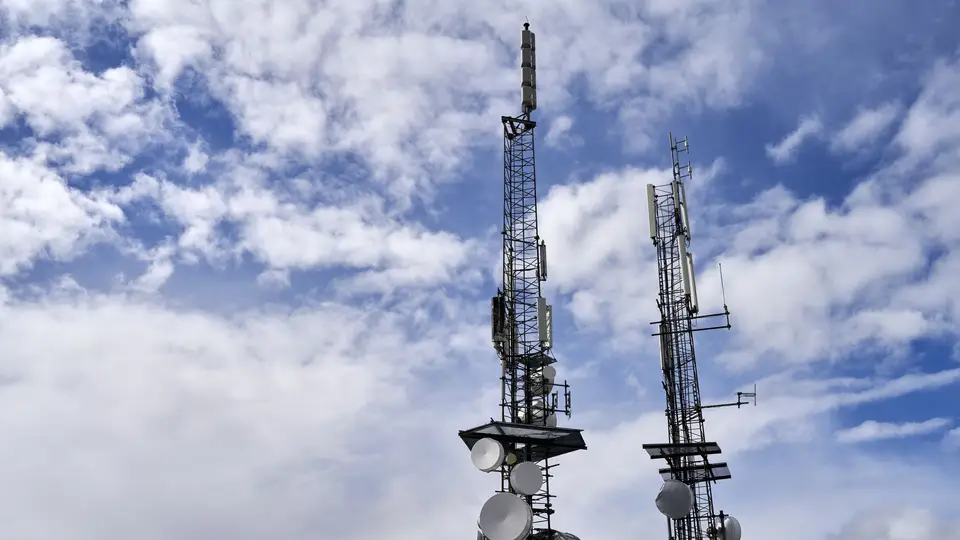
$207K
$207K Closed Across 14 Deals for a Telecommunications Provider
Since 2014, our telecommunications partner has been a trusted provider of cutting-edge telecommunication solutions.
Results from named client programs, written up in full. Results vary by program. All case studies.
Sources and notes
- Abstrakt telecom talk track, target accounts, decision-makers, triggers and qualification standards, as published on our Telecom page.
- Case studies: named client programs, linked above.
- The toolkit's general advice (scorecard, core questions, follow-up stages and the 30-day plan) is sales practice, not data.
