

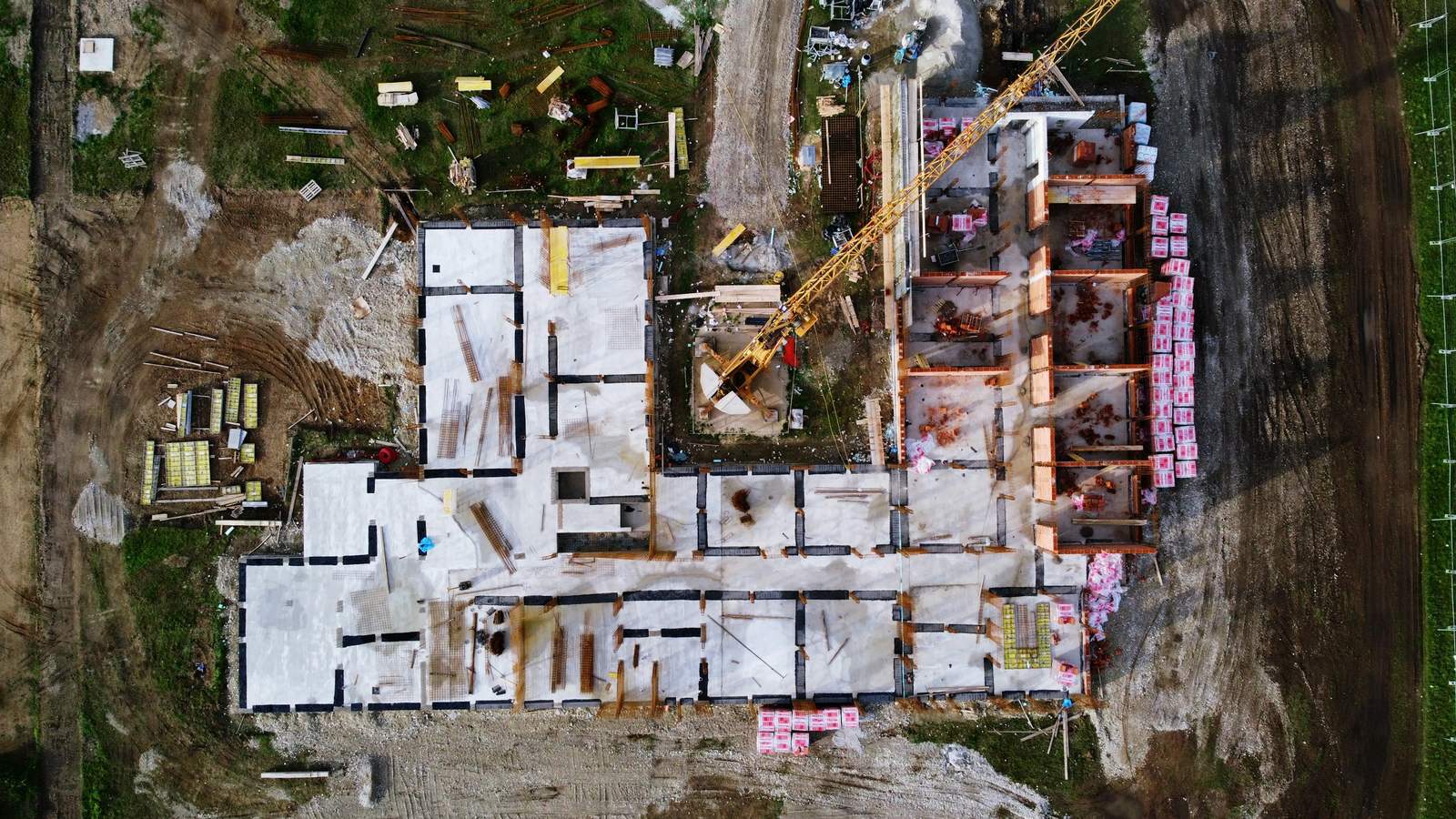
The best commercial construction leads never begin as a bid request. They begin as a line in a budget, written long before anybody is invited to price anything.
Most commercial contractors look for work in the same place at the same time: a bid list, alongside four other companies, with a scope somebody else wrote. By then the money is fixed, the specification is set, and the only remaining question is who will do it for least.
That’s not a lead. It’s an auction you were invited to, and the invitation went out to everybody.
The work was decided earlier, in two processes most contractors never see. Both are documented, both run in a fixed order, and both have a point where an outside contractor can still change the outcome.
In short
- Owner-driven work is decided in the budget. Designed work is decided in Design Development.
- By the time a project reaches procurement, the scope is written and you’re competing on price alone.
- Ask which fiscal year the property runs on and which phase a project has reached. Two questions, and they tell you whether you’re early or late.
Two routes, and neither of them is a bid list
Commercial work reaches a contractor down one of two paths, and they behave differently.
The first is the owner’s budget. A property manager or facilities director assesses the property, puts numbers against what is failing, sends the plan up for approval, absorbs whatever gets cut, and eventually releases the funded items. Repairs, replacements and building systems arrive this way.
The second is a designed project. An owner engages an architect, and the work moves through a sequence of phases before anybody bids anything.
The design phases, named by the people who set them
This sequence isn’t folklore. It’s written into the standard agreement between an owner and an architect.
The American Institute of Architects publishes B101, the Standard Form of Agreement Between Owner and Architect. Its 2017 edition divides the architect’s Basic Services into five phases: Schematic Design, Design Development, Construction Documents, Procurement, and Construction.
Worth noticing what the fourth phase is called. Procurement. Not decision, not selection, not design, but the administrative act of buying something whose nature was settled two phases earlier, which is exactly what a bid list feels like from the inside once you have seen the sequence written down.
| Phase | What is being settled | What a contractor can still influence |
|---|---|---|
| Schematic Design | Scope, layout, rough direction | Almost everything, and almost nobody is in the room |
| Design Development | Systems, materials, the specification | What gets specified. This is the phase that matters |
| Construction Documents | The drawings and specs others will price | Details and alternates, if you’re already known |
| Procurement | Who does it and for how much | Your price. Nothing else |
| Construction | Delivery, changes, administration | Change orders, and your reputation for the next one |
Every contractor competing on a bid list entered at phase four. The specification they’re pricing was settled at phase two by whoever was talking to the architect or the owner while it was being written.
Get specified, not invited
An invitation to bid is a compliment with no economic value. Being named in a specification is different, and it happens during Design Development because that’s when the specification is written.
Contractors and manufacturers who get specified do unglamorous things. They answer technical questions for architects without sending an invoice. They provide details and section drawings that get used. They flag a constructability problem early, which saves the design team a change later and buys a long memory.
“If it’s useful, I can put together a detail and a budget range for that assembly while you’re still deciding. No obligation, and you can hand it to whoever ends up bidding it.”
Some of that work ends up benefiting a competitor who bids the job you helped shape. Enough of it doesn’t, and the arithmetic is comfortably in your favor over a couple of years.
Get in before procurement
Abstrakt sets appointments with the owners, facilities directors, and property managers who fund commercial construction, so your team is in the conversation while scope is still being written. The walkthrough, the number, the proposal, and the contract are yours.
The other route: the budget
Plenty of commercial work never sees an architect. A roof fails, a lot needs rebuilding, a system reaches the end of its life, and the project lives entirely inside the owner’s budgeting process.
Capital and operational budgeting is a defined discipline for facility managers, and the International Facility Management Association maintains a body of knowledge on it. The practical shape is consistent: assess, cost, submit, absorb the cuts, release what survived.
What varies is when it starts, and that’s set by the fiscal year. Calendar-year owners and July-to-June institutions run the identical sequence six months apart, which is why a contractor working from their own calendar reliably calls at the wrong point.
“So I’m not calling at the wrong time, what fiscal year does the property run on, and roughly when does the budget go up for approval?”
Eight seconds. It converts a guess into a date.
Two questions that tell you where you stand
01
Is there an architect involved?
If yes, ask which phase it has reached. Design Development means you’re early enough to matter. Procurement means you’re pricing somebody else’s decisions.
02
Is this in the budget yet?
If not, your number can become the number. If it’s already funded, ask what the figure was, because that tells you what the scope will be shaped to fit.
Neither question sounds like selling, because neither one is. They’re the questions any contractor who has done this before would need answered before committing estimating time, and asking them out loud is itself a signal about who you’re.
What this means for how you spend the week
Stop treating bid lists as lead generation. Bid when it suits you, but a list you were invited to at procurement is the end of somebody else’s process, not the start of yours.
Build relationships with architects and engineers, not only owners. They write the specification. Most contractors never call them at all, which is why the ones who do get remembered.
Ask the fiscal year question on every property you touch. Write the answer down. It costs nothing and it’s the difference between calling at the right point and calling after the decision.
Do one piece of unpaid useful work a month. A detail, a budget range, a constructability note. It’s the cheapest way into a specification that exists.
When you’re genuinely too late
Sometimes you arrive at procurement and there was never an earlier door available to you. Bid it properly or decline it. Either way, do one more thing first.
Ask who is designing it and what else that owner has coming. A project you lose at phase four is worth something if it tells you who to know before phase two of the next one. That’s the only way a late lead pays for itself.
Frequently Asked Questions
How do you find commercial construction leads before they go out to bid?
Get into whichever process is deciding the work. For designed projects that means being known to the architect during Design Development, when the specification is written. For owner-funded work it means being in the budget before it’s submitted. A bid list reaches you at procurement, which is after both.
What are the phases of a designed construction project?
AIA B101-2017, the standard agreement between owner and architect, divides the architect’s Basic Services into five phases: Schematic Design, Design Development, Construction Documents, Procurement, and Construction. Procurement is the fourth of five, which is a useful reminder that bidding is late in the process and not the beginning of it.
What does it mean to be specified?
Your product, assembly or company is named in the construction documents others will price against. It happens during Design Development, and it’s earned by being useful to the design team before there’s any work to win.
What is a budget for a commercial building?
The list of work a property intends to fund, with a number against each item, submitted for approval and then cut to what the owner will pay for. Capital and operational budgeting is a recognized facility management discipline with its own body of knowledge. Work that’s not on the plan doesn’t happen that year.
Why does the fiscal year matter so much?
Because the budgeting sequence is identical everywhere and only the start date moves. Calendar-year owners and July-to-June institutions run six months apart, so a contractor working from their own calendar will consistently call after the decision was taken.
Should you still bid work you found on a list?
If the job suits you, yes, with clear eyes about what it’s. Then ask who designed it and what else that owner has coming. The value of a late lead is usually the relationship it points at, not the job itself.
Keep going
- Construction lead generation
- Best contractor lead generation companies
- What to say when you cold call a facility manager
- Outsourced SDR services
- Lead generation vs appointment setting
About this article
Jeff Winters is Chief Executive Officer at Abstrakt. Reviewed by Neil Erker, Chief Marketing Officer. Abstrakt sets appointments for commercial construction contractors and the rest of the trades, and the patterns here come from that calling.

Jeff Winters is the CEO of Abstrakt Marketing Group, a U.S.-based B2B lead generation and appointment-setting company that books qualified sales meetings for clients across the commercial trades, IT and managed services, manufacturing, and B2B services. He has spent his career building and running outbound sales programs at scale, and he breaks down what actually works in sales and lead generation on Abstrakt's podcast, The Grow Show.