


If you’re jumping into a sales career, you have to understand that sales call objections are just a part of the job. Unfortunately, not every lead in the sales pipeline is going to agree to a sales meeting after the first few cold calls or emails. While many sales reps view sales call objections negatively, it’s important to look at them through a different lens.
Sales objections give sales reps an opportunity to learn more about a prospect in the sales pipeline. And the more they learn, the more targeted their sales pitches can be when making a follow-up call or email. At the end of the sales funnel, what started off as an objection could very well turn up into a high-quality sales opportunity that has value to both the prospect and your company, increasing the likelihood of a long-lasting business partnership.
While sales call objections aren’t the ideal scenario for appointment setters, they can provide a lot of value if they know how to overcome them. Overcoming objections in sales development can be easier if you’re prepared ahead of time.
Four Main Types of Sales Objections
1. Budget
One of the most frequent sales objections is that prospects don’t have any money to spend on outsourced products or services. While money is a significant factor when selecting a provider, there are a few ways to handle pricing objections:
- If possible, break the price into smaller billing options. Today, many companies are offering smaller billing options for their customers. They know that money is tight for a lot of businesses right now, which is why they’re accepting a smaller amount of money more frequently than requiring clients to pay everything upfront.
- Focus on the value your product or service provides. The price of your product or service may be higher than competitors, but there’s a reason for that. For example, let’s suggest you’re a commercial cleaner providing additional cleaning routines for your clients, such as COVID-19 disinfection services. In this case, your service is worth more than your competitors because they don’t take advantage of these cleaning practices. While your competitors’ service costs may be cheaper, so are their cleaning routines.
2. Authority
When appointment setters call large-scale companies, it can be challenging to determine the decision-maker for a particular product or service. If a sales rep is directed to an employee who says they’re not responsible for a specific product or service, they should politely ask them if they know who the best point of contact would be. If they refuse to give them additional information, the sales rep may have to do further research to find a new decision-maker.
3. Need
Most prospects in the sales pipeline aren’t actively looking for business solutions if they don’t identify a problem in the first place. If they say they don’t need your company’s product or service, take this time to learn about the prospective business and their industry as a whole. Sales development representatives (SDRs) can use this knowledge to your advantage to give the prospect additional insight that they’re able to understand from their perspective.
4. Urgency/Timeline
If a prospect doesn’t think they need your company’s product or service, they don’t have the urgency to see the value of what you have to offer them. However, sales reps can help prospects understand the value of your company’s products or services by asking them about their pain points and explaining how your company can help relieve them.
The Best Way to Handle Sales Objections
The best approach to handling sales objections is for a sales rep to actively listen to the prospect’s concerns and respond with empathy and understanding. They should acknowledge the objection and ask open-ended questions to gain a deeper understanding of their needs and motivations.
Once an SDR restates the prospect’s objection, they should offer them a solution that directly addresses the objection and emphasizes the unique benefits and value of your company’s product or service. An SDR should be transparent and honest about any limitations or drawbacks and always follow up with additional information or resources if needed.
Last but not least, it’s essential that SDRs remain positive, professional, and respectful throughout the process, focusing on building a long-term relationship with the prospect based on trust and mutual respect.
Most Common Sales Objections (And Rebuttals)
Objection 1: “We don’t have a need for your product or service.”
When a decision-maker says they don’t have a need for your company’s product or service, use this time to ask them about their current solution. By gathering this information, you have the opportunity to learn about their priorities and potentially where their pain points lie.
Once they tell you about their current process, discuss your company’s product or service benefits and how it could make their day-to-day operations more straightforward.
For example, here’s a sample response:
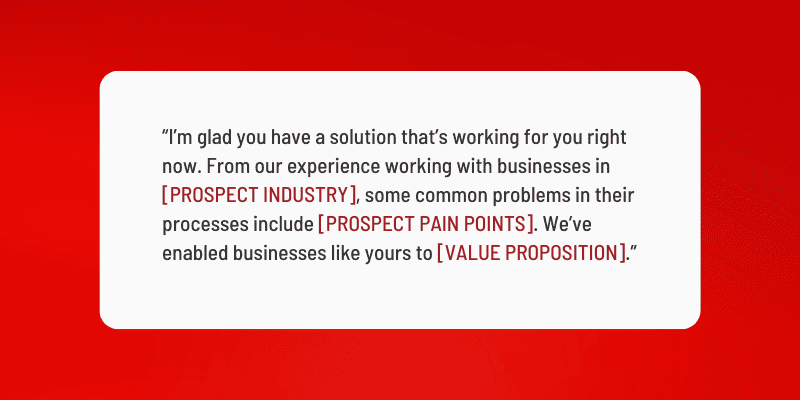
This provides additional value for the lead in the sales pipeline and shows them that your company’s product or service would benefit their business.
Objection 2: “Send me some information, and I’ll get back to you.”
When a lead says, “Just send me some information,” this is neither good nor bad. However, it can be difficult to decipher what it means without proper discovery. A decision-maker could be saying this to get you off the phone, or they could just be busy and interested in learning more on their own time.
While emails are great for nurturing leads, pitching prospects over the phone is ideal because it allows you to talk one-on-one and further pique their interest. When a decision-maker gives you this objection, consider the following response:
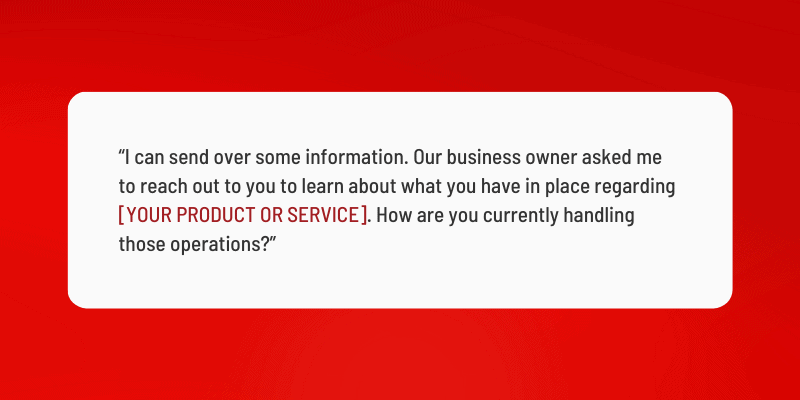
However, if you’ve already discussed your company’s product and service offerings, then jump right into pitching the sales appointment. Consider using one of these responses:
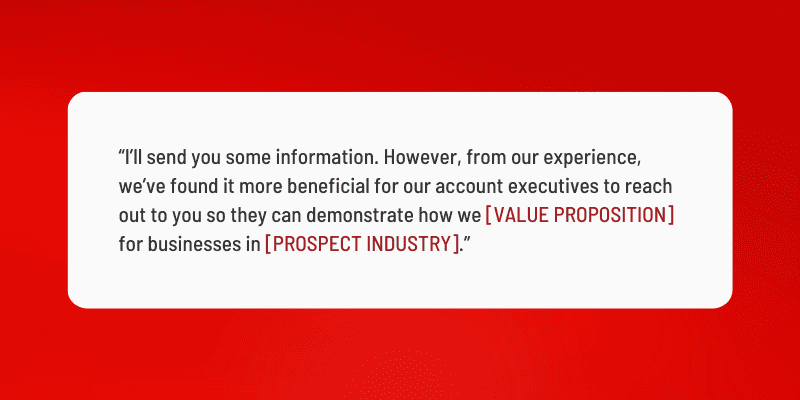
Then, offer up two dates and times for an account executive to reach out to them within the next few days.
If you want to gather more information and qualify the lead before setting the appointment, consider the following responses:
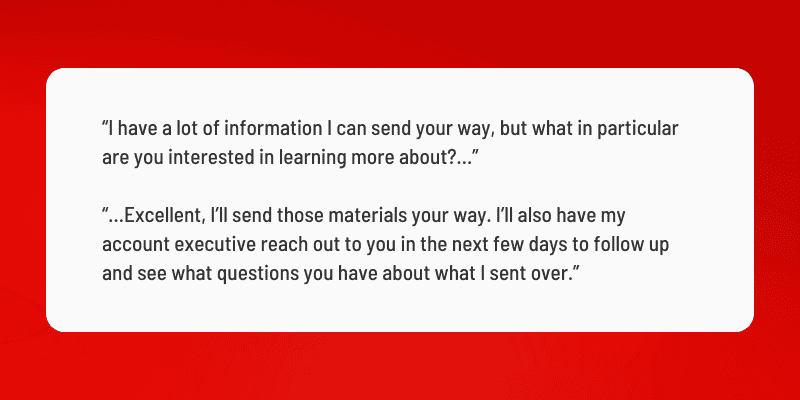
Then, pitch them two dates and times for an account executive to reach out to them.
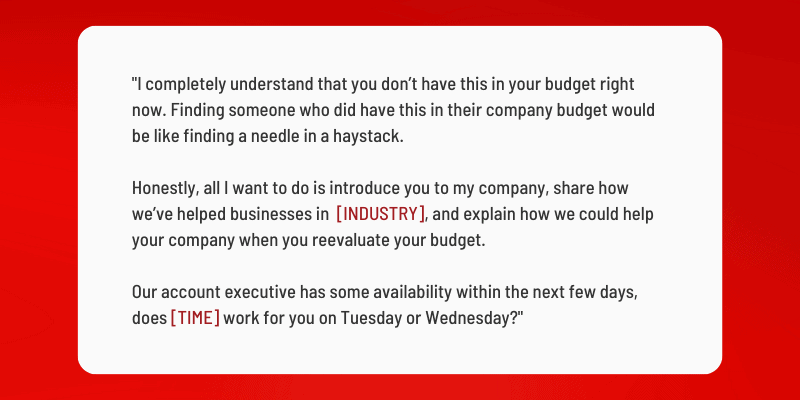
Objection 3: “We don’t have the money for that right now.”
Most likely, leads in the sales pipeline won’t have your company’s product or service solution listed in their quarterly budget. If a decision-maker makes this objection, it could be because this is the first time they’ve heard of your solution, so they haven’t considered spending money on it yet.
When overcoming this objection, it’s essential to be considerate of their budget and encourage them to think about long-term ROI for their business solution. Here’s a potential response you can use for this objection:
Objection 4: “I’m not the one who handles this.”
Pitching the wrong decision-maker happens all the time. When this happens, it’s important to be friendly and continue to carry on a conversation with the prospective business. This allows you to leave a good impression on the person you’re talking to.
If an individual says they’re not the right point of contact, consider following this talk track:
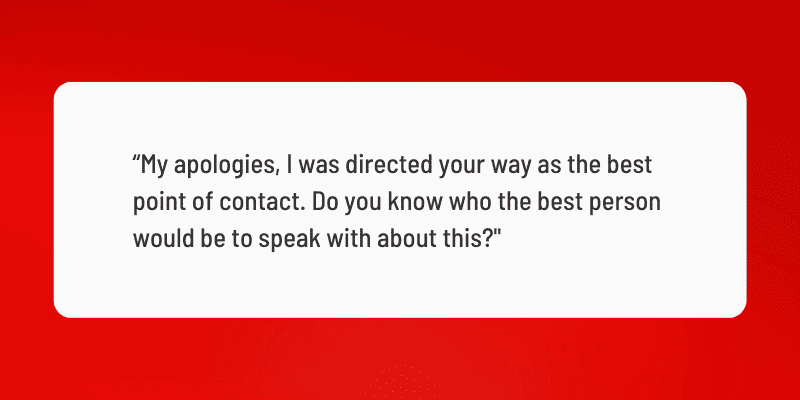
If they refuse to give you a name, consider asking which department this product or service would fall under. However, if they still don’t want to provide the information, ask if there’s an email you can send marketing materials to and have it directed to the right person.
Objection 5: “We’re happy with our current solution.”
If you’re a commercial service company, more likely than not, the prospect already has a solution in place. If they didn’t have a commercial cleaner, roofer, or HVAC tech, they probably wouldn’t even be in business.
While they may have a current solution in place, it doesn’t mean they wouldn’t change anything about their current product or service provider. When a decision-maker gives you this objection, use your competitive industry knowledge to highlight what differentiates your business from competitors.
First, you should identify if their current solution is in-house or an outsourced vendor. If it’s an outsourced company, ask them who they’re working with. To gather more information about the vendor, consider asking the following questions:
- What do you enjoy about your provider’s products and services?
- Where do you feel like your current solution could improve?
- What would it take for you to change your current solution?
By asking these questions, you have the chance to learn the pros and cons of their current setup.
After asking these questions, shoot for the sales appointment:
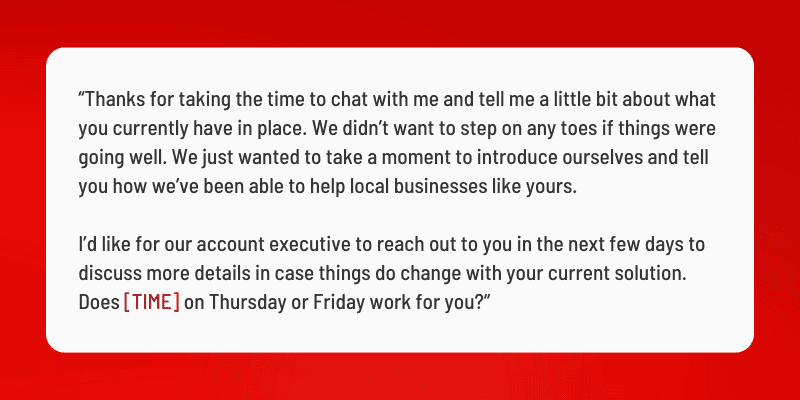
If a decision-maker says they won’t review their current solution until next quarter, ask for an email so you can send relevant information to them in the meantime. Then, tell them that you’ll follow up with them when they’re closer to reviewing those contracts. This ensures that the appointment you set in the future is high quality and makes sense with their timeline.
Key Takeaways
While most sales reps fear sales objections, there are ways to get around them and add more value to your sales pitch. Dealing with objections in sales is a crucial skill that every sales rep should have, and it’s easier if you prepare for it ahead of time.
At Abstrakt Marketing Group, our SDRs are well-equipped to overcome common objections in sales and provide long-lasting value to prospects in the sales pipeline. If you need help handling objections and converting more prospects into sales opportunities, contact the lead generation experts at Abstrakt!

Jeff Winters
Jeff Winters is the Chief Executive Officer (CEO) of Abstrakt and former CEO of Sapper Consulting, acquired by Abstrakt in 2021. A seasoned entrepreneur, Jeff founded Sapper in 2013 and led it to a successful acquisition. With expertise in sales and revenue growth, he drives strategies that deliver results. As co-host of The Grow Show, Jeff shares practical insights and real stories from experienced leaders to help entrepreneurs grow. Tune in weekly on Spotify, Apple Podcasts, and more!