
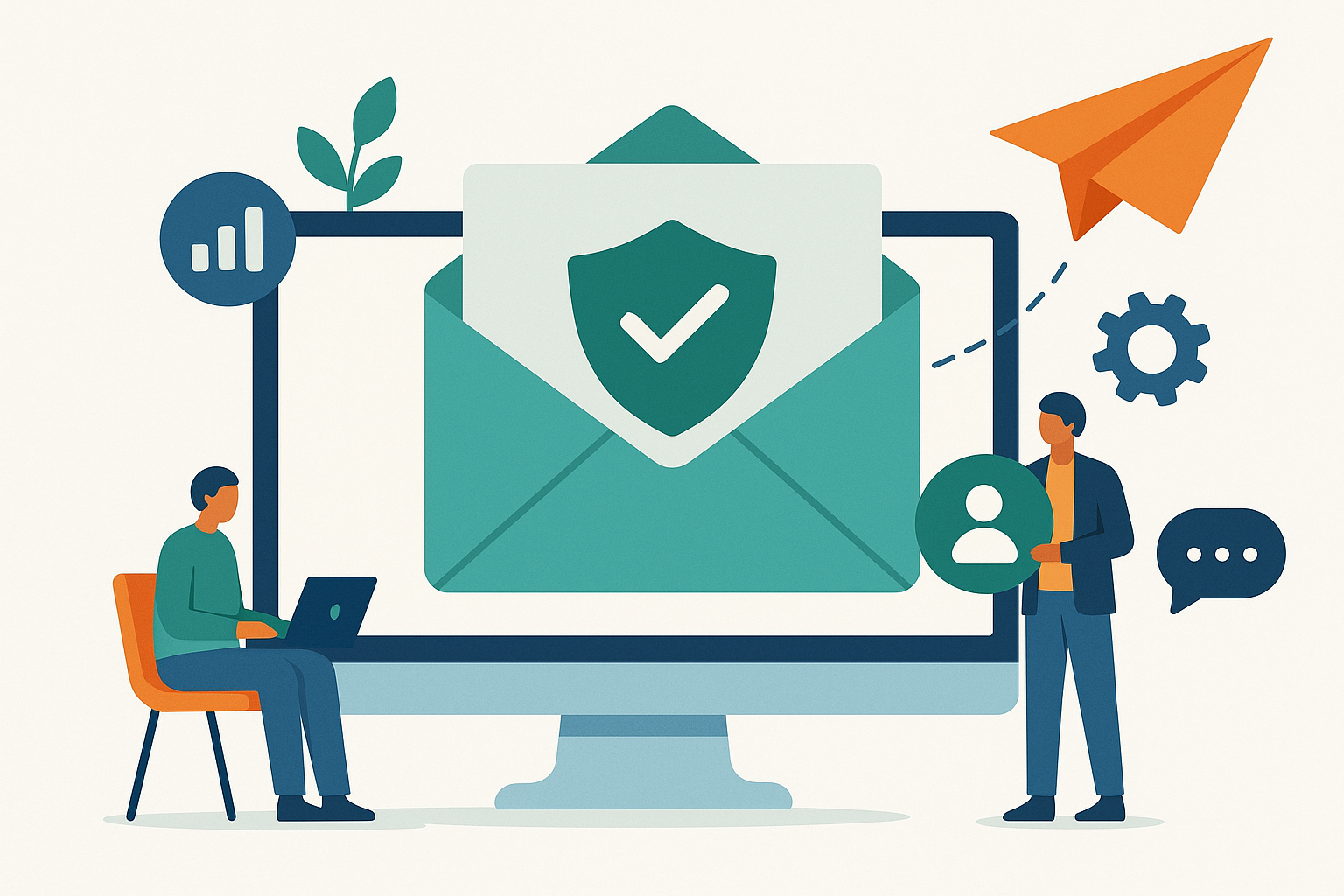
Insurance is a relationship-driven business. People rarely buy a policy after one interaction. They research, compare, ask questions, and often delay a decision until renewal or life changes prompt action. That makes email marketing one of the most powerful tools insurance agencies can use to build trust, stay top of mind, and move leads down the funnel.
But not all email marketing is created equal. To be effective, insurance email campaigns need to be well-timed, highly personalized, and aligned with your agency’s service lines. Whether you sell life, health, home, auto, or commercial policies, an intelligent email marketing strategy can help you attract, educate, convert, and retain clients across the policy lifecycle.
This guide will walk you through how to use email marketing to nurture insurance leads intelligently, including:
- Structuring drip campaigns by product type
- Using personalization and behavioral triggers
- Applying cross-sell and upsell tactics
- Measuring success with key KPIs
- Automating campaigns through your CRM or marketing platform
- Leveraging email design and content strategy for long-term results
Contents
- 1. Why Email Marketing Is Critical for Insurance Agencies
- 2. Step 1: Segment Your Audience for Maximum Relevance
- 3. Step 2: Build Drip Campaigns for Different Policy Types
- 4. Step 3: Add Personalization and Behavioral Triggers
- 5. Step 4: Cross-Sell and Upsell Existing Clients
- 6. Step 5: Automate with CRM and Email Marketing Tools
- 7. Step 6: Track Key Metrics and Optimize
- 8. Step 7: Enhance Content and Design for Better Engagement
- 9. Bonus Tip: Pair Email with Other Channels
- 10. Final Thoughts: Smart Email Drives Smart Growth
Why Email Marketing Is Critical for Insurance Agencies
Email gives you a direct line to your prospects and clients. Unlike social media or paid ads, it’s a channel you control — with no algorithms in the way. Email allows you to show up in someone’s inbox with a helpful message exactly when they are ready to take action.
Benefits of Email Marketing for Insurance Agencies:
- Low cost per contact
- Easy to personalize by audience segment
- High ROI when paired with drip automation
- Enables cross-selling without cold calls
- Keeps your agency top-of-mind throughout the buyer journey
- Builds long-term trust through consistent communication
For insurance agencies looking to scale efficiently, email marketing is one of the few channels that supports both acquisition and retention at scale.
Next, let's talk about email, and how it can help you fill your sales pipeline. The number one thing you have to know about using email for sales and marketing in general is deliverability. It didn't always used to be that way. Way. No one knew the word deliverability a decade ago, and now anybody who has anything to do with sales prospecting or marketing needs to be intimately familiar with deliverability. So what does that mean? Effectively, it means the ability for you to get your email to someone else's inbox, not their junk folder, not their other folder. It's their inbox, and it's harder today than it was yesterday, and it'll be harder tomorrow than it is today. You have to observe some best practices in this area that are constantly changing, but you have to observe best practices in this area to make sure you are at least set up for success. Number one, domains. You have to have domains that are on Gmail and Outlook. Let me say it again. You have to have Outlook domains and Gmail domains. You have to have a lot of senders on each domain, so like around fifty would be a best practice. And the reason for that is because you need Gmail and Outlook receiving those emails on behalf of prospects that you're sending to to think that you're at a big company, and they know how many senders are on each domain. So if you set up a domain, for example, and you have one sender on that domain, then Gmail Outlook is gonna know, this isn't a real company. This is ridiculous. We're gonna send this to spam. When it comes to spam, the biggest change that's happened over the last four months is Microsoft Outlook has gotten really stringent on what it lets into its inbox. So it's really, really changed, and you have to be extremely deliberate, especially with Microsoft inboxes in terms of how many you're sending on a daily basis, your domain to sender ratio, how the emails look and feel, those are all of increasing importance when it comes to Microsoft. Next, you gotta hook it up to a system. In this day and age, typically what we're seeing more advanced sales prospectors use are Instantly, SmartLead, Pypel. Those are three in vogue right now, and the tool you select is incredibly important because as email marketing changes, as deliverability changes, you really need to be aligned with the right tool that is hyper focused on sales prospecting, because then they won't divert resources to other products in their mix. You have to have a company hyper focused on sales prospecting. So they divert all the resources for building their product to you and your purpose, which is using their tool to prospect for sales, and it's all gonna be about deliverability. Next, the copy. Very short, very relevant. I'm gonna keep it under a hundred and twenty five words. I'm gonna keep the paragraphs. Try to be one to two lines max. I'm also gonna have some sort of social proof, and I'm gonna end with a soft call to action. I'm generally not starting with, hey, would you wanna have a meeting? It's sort of like, would you be, interested to learn more? Is this something that could be of interest? How many emails in a sequence? Right now, I'd say a pretty quick sequence in terms of days, and maybe three to five emails. So three to five emails inside of thirty days, let that prospect cool off for ninety days, and start another sequence. That's generally sort of my rule of thumb as we sit here today. Next, inboxing. Who is watching the emails that are coming back? Because those are golden. What do you do with them? Most people would say, somebody sends me an email after I send them a sales prospecting message. I respond. I probably wouldn't I'd probably pick right up the phone. That's the way I would do it. I don't like the secondary response to an email. I like I get an email. Hey. I might be interested. Boom. Pick up the phone. Hey. Just saw you shot me a note. Didn't have time to get back. Thought maybe I'd give you a call. It would be easier. Pick up the phone and schedule that meeting. And then go through the confirmation process. Schedule a meeting. Send out the invite while you're on the phone. Confirm, have them accept while you're on the phone, and then make sure you're going through whatever rigorous confirmation process you're going through after that. The person you would have manage your email today is very different from the person you'd have manage your email campaigns five years ago. Five years ago, you'd probably have someone with more of a marketing background managing your outbound email campaigns. Now you need somebody with more of a technology background. Sounds odd, but the name of the game is getting an email to an inbox. You know before, there were so many emails in your inbox, it was about how do you use your marketing brain to stand out in that inbox so that someone would open your email, read your email, reply to your email. Now it's different. The act act of just getting there is the most important hurdle to jump over. The content has almost become secondary. Sounds crazy, but true. So I am leaning heavily on my IT team, on my technology team, on my development team to ensure I've got the infrastructure architecture in place to ensure I'm giving myself the highest probability of getting to a prospect's inbox. I think in sum, when it comes to email, things are totally different than they were three to five years ago, which is bad in the sense that it's harder, but it's good in the sense that a lot of people have just totally given up, and you don't have to. Try using those tips. Let me know how it goes.
Step 1: Segment Your Audience for Maximum Relevance
The first rule of email marketing is: never send the same email to everyone. Segmentation is what allows you to speak directly to a lead’s unique needs, concerns, and policy interests.
Key Segments for Insurance Email Campaigns:
- New leads (from web forms, events, or referrals)
- Clients by policy type (auto, home, life, etc.)
- Clients approaching renewal
- Policyholders without cross-coverage
- High-net-worth clients
- Commercial vs personal lines
- Leads based on demographics or family status
Your email platform or CRM should allow you to tag and segment leads automatically based on their form submissions, product interests, or previous purchases.
Pro Tip: Add custom tags to your contacts based on the policy lifecycle stage. This allows for hyper-personalized content that improves engagement and conversion.
See How Abstrakt Generates Qualified Insurance Leads >>
Step 2: Build Drip Campaigns for Different Policy Types
Drip campaigns are a series of emails sent at timed intervals based on a user’s actions or profile. They allow you to automate follow-up in a way that feels helpful rather than pushy.
Example 1: New Auto Insurance Lead
Email 1: Welcome & Introduction Subject: Thanks for checking out our auto coverage options Content: Brief intro to your agency, what makes you different, and what they can expect next CTA: Download an auto coverage checklist
Email 2: Policy Education Subject: What does your auto policy really cover? Content: Explain basic vs comprehensive coverage, what’s required vs optional CTA: Book a 10-minute call to review your current policy
Email 3: Comparison Guide Subject: Are you overpaying for auto insurance? Content: Offer a rate comparison or savings analysis CTA: Submit your current policy for review
Email 4: Customer Testimonial Subject: How Sarah saved $420/year with [Your Agency] Content: Share a short success story with relatable context CTA: Start your quote now
Email 5: Follow-Up Offer Subject: Let’s make this easy Content: Share a one-click quote form or bundled pricing offer CTA: Request instant quote
Example 2: Life Insurance Nurture Sequence
Email 1: Education First Subject: Is life insurance right for your family? Content: Overview of why and when people get coverage CTA: Take a quick quiz to see what fits your needs
Email 2: Product Comparison Subject: Term vs Whole Life — Which one fits you best? Content: Pros and cons with simple visuals CTA: Schedule a coverage consultation
Email 3: Client Story Subject: Why Mark made the switch to permanent coverage Content: Highlight peace of mind and long-term value CTA: Get a personalized quote
Email 4: Objection Handling Subject: Think life insurance is too expensive? Content: Share options for any budget and explain ROI over time CTA: Book a free planning session
Email 5: Urgency Message Subject: Lock in rates while you’re young and healthy Content: Use age-based rate examples to show potential savings CTA: See your rate now
Bonus Campaign: Commercial Insurance Drip
- Address industry-specific risks
- Provide downloadable guides (e.g., workers’ comp checklist)
- Highlight compliance deadlines or renewal windows
- Feature case studies of businesses you’ve helped
- Invite prospects to a “business insurance checkup” call
Each campaign should have a clear start, end, and goal — whether that’s booking a meeting, submitting a form, or simply moving to the next funnel stage.
Here's two tips to handle prospects who are on the verge of ghosting you. Tip number one, it's an email. It's my favorite email. It's did I drop the ball? This is used for prospects where they're not terribly responsive but they were interested. Hey prospect name. Did I drop the ball question mark? Thought we had some great inertia after our last call. Really enthusiastic about the partnership but I wanna make sure you don't need anything else from me. Period. Thanks. Your name. That's email number one. If that doesn't work and you've made some calls and you wanna send another email, here's email number two. Close the file. Hey prospect name. Is it time I close the file? Question mark. Really was excited about a potential partnership but it sounds like this may be a back burner item for you and the team. Is it best if I circle back in six to eighteen months question mark? Thanks. Your name. Use those two emails and you will get ghosted a whole lot less.
Step 3: Add Personalization and Behavioral Triggers
Generic email blasts rarely convert. Personalized, behavior-based campaigns dramatically increase engagement.
Ways to Personalize Your Emails:
- Use the recipient’s first name
- Reference policy type or interest
- Trigger emails based on:
- Form completions
- Page visits (e.g., someone views your “Homeowners Insurance” page)
- Email clicks (e.g., clicked on “compare rates” link)
- Missed renewals or lapsed policy dates
- Downloaded lead magnets (e.g., “Home Coverage Essentials” guide)
Example: If a prospect clicks a link about umbrella coverage in one of your emails, you can trigger a follow-up sequence educating them on liability limits and bundled pricing options.
Behavioral emails drive higher open and click rates because they feel timely and relevant.
Learn How We Use Cold Email to Drive Sales >>
Step 4: Cross-Sell and Upsell Existing Clients
Your current book of business holds massive untapped value. Email marketing is a low-pressure way to introduce other products and deepen relationships.
Cross-Sell Campaigns:
- Homeowners with no auto coverage
- Life insurance holders without disability or long-term care
- Commercial clients without cyber or umbrella liability
- Auto clients without renters insurance
- Group health clients without supplemental options
Sample Subject Lines:
- “Most of our auto clients save more when they bundle home, too”
- “Do you have the right protection for life’s curveballs?”
- “Have you considered coverage for lost income or long-term care?”
Upsell Tactics:
- Add riders to life policies
- Offer higher liability limits during renewal season
- Promote usage-based auto programs for safe drivers
- Highlight policy gaps based on age, income, or life stage
- Encourage higher deductibles with premium savings examples
Make cross-sell campaigns feel like a service — not a sales pitch.
Thank you so much, Ryan, for joining us today. Ryan of SureLife Insurance. I first just wanted to ask you about the beginning of your partnership with Abstract. What was the problem you were trying to solve? Being in the insurance business, specifically health insurance, it's very hard to penetrate and get into an account because they have pretty entrenched relationships. You know, I struggled with it myself personally, cold calling, marketing. So I figured, you know, probably best to outsource to professionals whose only job is to do that, so I'm getting in front of qualified appointments. What did you like most about the partnership with Abstract? Well, I mean, I've worked with, you know, dozens of of vendors in the past that, you know, we'll we'll just call them appointment setters. And the nice part about Abstract and what drew me to it initially was you guys are all all encompassing, so we're hitting hitting the prospect from every angle. What would you say to a prospective partner, that we've just set a meeting up with and they're gonna hear about Abstract? What what advice would you give them if they're looking to take the leap? One thing I absolutely love is a lot of the collateral material Abstract has has produced for us. And the great part with Abstract is it's really an investment in something you're either growing or dying. The only way to grow is is to get new prospects in the door.
Step 5: Automate with CRM and Email Marketing Tools
You don’t need to manually send each email. With the right tools, you can set up intelligent workflows that nurture every lead automatically.
Recommended Tools:
- HubSpot: Robust automation and segmentation
- ActiveCampaign: Affordable, intuitive for small agencies
- Zoho Campaigns: Great CRM + email integration
- Mailchimp: Simple list building and automation for startups
- AgencyBloc or RadiusBob: Built for insurance-specific needs
These tools allow you to:
- Tag leads by source or interest
- Trigger emails based on events
- Score leads based on engagement
- Track opens, clicks, replies, and conversions
- Assign tasks to producers when a lead shows intent
Advanced Automations:
- Auto-reminders before renewals
- Welcome series for new clients
- Feedback surveys post-claim or renewal
- Birthday or anniversary campaigns
- Lapsed-policy winback sequences
Automation frees your team to focus on closing, while the system nurtures leads in the background.
Step 6: Track Key Metrics and Optimize
Email marketing is only effective if you’re measuring performance and making changes. Regularly review campaign metrics to identify what’s working and where to improve.
Metrics to Watch:
- Open Rate: Are your subject lines engaging?
- Click-Through Rate (CTR): Are people clicking to learn more?
- Conversion Rate: Are leads booking calls or requesting quotes?
- Unsubscribe Rate: Are you targeting the right message to the right segment?
- Bounce Rate: Is your list clean and verified?
- Lead-to-client conversion: Are nurtured leads converting faster?
- Revenue per email: Which sequences are generating the most value?
Run A/B tests on subject lines, CTAs, send times, and content formats to continually improve performance.
Step 7: Enhance Content and Design for Better Engagement
Design and copy go hand in hand in email marketing. Use clear, scannable formatting with short paragraphs, bullet points, and visual hierarchy.
Content Best Practices:
- Use a conversational tone — write like a helpful advisor
- Focus on benefits, not just features
- Include testimonials or client quotes
- Embed FAQs to handle objections proactively
- Offer real value (checklists, calculators, guides)
Design Tips:
- Use responsive templates for mobile
- Keep color scheme consistent with your brand
- Include a logo and professional header
- Use CTA buttons, not just text links
- Limit emails to 1–2 CTAs max
Every email should look and feel like it came from a trusted expert — not a mass email blast.
Bonus Tip: Pair Email with Other Channels
Email works even better when it’s part of a multi-channel strategy. Use email to support:
- PPC campaigns: Follow up on form submissions
- Social media ads: Reinforce brand familiarity
- Direct mail: Email before or after postcards to drive action
- Referral outreach: Stay top-of-mind with clients who can refer others
- Webinars: Send reminders, replays, and post-event offers
Use consistent branding and messaging across all channels to maximize results.
Final Thoughts: Smart Email Drives Smart Growth
Email marketing for insurance agencies is not just a “check-the-box” tactic — it’s one of the smartest, most cost-effective ways to move leads through the funnel, retain clients longer, and expand the value of each account.
When done right, it becomes your 24/7 producer — educating leads, building trust, surfacing intent, and prompting action without lifting the phone.
Want to see how your email marketing strategy stacks up?
Book a campaign review call with Abstrakt. We’ll evaluate your current email flow, identify gaps, and help you build a lead-nurturing engine that supports growth across every policy line.

Jeff Winters
Jeff Winters is the Chief Executive Officer (CEO) of Abstrakt and former CEO of Sapper Consulting, acquired by Abstrakt in 2021. A seasoned entrepreneur, Jeff founded Sapper in 2013 and led it to a successful acquisition. With expertise in sales and revenue growth, he drives strategies that deliver results. As co-host of The Grow Show, Jeff shares practical insights and real stories from experienced leaders to help entrepreneurs grow. Tune in weekly on Spotify, Apple Podcasts, and more!