
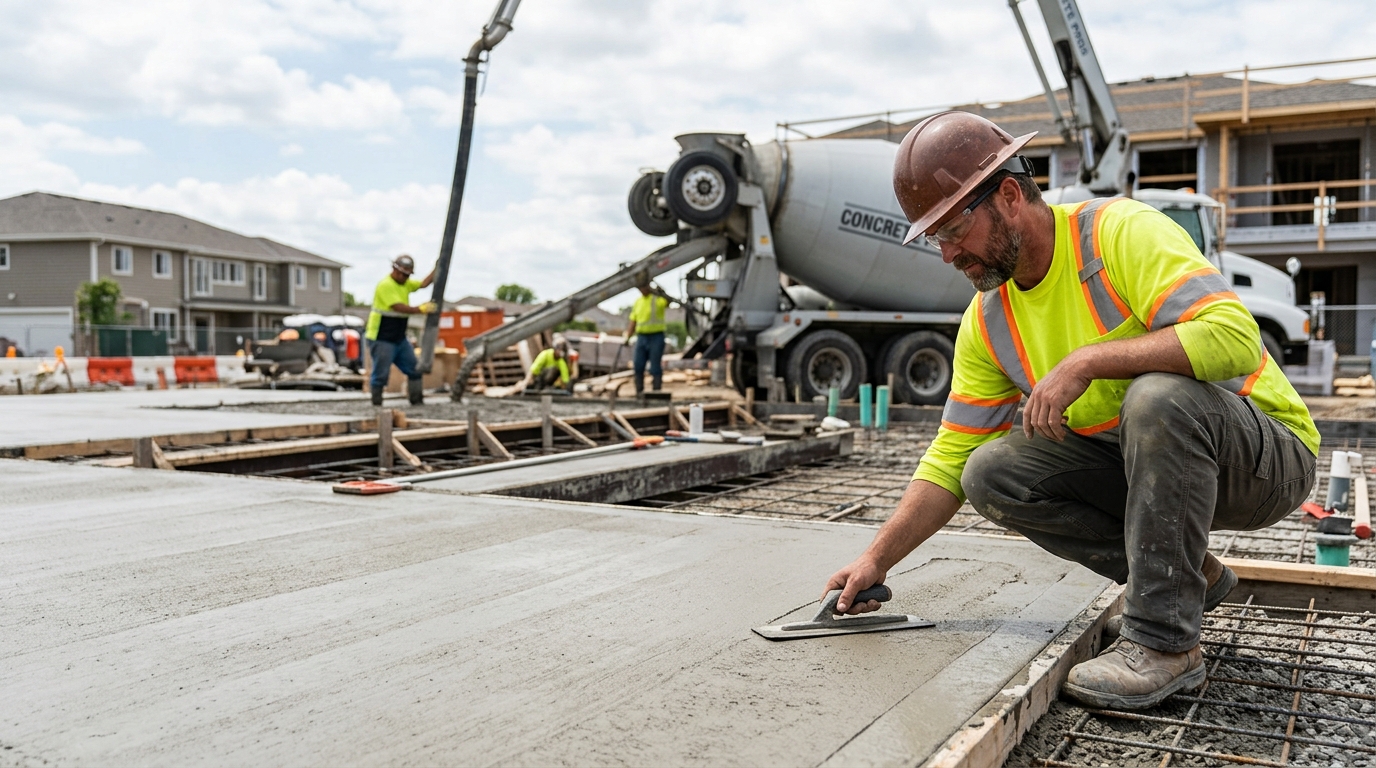
Most commercial concrete contractors are excellent operators. They pour foundations, complete large flatwork projects, and deliver on tight commercial timelines. What holds them back from growing is rarely the quality of their work. It is the absence of a consistent system for finding and closing new commercial clients.
The commercial concrete sales cycle is not like residential work. You are not waiting for a homeowner to search Google. You are trying to reach property developers, general contractors, facility managers, and municipal procurement contacts who plan projects months or years in advance. By the time a commercial concrete opportunity hits a public bid board, the relationship has often already been decided.
This guide covers how commercial concrete contractors can build a reliable, repeatable lead generation system for B2B work, from digital infrastructure through outbound outreach and follow-up.
Contents
- 1. Why Commercial Concrete Lead Generation Requires a Different Approach
- 2. Building a Commercial-Grade Digital Foundation
- 3. Outbound Lead Generation for Commercial Concrete Work
- 4. Converting Commercial Concrete Leads Into Contracts
- 5. When to Work With a Commercial Lead Generation Partner
- 6. Frequently Asked Questions
- 6.1. How is commercial concrete lead generation different from residential?
- 6.2. What types of organizations are the best targets for commercial concrete contractors?
- 6.3. How long before outbound lead generation produces results for concrete contractors?
- 6.4. Should commercial concrete contractors use shared lead platforms like Angi or HomeAdvisor?
- 6.5. What makes a strong commercial concrete proposal?
- 6.6. When does it make sense to hire a lead generation company for commercial concrete work?
- 7. Final Thoughts
Why Commercial Concrete Lead Generation Requires a Different Approach
Residential lead generation is largely reactive. You show up in search results, someone fills out a form, you send an estimate. Commercial concrete sales are proactive. The contractor who wins the parking garage, the commercial site prep, or the warehouse floor contract is usually the one who started the conversation first.
Commercial buyers evaluate concrete contractors on capacity, safety record, timeline reliability, and ability to work within a general contractor’s schedule. They are not comparison shopping on price alone. They are looking for a contractor they can trust on a project worth $100,000 or more. That trust is built through consistent visibility, professional outreach, and proof of relevant experience before an RFP is ever issued.
The contractors who grow year over year in commercial concrete are not doing more marketing. They are doing more targeted outreach to the right people at the right organizations, and they are staying in front of those contacts consistently until the timing is right.
Building a Commercial-Grade Digital Foundation
Your website and digital presence support your outbound efforts. When a property manager or general contractor receives an outreach email from your team, the first thing they do is Google you. What they find either validates the conversation or ends it.
What Commercial Buyers Look for on Your Website
A commercial concrete contractor’s website needs to communicate capability and credibility, not just list services. Project case studies with scope, square footage, timeline, and client type carry far more weight than a generic services page. Specific project types matter: if you specialize in tilt-wall construction, post-tension slabs, or industrial flatwork, that needs to be front and center.
Include any relevant certifications, bonding and insurance information, and safety records. Commercial buyers, especially general contractors and facility managers, are managing liability. The easier you make it to verify your qualifications, the faster they move to the next conversation.
Local and Commercial SEO for Concrete Contractors
Organic search still drives inbound inquiries for commercial concrete work, particularly for searches like “commercial concrete contractor [city]” or “concrete flatwork for industrial facilities.” Dedicated service pages for each project type, optimized with location and buyer-specific language, capture these searches over time.
SEO for commercial concrete takes six to twelve months to compound meaningfully. It is a long-term asset, not an immediate lead source. Build it alongside your outbound program, not instead of it.
Outbound Lead Generation for Commercial Concrete Work
Outbound is where commercial concrete contractors create pipeline instead of waiting for it. The core of a commercial outbound program is identifying the right target accounts and reaching the right contacts within those organizations through a coordinated, multi-touch approach.
Who to Target
The buyer for commercial concrete work depends on project type. General contractors are the primary target for subcontract work on new construction and renovation projects. Property management companies and REITs control maintenance and improvement budgets for commercial portfolios. Facility managers at large industrial or institutional sites approve concrete repair, flatwork, and infrastructure work directly. Municipal and government procurement contacts manage contracts for public infrastructure and site work.
Build a target account list around the organizations that match your project size, geographic footprint, and service capabilities. A concrete contractor specializing in industrial flatwork should be targeting distribution centers, manufacturing facilities, and large logistics operations, not retail strip malls.
Multi-Channel Outreach
Reaching commercial decision-makers requires persistence across multiple channels. A single cold email rarely moves a relationship forward. A coordinated sequence that includes phone calls, email, and LinkedIn contact over several weeks creates the visibility that keeps your company top of mind when a project need emerges.
Cold calling remains one of the most effective channels for commercial concrete outreach specifically because project timing is so unpredictable. A phone call catches a prospect in the week they just got a pavement assessment back or received budget approval for a facility upgrade. Email and LinkedIn keep your name in front of them during the months when nothing is moving.
How Long It Takes
Commercial concrete lead generation operates on a longer timeline than residential. Expect 60 to 90 days before outbound outreach produces consistent first conversations. Expect six to twelve months before a repeatable pipeline of commercial opportunities develops. The contractors who stop outreach after 60 days because nothing closed yet are the ones who stay stuck in the feast-or-famine cycle. The ones who commit to a 12-month program build something durable.
Converting Commercial Concrete Leads Into Contracts
Generating conversations is half the equation. Converting them into contracts requires a professional sales process that matches the expectations of commercial buyers.
Professional Proposals Built for Commercial Buyers
A commercial concrete proposal is a sales document, not a price sheet. The organizations spending $50,000 to $500,000 on a concrete project expect a proposal that outlines scope in detail, specifies materials and mix designs, addresses sequencing and site logistics, and includes timeline, warranty, and insurance documentation.
Contractors who send a one-page estimate with a total dollar amount lose to contractors who send a complete proposal package. The investment in a professional proposal template pays back on every bid submitted.
Follow-Up Systems That Prevent Pipeline Leakage
Commercial buyers go quiet. Budget cycles shift. Projects get pushed. That does not mean the opportunity is dead. It means your follow-up system needs to stay active on a cadence that matches commercial project timelines.
A structured follow-up sequence for commercial concrete prospects should include contact at two weeks, five weeks, and three months after the initial proposal. Each touch provides a reason to re-engage, whether that is a relevant project you recently completed, a change in material pricing, or simply checking in on their project timeline. Contractors who follow up consistently recover a meaningful percentage of opportunities that would otherwise go cold and never close.
Referral Partnerships with General Contractors
A strong relationship with two or three active general contractors in your market can generate more commercial concrete work than any single marketing program. GCs need reliable concrete subs. When you deliver on schedule, communicate proactively, and make their job easier, you become the contractor they call first on every applicable project.
Approach GC relationships as a long-term investment. Show up professionally, bring your project portfolio, and be specific about the work types and project sizes where you add the most value. One strong GC relationship can be worth $200,000 or more in annual revenue.
When to Work With a Commercial Lead Generation Partner
Building an outbound program internally requires dedicated time, tools, a target list, trained callers or outreach staff, and consistent management. Many commercial concrete contractors reach a point where the internal capacity to run a consistent outbound program does not exist alongside the operational demands of running projects.
A commercial lead generation partner handles target list building, outreach execution, appointment setting, and reporting, freeing your team to focus on estimating and project delivery. The key is finding a partner with experience in commercial construction and paving sales, not a generalist that treats your business like a software company.
Evaluate any lead generation partner on exclusivity terms, their experience with commercial buyer personas in construction and facilities, how they qualify appointments before putting them on your calendar, and how transparent their reporting is.
Frequently Asked Questions
How is commercial concrete lead generation different from residential?
Commercial buyers plan projects months or years in advance, evaluate contractors on capacity and track record rather than price alone, and require professional proposals and formal processes. Residential lead generation is largely reactive and price-driven. Commercial lead generation is proactive, relationship-based, and operates on a longer sales cycle.
What types of organizations are the best targets for commercial concrete contractors?
General contractors for subcontract work, property management companies and REITs for maintenance and improvement projects, industrial facility owners for large flatwork and infrastructure work, and municipal procurement contacts for public site work are the primary target categories for most commercial concrete contractors.
How long before outbound lead generation produces results for concrete contractors?
First conversations typically develop within 60 to 90 days of consistent outreach. A reliable pipeline of recurring commercial opportunities usually takes six to twelve months to build. Stopping outreach early is the most common reason contractors do not see returns from lead generation investment.
Should commercial concrete contractors use shared lead platforms like Angi or HomeAdvisor?
Those platforms are built for residential and small commercial work. Shared leads in the commercial space create price competition that undercuts the relationship-building commercial paving and concrete sales require. They can fill short-term schedule gaps but are not a foundation for consistent commercial growth.
What makes a strong commercial concrete proposal?
Scope detail, material specifications, timeline, sequencing, insurance and bonding documentation, warranty terms, and relevant project examples in the same category. Commercial buyers are managing risk and liability. A proposal that addresses those concerns professionally differentiates you from contractors who send a one-line price.
When does it make sense to hire a lead generation company for commercial concrete work?
When consistent outbound outreach is not getting done because of operational demands, when your pipeline is inconsistent month to month, or when you want to grow into new geographies or project types without hiring a full internal sales team, a commercial lead generation partner is worth evaluating.
Final Thoughts
Commercial concrete contractors who grow consistently are not better at pouring concrete than their competitors. They are better at staying visible with the right buyers, showing up professionally when opportunities emerge, and following up long enough for timing to align.
Building that system internally takes time and resources. Working with a lead generation partner who understands commercial construction sales can compress that timeline significantly.
If your concrete business is ready to move beyond referrals and reactive bidding, Abstrakt builds outbound lead generation programs specifically for commercial contractors. Contact us to see how we help concrete and paving contractors build a more predictable pipeline of commercial work.

Jeff Winters
Jeff Winters is the Chief Executive Officer (CEO) of Abstrakt and former CEO of Sapper Consulting, acquired by Abstrakt in 2021. A seasoned entrepreneur, Jeff founded Sapper in 2013 and led it to a successful acquisition. With expertise in sales and revenue growth, he drives strategies that deliver results. As co-host of The Grow Show, Jeff shares practical insights and real stories from experienced leaders to help entrepreneurs grow. Tune in weekly on Spotify, Apple Podcasts, and more!
Jeff Winters
Jeff Winters is the Chief Executive Officer (CEO) of Abstrakt and former CEO of Sapper Consulting, acquired by Abstrakt in 2021. A seasoned entrepreneur, Jeff founded Sapper in 2013 and led it to a successful acquisition. With expertise in sales and revenue growth, he drives strategies that deliver results. As co-host of The Grow Show, Jeff shares practical insights and real stories from experienced leaders to help entrepreneurs grow. Tune in weekly on Spotify, Apple Podcasts, and more!