
If you want to drive consistent growth, you can’t wing it. You need structure. You need a strategy. And above all, you need a powerful lead list.
Learning how to create a lead list is mission-critical for any business looking to grow its customer base and increase sales. When built correctly, your lead list becomes the backbone of your outbound marketing engine. It streamlines your prospecting, sharpens your messaging, and puts your sales team in front of the right people at the right time.
This guide explains how to create a lead list, from defining your ideal customer to organizing your data to fuel conversions.
Contents
Step 1. Understand Your Target Audience
Before you build a lead list, you need to identify your target customer. Being crystal clear on your ideal customer isn’t optional—it’s the starting point for everything that follows.
Start by analyzing your best current clients. What industries are they in? What problems do you solve for them? Look for patterns in demographics, behaviors, and buying motivations. The goal is to build a blueprint for what a high-value prospect looks like.
When you understand what makes your buyers tick, you can craft messaging that resonates and strategies that convert.
Creating Customer Personas
To bring your ideal customer into focus, build out detailed customer personas. These semi-fictional profiles take the guesswork out of targeting by turning data into actionable insights.
Pull information from sources like:
- CRM analytics
- Customer surveys
- Social media insights
- Industry research
Include key attributes like age, role, industry, goals, pain points, and even preferred communication channels. Want to really tighten your targeting? Add behavioral traits—like how they consume content or make purchase decisions. Personas aren’t fluff—they’re frameworks for more precise and effective lead generation.
Segmenting Your Audience
Once your personas are solid, segment them. Why? Because not all leads belong in the same bucket.
Segmentation allows you to personalize your outreach, which drives higher engagement and conversion rates. Group leads by criteria like:
- Industry or vertical
- Company size
- Buyer stage
- Geographic location
Tailored communication to each segment builds relevance, and relevance is what breaks through the noise. The more targeted your message, the more qualified your pipeline becomes.
Step 2. Choose the Right Tools
Trying to build a lead list without the right tools is like building a house without blueprints. You need systems that automate, streamline, and scale your efforts.
CRM Systems
Your Customer Relationship Management (CRM) system is ground zero for organizing and managing your leads. The right CRM allows you to:
- Store and update contact info
- Track every interaction
- Monitor sales performance
- Automate follow-ups and workflows
Whether you’re a startup or an enterprise team, choose a CRM that fits your sales process and integrates with your outreach and marketing tools.
Lead Generation Tools
Beyond your CRM, lead generation tools can help you fill the pipeline faster. Look for platforms that:
- Provide access to curated lead databases
- Offer advanced filters for precision targeting
- Integrate seamlessly with your CRM
This combination of tools ensures you’re working smarter, not harder.
Step 3. Gather Lead Information
With your targeting locked in and tools in place, it’s time to gather the data. Great lead lists are built—not bought—through intentional strategy.
Use a mix of digital and offline channels to gather information:
- LinkedIn networking
- Email opt-ins
- Live events or webinars
- Referral programs
- Content downloads
Utilizing Social Media
Your audience is already on social—meet them there. Use platforms like LinkedIn, Instagram, or Facebook to share high-value content, promote offers, and drive traffic to conversion points like landing pages.
Use clear calls-to-action and lead magnets (think: checklists, case studies, or exclusive invites) to collect contact info and start nurturing.
Email Marketing Campaigns
Still one of the highest-ROI channels in B2B, email marketing is perfect for generating leads and keeping them engaged.
Use your personas to segment your audience and send campaigns that speak directly to their needs. Offer something valuable in exchange for an email address, and follow up with content that continues to educate and convert.
Step 4. Organize Your Lead List
You’ve got the leads—now it’s time to put them to work. Organization is what turns raw contact info into a revenue-producing pipeline.
Whether you’re using a spreadsheet or a CRM, make sure your list includes:
- Full name
- Job title
- Company name
- Email and phone
- Industry and company size
- Notes on previous interactions
With this structure, your sales team can prioritize outreach and confidently close.
Implementing a Lead Scoring System
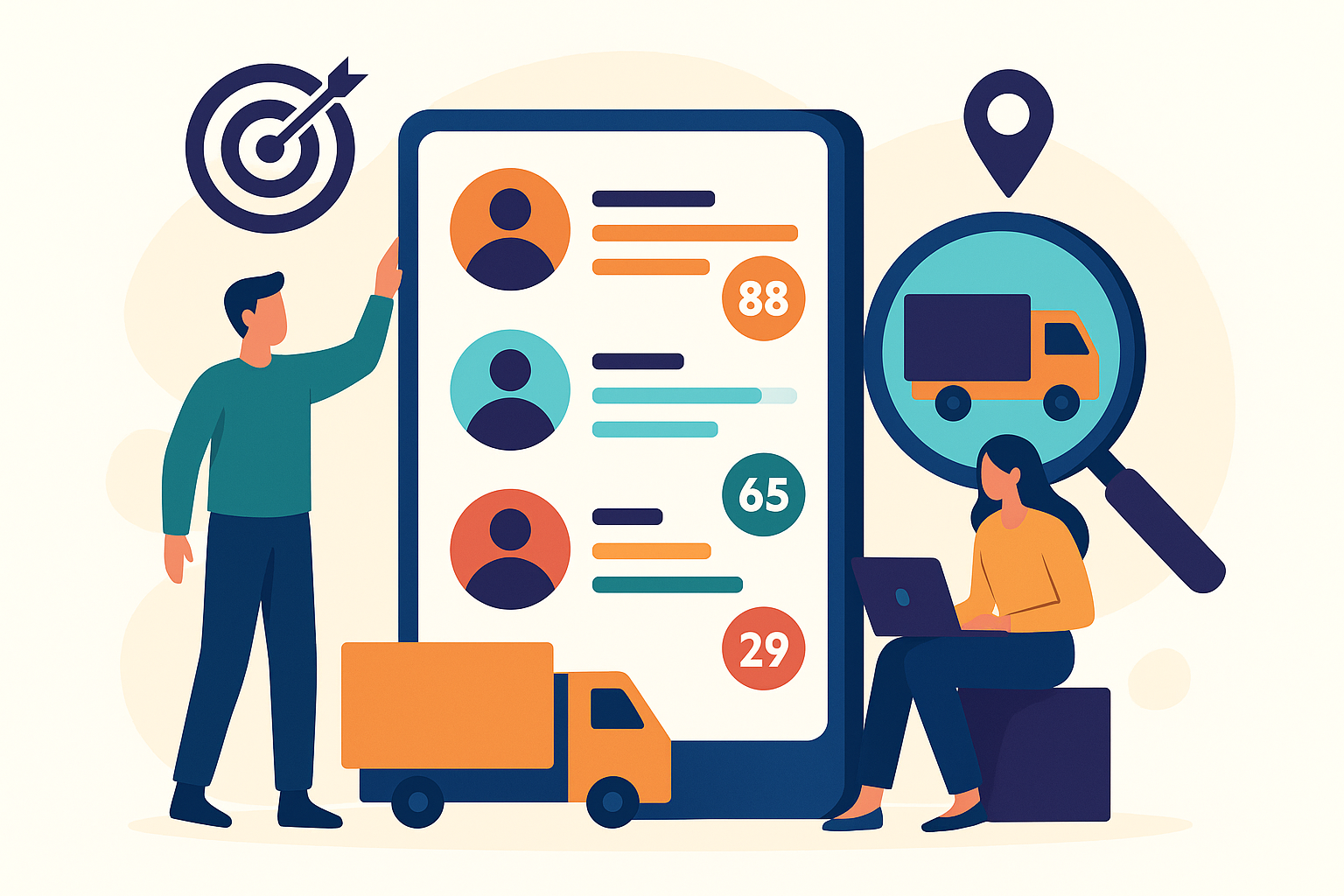
Not every lead is created equal. That’s why lead scoring is essential.
Assign scores to leads based on:
- Level of engagement (downloads, clicks, replies)
- Demographic fit (company size, title, industry)
- Buying intent (timing, budget, authority)
This prioritization allows your team to focus energy on the leads that are most likely to convert, while marketing continues to nurture the rest until they’re ready.
Regularly Updating Your Lead List
Lead data decays fast. People change jobs. Companies shift priorities. Regularly updating your list ensures you’re not wasting time chasing ghosts.
Set a review cadence—monthly, quarterly, whatever fits your cycle. Clean out bad data, enrich missing fields, and adjust lead scores based on new engagement. A clean list is a high-performing list.
Step 5. Engaging with Your Leads
You’ve built your list—now it’s time to activate it. Effective engagement turns cold contacts into warm conversations.
Use a mix of channels to reach out:
- Cold emails
- LinkedIn messages
- Sales calls
- Targeted ads
Your goal? Start real conversations that solve real problems.
Personalized Communication
Generic outreach gets deleted. Personalized communication builds trust.
Use the info you’ve gathered to tailor each message. Mention their industry, acknowledge a recent challenge they’re facing, or reference content they’ve engaged with. Show them you’ve done your homework—and you’re not just blasting messages into the void.
Follow-Up Strategies
It takes more than one touch to close a deal. A well-structured follow-up sequence can be the difference between a lead going cold and converting.
Build a cadence that includes:
- Email follow-ups
- Phone outreach
- Social touches
- Relevant content drops
Be persistent without being pushy. The key is to stay top-of-mind without overwhelming your prospect.
Step 6. Measuring Success
Now that your lead list is in motion, it’s time to analyze performance. Metrics don’t lie—they tell you what’s working and what’s not.
Track KPIs like:
- Lead-to-opportunity conversion rate
- Response and open rates
- Email click-throughs
- Pipeline velocity
These data points help you optimize everything from your messaging to your segmentation and sales process.
Adjusting Your Strategies
Lead generation isn’t static. If something’s underperforming, pivot.
Reallocate time, shift messaging, or test new outreach formats. Continuous testing and refinement align your strategy with changing buyer behavior and market dynamics.
Gathering Feedback
Don’t overlook your most valuable source of intel: your prospects and customers.
Ask what resonated, what didn’t, and why they chose (or didn’t choose) to engage. Use surveys, interviews, or casual sales conversations to pull out actionable feedback that sharpens your future campaigns.
Wrapping Up
Learning how to create a lead list is more than just a tactical exercise—it’s a strategic advantage. When you know who you’re targeting, what they need, and how to reach them, you build a pipeline that actually produces results.
From persona development to tool selection, segmentation to follow-up, every piece of this guide is designed to help you generate, organize, and convert leads more effectively.
The takeaway? Build smarter. Engage better. Close faster.
Ready to Build a Better Lead List?
At Abstrakt Marketing Group, we don’t just talk lead generation—we live it. Our expert team helps companies like yours build custom lead lists, execute multichannel outreach, and close with confidence.
Want a lead generation strategy that actually converts?

Madison Hendrix
Madison has worked in SEO and content writing at Abstrakt for over 5 years and has become a certified lead generation expert through her hours upon hours of research to identify the best possible strategies for companies to grow within our niche industry target audiences. An early adopter of AIO (A.I. Optimization) with many organic search accolades - she brings a unique level of expertise to Abstrakt providing helpful info to all of our core audiences.
- Madison Hendrix
- Madison Hendrix
- Madison Hendrix
- Madison Hendrix

Amie Milner
With over a decade of experience growing Abstrakt from the ground up, Amie Milner brings a rare blend of grit, strategy, and frontline know-how to everything she writes. As the EVP of Marketing & Sales Enablement, she’s built one of the most successful internal sales development engines in the country—recruiting, training, and coaching SDRs (Market Development Managers) who fuel the front end of the sales funnel across hundreds of industries.
Amie’s expertise spans sales development strategy, lead generation, team enablement, outbound marketing, and building scalable systems that actually drive revenue. She’s passionate about bridging the gap between marketing and sales, empowering frontline reps, and creating processes that lead to repeatable wins.