
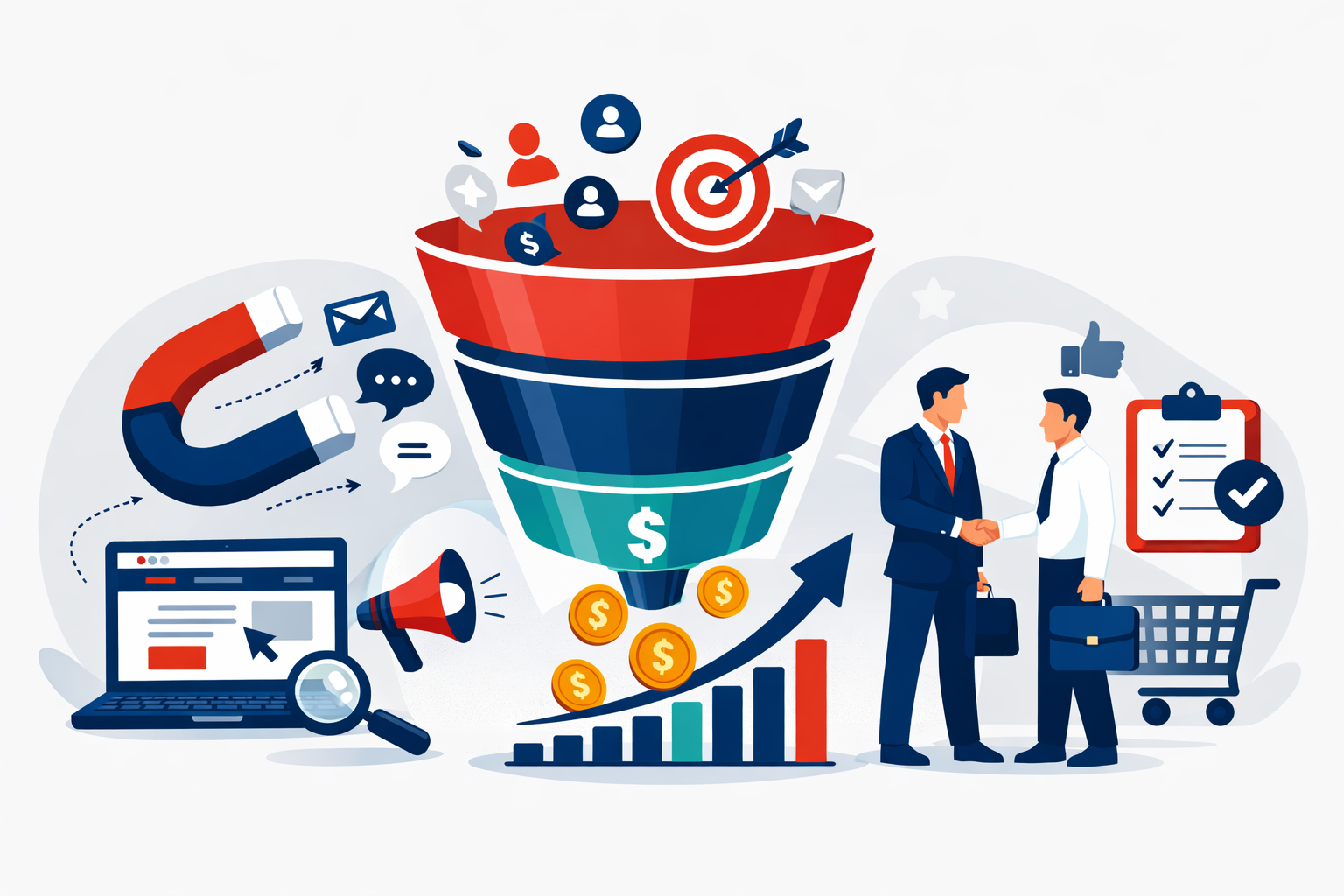
Understanding the nuances between lead generation and customer acquisition is vital. Both processes play distinct roles in growing your business, yet they merge into a unified sales strategy that bridges marketing with revenue-generating operations. In this article, we’ll break down each process, show how they support one another, and provide actionable strategies to bolster your pipeline.
This guide uses clear explanations and real statistics from authoritative sources to help you navigate today’s digital landscape. Let’s dive into how personalized outreach can overcome today’s barriers and drive measurable results.
Contents
- 1 Understanding Lead Generation
- 2 Customer Acquisition: Turning Leads into Loyal Clients
- 3 Merging Lead Generation and Customer Acquisition into a Cohesive Strategy
- 4 Actionable Steps to Enhance Your Funnel
- 5 Measuring Success in Lead Generation and Customer Acquisition
- 6 Overcoming Common Challenges in the Sales Funnel
- 7 Real-World Examples and Success Stories
- 8 Strategies to Integrate Lead Generation with Customer Acquisition
- 9 The Future of Lead Generation and Customer Acquisition
- 10 Wrapping Up: Finding the Balance
- 11 Additional Resources
- 12 Conclusion
Understanding Lead Generation
Lead generation is about attracting prospects and sparking their initial interest. It involves engaging potential customers early in the decision-making process with tactics such as content marketing, landing pages, and targeted outreach.
This strategy is critical because research shows that businesses that use SEO as a primary lead channel can reduce cost per lead (CPL) by up to 60% (). It’s not just about quantity; quality matters too.
The Pillars of Effective Lead Generation
A solid lead generation strategy blends various elements into a coherent plan:
- Content Marketing – Engaging blog posts, articles, and e-books that inform while enticing interest.
- SEO – Optimizing content to rank higher on search engines and attract organic traffic.
- Landing Pages – Dedicated pages designed to capture information and convert visitors into leads.
- Personalized Outreach – Tailored messages that resonate deeply with prospective customers.
The integration of these components creates a dynamic funnel. For example, companies that publish 15 blog posts per month generate, on average, 1,200 more leads each month than those who don’t (HubSpot statistic).
The Role of Landing Pages in Lead Capture
Landing pages are more than just web pages; they are focused entry points where visitors convert into leads. Statistics reveal that companies with 31–40 landing pages generate seven times more leads than those with just 1–5 pages (HubSpot insight).
This is because effective landing pages provide contextually relevant content, clear call-to-action (CTA) buttons, and user-friendly designs. More landing pages, when used strategically, can drive 55% more leads, while companies with over 40 landing pages generate up to 12 times more leads compared to minimal implementations (HubSpot research).
The Importance of SEO in Lead Generation
SEO remains a cornerstone for attracting prospects. By optimizing your digital content for search engines, you ensure that high-intent buyers most likely to convert will find you first. When businesses focus on SEO as a lead channel, they can see dramatic reductions in CPL.
This approach isn’t merely about rankings-it’s about visibility. The vital connection between organic search and lead quality is clear. In fact, many companies witness substantial improvements in both lead quality and conversion rates by integrating SEO with content marketing. Engaging content that answers real questions and incorporates keywords can drive sustained traffic over time.
Customer Acquisition: Turning Leads into Loyal Clients
Once lead generation forms the top of your funnel, customer acquisition takes center stage. This process transforms interest into revenue. It involves engaging leads more deeply, nurturing them through tailored communication, and guiding them to make a purchase decision.

Customer acquisition is not a one-touch process. It demands a strategic approach that aligns sales, marketing, and customer service to convert qualifying leads into loyal customers.
The Customer Acquisition Journey
The journey from interested prospect to paying customer follows key steps. Early interactions lay the groundwork, and each stage in the process should build on the previous one. Here are the typical stages:
- Initial Awareness – Engaging prospects through informative content and personalized outreach.
- Consideration – Nurturing leads with value-driven insights, product demos, and case studies.
- Decision – Assisting prospects in choosing your service through clear CTAs and special offers.
- Retention – Post-acquisition communication to solidify long-term relationships.
By mapping out these phases, companies can better align their strategies around each touchpoint, ensuring a smoother path to conversion.
Loss Reduction Through Effective Nurturing
Lead nurturing is essential to keeping prospects engaged throughout the buyer’s journey. When properly automated, nurturing can reduce the CPL by up to 33% (Marketing LTB). Automation tools such as email marketing campaigns and CRM integration help maintain a steady dialogue with leads.
This continuous interaction not only builds trust but also ensures that when a buyer is ready to commit, your team already has the necessary relationship groundwork laid out. Companies with mature lead generation processes are three times more likely to hit their revenue goals (Marketing LTB), which underlines the importance of a well-oiled nurturing machine.
Aligning Sales and Marketing for Conversion
Alignment between sales and marketing is crucial for moving prospects smoothly through the funnel. A direct line of communication allows both teams to refine strategies, share insights, and continuously optimize protocols. For example, personalized outreach that follows a targeted lead nurturing campaign often yields better engagement and conversion.
In practice, this alignment helps in identifying which leads are photographically the most promising, ensuring that sales representatives spend their time engaging prospects who are nearly ready – turning potential interest into confirmed sales calls, demos, or even meetings.
Merging Lead Generation and Customer Acquisition into a Cohesive Strategy
Strong marketing strategies are not built on isolated tactics. Instead, they hinge on how well lead generation activities align with customer acquisition efforts. Every touchpoint from initial contact to final conversion represents part of a continuous journey.

With personalized outreach built for today’s digital barriers, companies can address both external trends and internal sales challenges. An integrated approach ensures that the tactical gains of lead generation feed directly into a strong customer acquisition effort.
Building an Integrated Funnel
A key element to success is creating a seamless transition between lead generation and customer acquisition. Often, this requires:
- Implementing robust CRM systems that track every interaction
- Utilizing lead scoring to prioritize prospects
- Adopting automation tools to keep leads warm until they’re ready to buy
- Employing A/B testing to optimize landing pages and messaging, which can boost conversions by 49% (Marketing LTB)
When these elements work in tandem, businesses can observe not just a numerical increase in leads, but an overall improvement in lead quality and conversion rates.
Personalized Outreach: The Connector Between the Two Strategies
Personalized outreach is the golden thread weaving together lead generation and customer acquisition. It can personalize interactions by addressing a prospect’s specific needs and positioning your product or service as the ideal solution.
Tailoring messaging to the prospect’s industry, pain points, and investment capacity enhances trust and builds a relationship that extends well into the purchasing process. Personalized communication also helps keep your brand top-of-mind, ensuring that when the buying cycle matures, your business is the obvious choice.
Leveraging Data to Refine Your Approach
Data and analytics are the bedrock of a successful integrated strategy. Tracking performance metrics across both lead generation and customer acquisition processes offers insights into areas that need refinement.
For instance, regular A/B testing on landing pages can provide actionable data that leads to a 49% increase in conversion rates, while automation in lead nurturing results in 33% lower CPL (Marketing LTB). Keeping an eye on performance helps you continuously adapt and optimize your outreach strategies.
Actionable Steps to Enhance Your Funnel
An effective funnel demands regular reassessment and iterative adjustments. Whether you’re ramping up your outreach, refining your landing pages, or aligning your sales and marketing teams, every improvement counts.
This section outlines practical strategies to allow your funnel to thrive through both lead generation and customer acquisition measures.
Step 1: Audit Your Current Funnel
Begin by evaluating every stage of your existing funnel. Look at where you’re generating the most leads, which landing pages convert well, and how effectively your team nurtures those leads. An honest audit lets you pinpoint gaps in execution.
Adopting this systematic approach ensures that every tool in your marketing arsenal is examined-be it personalized email campaigns or automated response systems used to enhance engagement.
Step 2: Increase the Number of Contextual Landing Pages
One clear benefit observed from user data and research is that a higher number of landing pages translates to dramatically more leads. Companies with over 40 landing pages generate up to 12 times more leads than those with 1–5 pages.
Focus on contextually tailoring your landing pages to cover a variety of audience segments. This ensures that different customer personas find content that is directly relevant to their unique needs, leading to higher conversion rates.
Step 3: Optimize Your Content Strategy
Your content strategy plays a crucial role in both attracting new leads and nurturing existing ones. Create blog posts, white papers, and case studies that directly address customer pain points. Regular content publication not only enhances organic search rankings but also solidifies your position as an industry thought leader.
For example, companies that publish 15 blog posts monthly see significant lead increases – a testament to the value of consistent, quality content (HubSpot statistic).
Step 4: Implement Automation and Lead Nurturing Tools
Automation makes it possible to maintain constant contact with leads. Integrate sophisticated CRM systems that not only map out customer journeys but also trigger personalized email sequences based on lead behavior.
This approach can substantially cut costs – research shows automated lead nurturing can reduce CPL by 33% (Marketing LTB) – freeing resources to further enhance conversion strategies.
Step 5: Align Sales and Marketing Communications
An aligned communication strategy between your sales and marketing teams bridges potential gaps. Schedule regular meetings to review lead progress reports, discuss challenges, and refine strategies. This synchronization ensures that every qualified lead receives personalized follow-up and that sales efforts focus on high-potential prospects.
By sharing performance data and customer insights, both teams contribute to a more robust and efficient conversion pipeline.
Measuring Success in Lead Generation and Customer Acquisition
Metrics are the heartbeat of any successful strategy. Evaluating the effectiveness of both lead generation and customer acquisition processes is essential for ongoing improvements.
Tracking indicators such as conversion rates, cost per lead, and customer lifetime value will help you adjust and invest in areas that generate the highest returns.
Key Metrics to Monitor
The following metrics are useful to track:
- Conversion Rate: The percentage of leads that eventually convert to paying customers. Companies using A/B testing on landing pages see about 49% more conversions ().
- Cost Per Lead (CPL): Understanding CPL is crucial. With an average CPL of $198, strategies such as SEO and automation that significantly reduce this cost are valuable (Marketing LTB).
- Lead Quality: Evaluate metrics that indicate the willingness and potential of a lead to transition into a sale. Tracking lead nurturing success and eventual customer relationship insights can help refine this measure.
- Customer Lifetime Value (CLV): This metric quantifies how much revenue each customer contributes over their lifetime, enabling smarter allocation of resources between acquisition and retention efforts.
Regularly reviewing these metrics paves the way for data-driven optimizations, ensuring that your campaigns are always aligned with market demands and business goals.
Integrating Feedback and Continuous Improvement
Listening to feedback from your team and customers is essential when fine-tuning your funnel. Make use of A/B testing results, survey data, and performance reviews to continuously refine your messaging and outreach tactics.
As you accumulate historical performance data, identify patterns and adjust your strategies accordingly-for example, scaling personalized outreach that yields higher conversions while trimming campaigns that are underperforming.
Overcoming Common Challenges in the Sales Funnel
Even with robust strategies in place, businesses often face roadblocks in either lead generation or customer acquisition. Addressing these challenges head-on is part of building resilient processes.
Below are some common hurdles and effective solutions for each segment of the funnel.
Challenge: Inconsistent Lead Quality
Not all leads are created equal. Many businesses encounter prospects that may appear promising but don’t translate into genuine interest. Improving segmentation through better data analysis and targeted outreach can help. Use lead scoring models to determine which leads are primed for transition.
Additionally, integrating consistent quality checks-like follow-up surveys or engagement tracking-can screen out noise and foreground leads with true intent. This is where personalized outreach and CRM tools prove immediate value.
Challenge: High Cost Per Lead (CPL)
With the average CPL at $198, resource allocation becomes crucial. Employing strategies like SEO optimization and automated lead nurturing can significantly reduce these expenses-by up to 60% and 33% respectively (Marketing LTB).
Scrutinize your campaigns regularly to identify inefficiencies. Transitioning to cost-effective methods and refining your content can lead to sustainable cost reductions without sacrificing quality.
Challenge: Misalignment of Sales and Marketing Teams
When sales and marketing are not in sync, pipelines break and opportunities are lost. Structured communication protocols and regular strategy sessions are essential for smoothing out these misalignments. Sales development representatives (SDRs) that follow up with personalized, context-driven calls are a prime example of bridging this gap.
By aligning both teams on shared metrics and key performance indicators, businesses can ensure that every lead is managed according to its potential, ultimately boosting revenue goals.
Real-World Examples and Success Stories
Learning from real-world examples can illustrate the practical application of these strategies. Many companies have transformed their pipeline effectiveness by refining their lead generation and customer acquisition methods.
Below, we explore several case studies that highlight the impact of an integrated approach on business growth.
Case Study 1: Doubling Lead Volume with Contextual Landing Pages
A mid-sized firm integrated a strategy that increased their number of landing pages from under 5 to over 30. This transition was not only about quantitative change; the quality and contextual relevance of each page played a pivotal role in enhancing overall conversion rates.
By tailoring landing pages for specific customer segments and incorporating evolving search trends, the company saw a remarkable spike in qualified leads. After data analysis confirmed improved metrics, the firm scaled these practices, generating seven times more leads than when they maintained only minimal landing pages (HubSpot insight).
Case Study 2: Lowering CPL Through Automated Lead Nurturing
An enterprise-level organization integrated automated lead nurturing into their CRM, which significantly eased the work of their SDRs. Automation allowed the team to focus on high-value leads, and by tracking interactions continuously, the company achieved a 33% reduction in CPL (Marketing LTB).
The improved process not only reduced operational costs but also increased the likelihood of converting leads into paying customers. By analyzing customer interactions, the sales team refined follow-up strategies and ensured that active, interested leads received the appropriate attention at the right time.
Case Study 3: Enhancing Conversion Rates with SEO-Focused Content
A technology company focused on a robust SEO strategy as part of its lead generation efforts. By aligning content production with keyword-specific research, the firm reduced its overall CPL by 60%-an impressive statistic supported by targeted content and messaging.
This initiative led to increased website traffic and higher-quality leads, which ultimately streamlined the customer acquisition process. The success can be largely attributed to a well-optimized content schedule paired with regular content publication, where the firm published blog posts consistently and reaped the benefits in lead generation (HubSpot statistic).
Strategies to Integrate Lead Generation with Customer Acquisition
Integration isn’t just a buzzword-it’s a necessity. We need a cohesive framework where every facet of lead generation feeds seamlessly into customer acquisition. This alignment drives sustainable growth and ensures that each level of the funnel reinforces the other.

These integrated strategies help your business maintain a healthy pipeline and maximize revenue opportunities.
Strategy 1: CRM-Driven Personalization
A robust Customer Relationship Management (CRM) system should serve as your operational backbone. This system must track every lead and customer interaction, map the journey, and flag key touchpoints.
With CRM integration, sales teams can automatically assign leads based on context-location, behavior, or previous engagement-ensuring that personalized outreach is both timely and relevant. The result: more efficient follow-ups and a smoother transition from lead to customer.
Strategy 2: Dynamic Content Creation
Content should dynamically evolve based on your audience’s needs. This involves aligning blog posts, landing pages, and social media outreach with varying customer personas. Use performance data to update and adjust content rapidly.
By continuously refining your content strategy based on engagement metrics, your team can ensure that each piece of content is designed to address specific marketing funnel stages-whether to attract, educate, or convert leads.
Strategy 3: Leveraging A/B Testing and Analytics
Data-driven decisions are key. Regular A/B testing on landing pages and personalized outreach emails can provide crucial insights. Testing design, copy, CTAs, or segmentation strategies all play into increased conversion rates, sometimes by as much as 49% (Marketing LTB).
Continuous analysis, paired with iterative improvements, helps bridge the gap between initial lead attraction and eventual customer commitment. Employing analytics tools enables your teams to optimize efforts across the board, ensuring that no opportunity is left unexplored.
Strategy 4: Training Your SDR Team for Effective Outreach
The human element in both lead generation and customer acquisition remains irreplaceable. Equip your Sales Development Representatives (SDRs) with proper training and modern call scripts that are both natural and effective. SDRs are the first line of contact; their ability to engage, qualify, and nurture leads is critical.
Regular training sessions and performance feedback loops can refine their messaging, ensuring that every call and email is tuned to convert prospects into customers. A well-trained SDR team can connect strategies and facilitate a more expedient path to conversion.
The Future of Lead Generation and Customer Acquisition
As technology advances and buyer behavior continues to evolve, businesses must remain agile. Both lead generation and customer acquisition will increasingly lean on data analytics, AI-driven personalization, and advanced automation platforms.
Future trends point to ever-more refined segmentation, smarter CRM systems, and deeper integration between digital marketing and sales processes. Embracing these innovations will help businesses not only survive but thrive in a competitive marketplace.
Emerging Trends in Lead Generation
Artificial intelligence is expected to play a pivotal role. AI-powered chatbots, predictive analytics, and adaptive content delivery are shaping the future of prospect outreach. As these solutions mature, they promise higher response rates and more efficient lead qualification.
Additionally, integrating social proof such as customer reviews and case studies into landing pages is becoming essential. These elements help build trust and credibility quickly, nudging prospects toward conversion.
Innovations in Customer Acquisition
Customer acquisition is evolving beyond mere transactional approaches. The focus is shifting to long-term relationship building, where personalized follow-up and loyalty programs are at the forefront. Technology that seamlessly integrates these efforts into daily workflows is on the rise.
For instance, dynamic email personalization and adaptive web experiences allow businesses to deliver a more tailored customer journey, making it clear that every touchpoint is designed to meet their specific needs.
Preparing Your Business for Tomorrow
Adapting to future trends means investing in scalable solutions today. This includes updating your CRM systems, embracing multi-channel integration, and continuously training your teams on emerging best practices.
As more companies transition to these advanced models, the competitive advantage will belong to those willing to innovate, measure rigorously, and integrate strategically. Staying ahead in this evolving landscape requires commitment and a willingness to adapt.
Wrapping Up: Finding the Balance
Lead generation and customer acquisition are distinct yet interconnected elements of a successful business strategy. While lead generation is about attracting interest and collecting prospects, customer acquisition zeroes in on converting that interest into revenue. Finding the right balance between the two is crucial.
When both strategies work in tandem, they create a powerful pipeline that drives sustainable growth. The key is to ensure that every part of the funnel is well integrated, personalized, and continuously optimized based on reliable data.
What to Take Away
The road to successful marketing is paved with focused strategies, clear performance metrics, and dedicated teams. Here are a few takeaways:
- Effective lead generation relies on quality content, SEO optimization, and personalized outreach.
- Customer acquisition demands close collaboration between sales and marketing teams to nurture leads methodically.
- Automation and data analytics are indispensable tools in reducing costs and boosting conversion rates.
- Continual testing and feedback loops enable your business to adapt to market demands swiftly.
By applying these insights, companies can ensure every prospect is not only reached but engaged and converted into a long-term customer.
Final Thoughts
Ultimately, bridging the gap between lead generation and customer acquisition is about building a cohesive, responsive strategy that delivers results. With a dedicated approach to personalization, data-driven decision-making, and ongoing training, your business can overcome modern digital barriers and establish lasting relationships with your customers.
Keep fine-tuning your approach, remain agile in the face of change, and focus on creating a funnel that delivers both quality leads and loyal clients. The journey is continuous, but the rewards-a full, vibrant sales pipeline and sustained revenue growth-are well worth it.
Additional Resources
For further insights on the topics discussed, consider exploring these resources:
- HolisticSEO Digital: Lead Generation Statistics
- Marketing LTB: Lead Generation Statistics
- National Event Staff: All the Marketing Statistics You Need
- HubSpot
These external links provide additional data points and case studies that reinforce the strategies discussed.
Conclusion
Ultimately, the debate between lead generation vs customer acquisition is not about prioritizing one over the other. It’s about understanding that each element plays a unique role in a comprehensive marketing strategy. When executed well, both approaches feed into the same ultimate goal: genuine, measurable business growth.
By integrating conversion optimization techniques, investing in the right technologies, and aligning your teams for seamless communication, you’ll be well-positioned to break through today’s digital barriers. Embrace innovation, trust in data, and prioritize personalized engagement at every step of your customer’s journey. Your roadmap to success is clear, and every well-nurtured lead is a step closer to turning prospects into loyal customers.
Ready to transform your lead generation and customer acquisition strategies? Abstrakt is here to empower your business growth with our expert B2B lead generation services. From setting appointments to digital marketing and creative solutions, we’re dedicated to filling your pipeline with quality, consistent leads. Join the ranks of clients who’ve seen over 100,000 appointments set annually. Send us a message and let’s make your business the next success story.

Madison Hendrix
Madison has worked in SEO and content writing at Abstrakt for over 5 years and has become a certified lead generation expert through her hours upon hours of research to identify the best possible strategies for companies to grow within our niche industry target audiences. An early adopter of AIO (A.I. Optimization) with many organic search accolades - she brings a unique level of expertise to Abstrakt providing helpful info to all of our core audiences.