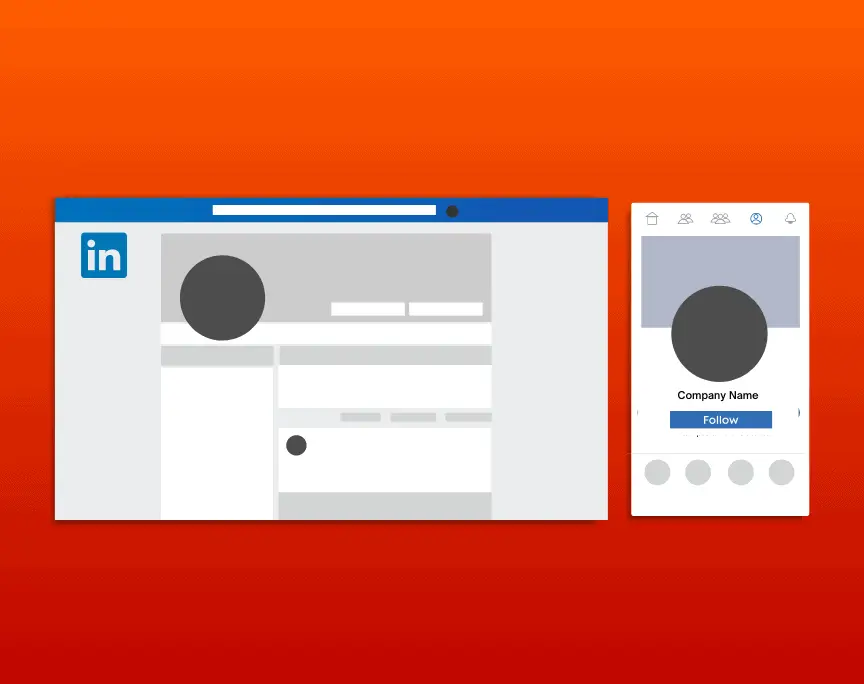
To create a LinkedIn business page, sign in to your personal LinkedIn account on a computer, click the For Business icon in the top-right corner, choose Create a Company Page, pick Company, fill in your business details, check the box confirming you're allowed to act for the company, and click Create page. It takes about as long as filling out a vendor form. Maybe less. The part that decides whether the page brings in any work comes after: filling in every field, connecting your team to it, and posting useful content to it steadily.
Before you start
A few things to have ready, so you're not hunting for them halfway through:
- A LinkedIn account. LinkedIn's own instructions say you need one to create a Page. Whoever creates it becomes the Page's super admin.
- The right device. You can create a Page on a desktop browser or the iPhone app. LinkedIn says creating a Page isn't supported on Android.
- Your logo, square, and a wide cover image. A photo of a crew on a real job usually beats stock art.
- A one-sentence description of what you do, who for, and where. Write it the way your best salesperson would say it on the phone.
- Your website address, industry, company size and main location.
One more thing before you begin. Search LinkedIn for your company name first. Former employees sometimes create a placeholder page, and it's easier to claim an existing page than to explain two of them to buyers.
Creating the page, step by step
- Sign in on a desktop browser and click the For Business icon in the top-right corner of your homepage.
- Scroll down and select Create a Company Page.
- Choose Company. The other two options are for sub-brands and schools.
- Fill in the page identity (name, LinkedIn public URL, website), company details (industry, size, type) and profile details (logo and tagline).
- Check the verification box confirming you're authorized to act on behalf of the company.
- Click Create page, then Start building your page.
LinkedIn moves its menus around from time to time. If a button isn't where these steps say, the linked LinkedIn help article above is kept up to date.
Fill in everything LinkedIn asks for
This is the step most companies skip, and it's the one LinkedIn puts a number on. Its help article on completing a Page says Pages with complete information can potentially receive 30% more weekly views. The fields it recommends filling in are industry, company size, overview, description, logo, commitments, website URL, location, a custom call-to-action button and work email verification.
A few of those deserve extra care.
The overview
Lead with what you do and for whom, in words a buyer would use. "Commercial roofing repair and replacement for warehouses and industrial buildings across the Kansas City metro" tells a facility manager more than "a trusted partner delivering excellence." Mention your main services and the areas you serve, so the page matches what people type when they look for a company like yours.
The call-to-action button
Point it somewhere useful, usually your contact page or a page about your main service. A generic homepage makes them hunt.
Locations
Add every office or yard you work from. Buyers often check whether you're actually nearby before they reach out.
Get your team attached to it
A company page with no employees looks abandoned, and a buyer who clicks through from a post and finds a logo, two followers and nothing else will reasonably wonder whether the company behind it is as small as the page suggests. Ask everyone on your team who has a LinkedIn profile to list your company as their current employer, choosing the page from the dropdown so their profile links to it. Add at least one other admin so the page doesn't disappear with one person's account.
Your people's networks are also how posts travel. When a project manager reshares a company post about a job they ran, it reaches people the page itself never would.
Keep it active
LinkedIn is a natural fit for B2B content. Pew Research found that 51% of US college graduates use LinkedIn, against 13% of adults with a high school education or less, which lines up well with the owners, managers and engineers most B2B companies sell to.
What to post is simpler than it looks. Start here. Share each new article from your website with a two- or three-line summary written for the person who'd care. Post job photos with a sentence about the problem you solved. Announce new services, new locations and new hires. A steady stream of useful posts beats occasional bursts.
LinkedIn also sells ads, including lead forms that pre-fill a member's details. Those can work, but they're a paid channel with their own budget and management, and they're a separate decision from setting up your page.
Keeping the page fed
Most company pages go quiet because nobody has time to keep writing, and after a few months of silence the page does a little damage every time a prospect checks it, because an empty feed reads as a company that isn't paying attention. That's the gap Inbound SDR fills. A new blog goes out every business day on your website and is posted to your LinkedIn page, plus Facebook, Instagram, TikTok, YouTube and X, and we keep those profiles current. We also build and run your website, up to 100 pages, and keep your Google Business Profile and directory listings accurate. Packages start at $1,000 per month on a 12-month term.
It doesn't include LinkedIn ads, and we don't do outreach or messaging from anyone's personal profile. If personal selling on LinkedIn is the main way you win work, you'll still want someone handling that. If you're curious how your company shows up beyond LinkedIn, our Free AI Visibility Check looks at your website, your mobile speed, whether you come up in a local search, and what an AI assistant says when a buyer asks who to call. No email needed.
Get the next one in your inbox
New playbooks, benchmarks and guides from our sales floor, for owners and sales leaders who sell to businesses. One email a month. See past issues.