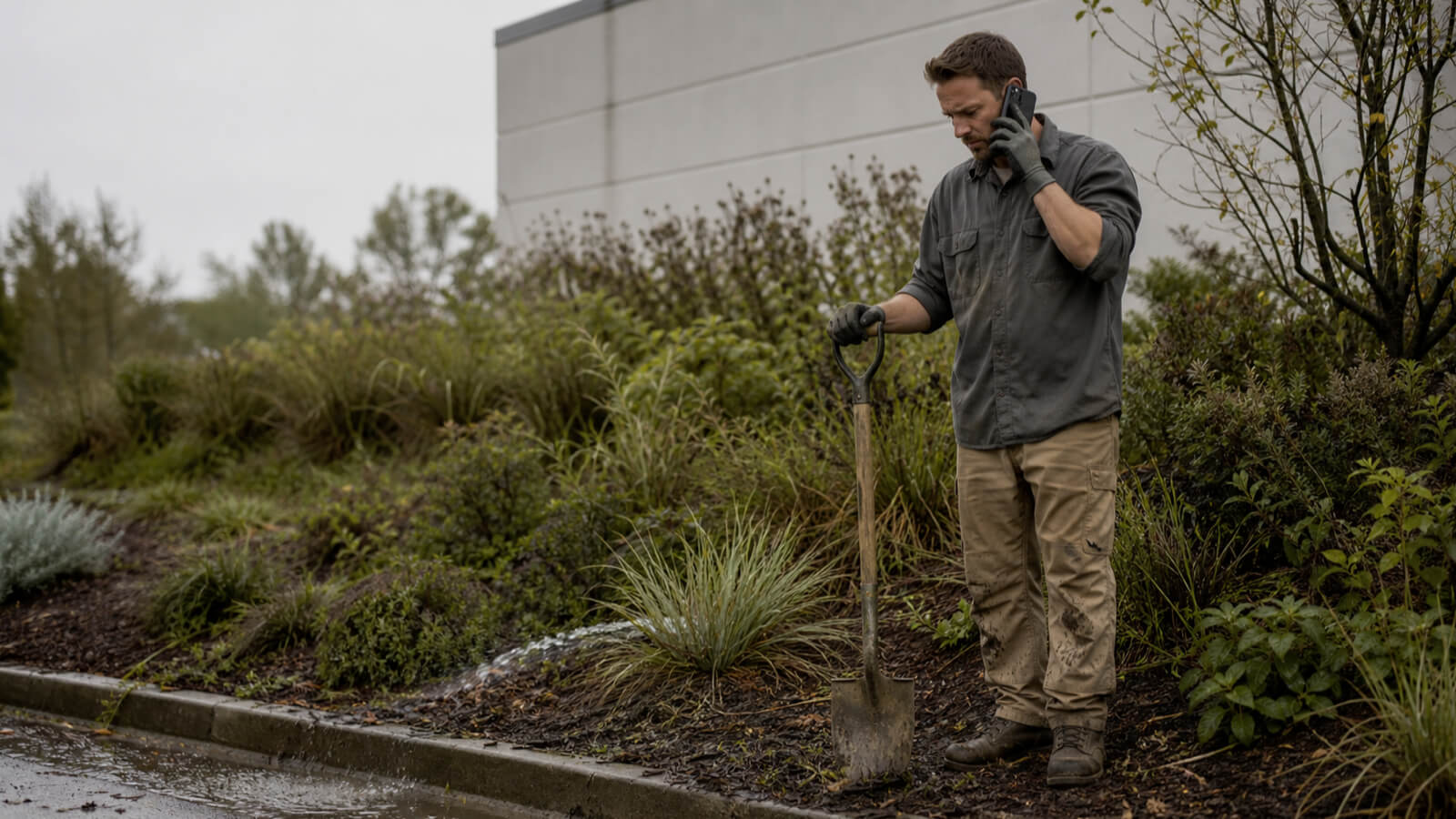

A property manager in Dallas told us something that stuck: “We spent $40,000 on a new website and got exactly three leads in six months.” The site looked impressive. Professional photos, detailed service pages, the works. But when we searched for commercial roofing contractors in Dallas, they were nowhere. Not page one. Not page two. They’d built a digital storefront on a street with zero foot traffic.
This is the reality for most commercial roofing companies. They understand that an online presence matters, but they’re approaching it like residential contractors chasing homeowners. Commercial roofing operates in a completely different universe. Your buyers are property managers, facility directors, and building owners who research differently, evaluate differently, and convert differently than someone with a leaky kitchen ceiling.
The commercial roofing companies winning right now aren’t just “doing SEO.” They’re building systematic digital presences designed specifically for B2B decision-makers who manage multi-million dollar properties. They understand that a single commercial roofing contract can be worth what residential contractors earn in a year, and they’ve structured their entire online strategy around capturing those high-value opportunities.
What follows is the playbook that actually works. Not generic marketing advice repackaged for roofers, but specific strategies we’ve watched generate millions in commercial contracts. If you’re serious about building a dominant digital presence in commercial roofing, this is where you start.
Contents
- 1. What Are the Foundations of Commercial Roofing SEO?
- 2. How Do Commercial Roofers Dominate Local Markets With Google Business Profile?
- 3. What SEO Services Do Commercial Roofing Contractors Need?
- 4. What Content Strategies Convert Commercial Roofing Decision Makers?
- 5. How Do Commercial Roofers Build Authority Through Niche Backlinks?
- 6. How Do You Convert Roofing Search Traffic Into Qualified Leads?
- 7. How Do You Measure SEO Success and ROI in Commercial Roofing?
What Are the Foundations of Commercial Roofing SEO?
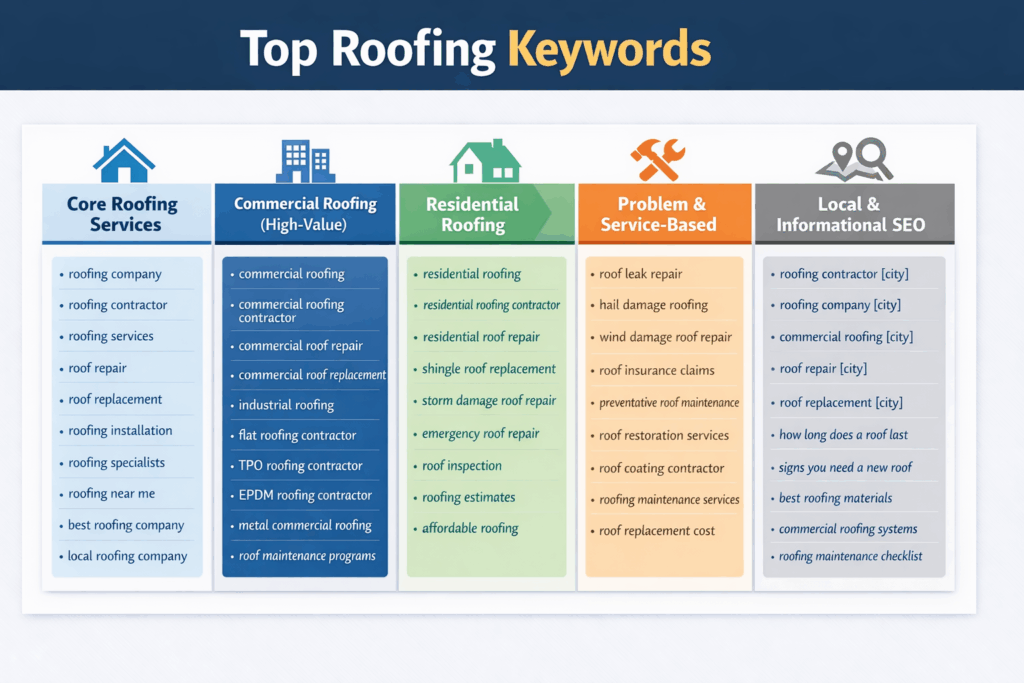
The fundamental mistake most commercial roofers make is targeting the same keywords residential contractors chase. Yes, “roofing company near me” gets search volume. But the facility manager responsible for a 200,000 square foot distribution center isn’t typing that into Google.
Commercial roofing SEO requires understanding how B2B buyers actually search. They use specific terminology. They search for solutions to specific problems. And they often search with purchase intent that’s far more qualified than residential leads.
How Do You Target High-Value B2B Roofing Keywords?
The keywords that generate commercial contracts look nothing like residential terms. Property managers search for “TPO roof replacement cost per square foot” or “flat roof maintenance programs.” Facility directors search for “commercial roof inspection services” or “emergency roof repair for warehouses.”
Start by mapping your keyword strategy to actual buyer concerns:
- Problem-aware searches: “standing water on flat roof,” “commercial roof leak detection”
- Solution-aware searches: “EPDM vs TPO roofing systems,” “cool roof coating benefits”
- Vendor-aware searches: “commercial roofing contractors [city],” “industrial roof replacement companies”
The search volume on these terms is lower than residential keywords. That’s actually good news. Lower volume means less competition and higher intent. A property manager searching “preventive roof maintenance program for retail centers” is significantly more valuable than someone searching “roof repair.”
Build content clusters around each major service category. If you offer roof coatings, you need pages addressing every question a property manager might ask: cost comparisons, lifespan expectations, application requirements, warranty details. This depth signals expertise to both Google and potential clients.
How Do You Handle Technical SEO for Large-Scale Roofing Sites?
Commercial roofing websites tend to be larger and more complex than residential sites. You’re covering multiple service types, numerous service areas, and various property categories. This complexity creates technical SEO challenges that can tank your rankings.
Site speed matters more than most roofers realize. Property managers often research from mobile devices while walking job sites. If your page takes six seconds to load, they’re gone. Compress images, enable browser caching, and consider a content delivery network if you serve multiple regions.
Your site architecture should make logical sense. Service pages link to relevant case studies. Location pages connect to testimonials from that area. Everything should be reachable within three clicks from your homepage. Create XML sitemaps and submit them to Google Search Console. Fix crawl errors immediately.
Schema markup is underutilized in this industry. Implement LocalBusiness schema, Service schema, and Review schema. This structured data helps Google understand your business and can generate rich snippets that increase click-through rates.
How Do Commercial Roofers Dominate Local Markets With Google Business Profile?
Your Google Business Profile is arguably more important than your website for generating commercial roofing leads. When a property manager needs a contractor quickly, they’re searching Google Maps, not scrolling through organic results. The companies appearing in that local three-pack capture the majority of clicks.
How Do You Optimize for the Local Map Pack?
Getting into the map pack requires more than just claiming your profile. You need complete, accurate information across every field. Your business name should match your legal name exactly. Your address must be consistent with what appears on your website and other directories.
Categories matter enormously. Select “Commercial Roofing Contractor” as your primary category if available. Add relevant secondary categories like “Roof Repair Service” and “Building Maintenance Service.” Google uses these categories to determine which searches trigger your listing.
Post regularly to your Google Business Profile. Share completed projects, industry news, and seasonal maintenance reminders. These posts signal activity and relevance. Upload photos weekly: job sites, completed projects, your team at work. Profiles with 100+ photos receive 520% more calls than those with fewer than ten.
Service area settings require strategic thinking. Don’t claim every city within 200 miles. Focus on areas where you can genuinely compete and serve clients well. Overextending dilutes your relevance signals for the markets that matter most.
How Do You Manage Reviews and Reputation for Trust?
Commercial clients read reviews differently than homeowners. They’re looking for patterns: consistent quality, professional communication, projects similar to theirs. A property manager considering you for a warehouse re-roof wants to see reviews mentioning commercial projects, not residential shingle replacements.
Develop a systematic review request process. After completing commercial projects, send personalized emails to your primary contact requesting feedback. Make it easy by including a direct link to your Google review page. Timing matters: request reviews within a week of project completion while satisfaction is fresh.
Respond to every review, positive and negative. Your responses demonstrate professionalism to prospective clients reading them. For negative reviews, respond calmly, acknowledge concerns, and offer to resolve issues offline. How you handle criticism tells potential clients everything about how you’ll handle problems on their project.
What SEO Services Do Commercial Roofing Contractors Need?
Once a commercial roofer understands how their SEO differs from residential and general construction, the next question is what to actually invest in. Eight services do the heavy lifting, and they fall into three groups: pages that capture demand, technical work that surfaces those pages in search, and content that builds authority over time.
Pages that capture demand—
- System-specific service pages for TPO, EPDM, modified bitumen, metal, built-up, and coatings. Each page covers typical applications, lifespan, ideal building types, and regional fit. Most commercial roofers skip this entirely, which is exactly why it works.
- Location-plus-system landing pages combining your service area with each system you install. “TPO roof installation in Dallas” and “EPDM roofing contractor Fort Worth” are what property managers actually type.
- Emergency repair landing pages with a phone number above the fold and a 24-hour response promise. Roof leaks and storm damage drive some of the highest-converting traffic in the industry.
Technical work that surfaces those pages—
- Google Business Profile optimization with “Commercial Roofing Contractor” as your primary category, weekly project photos, and posts tied to recent jobs. Most roofers set up GBP once and never touch it again.
- Schema markup for LocalBusiness, Service, Review, and FAQ types — so star ratings, service areas, and answers to common roofing questions surface directly in search results.
- Local link building from roofing-adjacent vendors: supply distributors, manufacturer certified-installer directories, scaffolding rental companies, gutter installers. A TPO manufacturer link carries far more local relevance than a generic chamber listing.
Content that builds authority—
- Project case studies naming the system installed, building type, square footage, project duration, and the problem solved. Drone footage where possible. These rank for long-tail queries and reduce buyer risk at decision time.
- Roof life cycle content on replacement timing, maintenance schedules, warranty management, and system comparisons. Captures property managers months before they’re ready to buy.
The commercial roofers that win their local markets aren’t running one or two of these. They’re running all eight as a connected program. System pages feed location pages, case studies support both, and schema makes everything more visible in search.
What Content Strategies Convert Commercial Roofing Decision Makers?
The content that converts commercial roofing leads differs fundamentally from residential content. Property managers don’t want to read “5 Signs You Need a New Roof.” They want detailed technical information that helps them make informed decisions and justify those decisions to their stakeholders.
What Educational Content Should You Create for Property Managers?
Create content that positions you as a knowledgeable partner, not just a vendor. Property managers face specific challenges: budget constraints, tenant disruption concerns, long-term maintenance planning. Address these directly.
Develop comprehensive guides on topics like lifecycle cost analysis for different roofing systems, capital expenditure planning for roof replacements, and regulatory compliance requirements. This content attracts organic traffic and demonstrates expertise that generic competitors can’t match.
Consider the questions property managers actually ask during sales conversations. Turn those into blog posts and resource pages. “How to minimize business disruption during commercial roof replacement” addresses a real concern. “What property managers need to know about warranty claims” provides genuine value.
Downloadable resources work exceptionally well for commercial audiences. Roof maintenance checklists, budget planning templates, and inspection guides generate email signups from qualified prospects. These leads are worth nurturing through email sequences that provide additional value over time.
How Do You Showcase Authority Through Project Case Studies?
Case studies are your most powerful content asset for commercial roofing. They provide proof of capability that no amount of marketing copy can match. A detailed case study showing how you completed a complex re-roofing project for a similar property type answers objections before they’re raised.
Structure case studies around the client’s challenge, your approach, and measurable results. Include specifics: square footage, timeline, budget, and any complications you overcame. Property managers want to see that you’ve handled projects like theirs successfully.
Photography and video elevate case studies significantly. Before and after images, drone footage of completed projects, and time-lapse videos of installations demonstrate professionalism. These visual assets also perform well on social media and can be repurposed across multiple marketing channels.
How Do Commercial Roofers Build Authority Through Niche Backlinks?
Backlinks remain a critical ranking factor, but the approach for commercial roofing differs from other industries. You’re not trying to get links from random websites. You need links from sources that commercial property decision-makers actually trust.
How Do You Earn Links From Construction and Trade Publications?
Industry publications like Commercial Property Executive, Building Operating Management, and Facility Executive carry significant authority. Getting mentioned or contributing content to these publications builds both SEO value and brand credibility.
Pitch contributed articles on topics where you have genuine expertise. Write about emerging roofing technologies, sustainability trends, or maintenance best practices. These publications need expert content, and positioning yourself as a thought leader opens doors beyond just backlinks.
Join industry associations and ensure your membership includes directory listings. Organizations like the National Roofing Contractors Association, local commercial real estate associations, and building owner groups often maintain member directories that provide valuable backlinks.
Local business publications and construction trade journals in your service areas offer link opportunities. Sponsor industry events, participate in awards programs, and engage with local business communities. These activities generate natural backlinks while building brand awareness among your target audience.
How Do You Convert Roofing Search Traffic Into Qualified Leads?
Driving traffic means nothing if that traffic doesn’t convert into qualified leads. Commercial roofing websites often fail at this critical step, losing potential clients to friction, confusion, or lack of clear next steps.
How Do You Optimize Landing Pages for RFP Submissions?
Commercial clients often prefer formal RFP processes. Your website should accommodate this preference with dedicated pages for quote requests and project submissions. Make the process straightforward: what information do you need, what happens after they submit, and what timeline should they expect.
Forms should request enough information to qualify leads without creating abandonment. Ask for property type, approximate square footage, project timeline, and preferred contact method. Skip fields that don’t help you prepare for the conversation.
Include trust signals throughout your landing pages: certifications, insurance information, manufacturer partnerships, and client logos. Commercial clients are risk-averse. They need reassurance that you’re established, insured, and capable of handling their project.
How Do You Build Mobile-First Design for On-Site Estimators?
Your website will be accessed from job sites, parking lots, and property walks. Mobile experience isn’t optional. Pages must load quickly, forms must be easy to complete on a phone, and click-to-call functionality must work flawlessly.
Test your website on actual mobile devices, not just browser simulations. Walk through the entire user journey from search to contact form submission. Identify and eliminate any friction points that could cost you leads.
Consider what mobile users specifically need: your phone number prominently displayed, quick access to service information, and easy navigation to contact options. These users often have immediate needs and limited patience for complex navigation.
How Do You Measure SEO Success and ROI in Commercial Roofing?
The metrics that matter for commercial roofing SEO differ from standard marketing KPIs. You’re not optimizing for traffic volume or even lead quantity. You’re optimizing for qualified opportunities that convert into profitable contracts.
Track keyword rankings for your target terms, but focus on terms with commercial intent. Monitor your Google Business Profile insights for search queries, direction requests, and phone calls. These signals indicate local visibility among active searchers.
Lead quality matters more than lead quantity. A single commercial contract can be worth $500,000 or more. Implement lead scoring to identify which sources generate the most valuable opportunities. Adjust your strategy based on actual revenue generated, not just form submissions.
Calculate your cost per qualified lead and cost per closed contract. Compare these figures across channels: organic search, paid advertising, referrals. This analysis reveals where your marketing investment generates the best returns and where you should increase or decrease spending.
Building a dominant online presence for commercial roofing requires sustained effort over months, not weeks. But the companies that commit to this approach build competitive advantages that compound over time. While competitors chase the same residential keywords, you’ll be capturing high-value commercial contracts that transform your business.
For companies ready to accelerate their B2B lead generation beyond organic search, working with specialists who understand commercial sales cycles can dramatically shorten the path to results. At Abstrakt Marketing Group, we help commercial roofing contractors build qualified pipelines that complement and amplify their SEO efforts. Learn how we can help.

Jeff Winters
Jeff Winters is the Chief Executive Officer (CEO) of Abstrakt and former CEO of Sapper Consulting, acquired by Abstrakt in 2021. A seasoned entrepreneur, Jeff founded Sapper in 2013 and led it to a successful acquisition. With expertise in sales and revenue growth, he drives strategies that deliver results. As co-host of The Grow Show, Jeff shares practical insights and real stories from experienced leaders to help entrepreneurs grow. Tune in weekly on Spotify, Apple Podcasts, and more!

With more than a decade of progressive leadership in sales development, Alyssa Stevenson currently serves as Executive Vice President of Inbound SDR. She is a strategic growth driver, specializing in building and scaling high-performing inbound marketing teams that deliver measurable results.
Alyssa has a track record of transforming developing individuals to use Outbound and Inbound marketing to exceed business goals. Her leadership philosophy hinges on operational excellence, data-driven decision-making, and fostering a culture of continuous improvement.
- Alyssa Stevenson
- Alyssa Stevenson