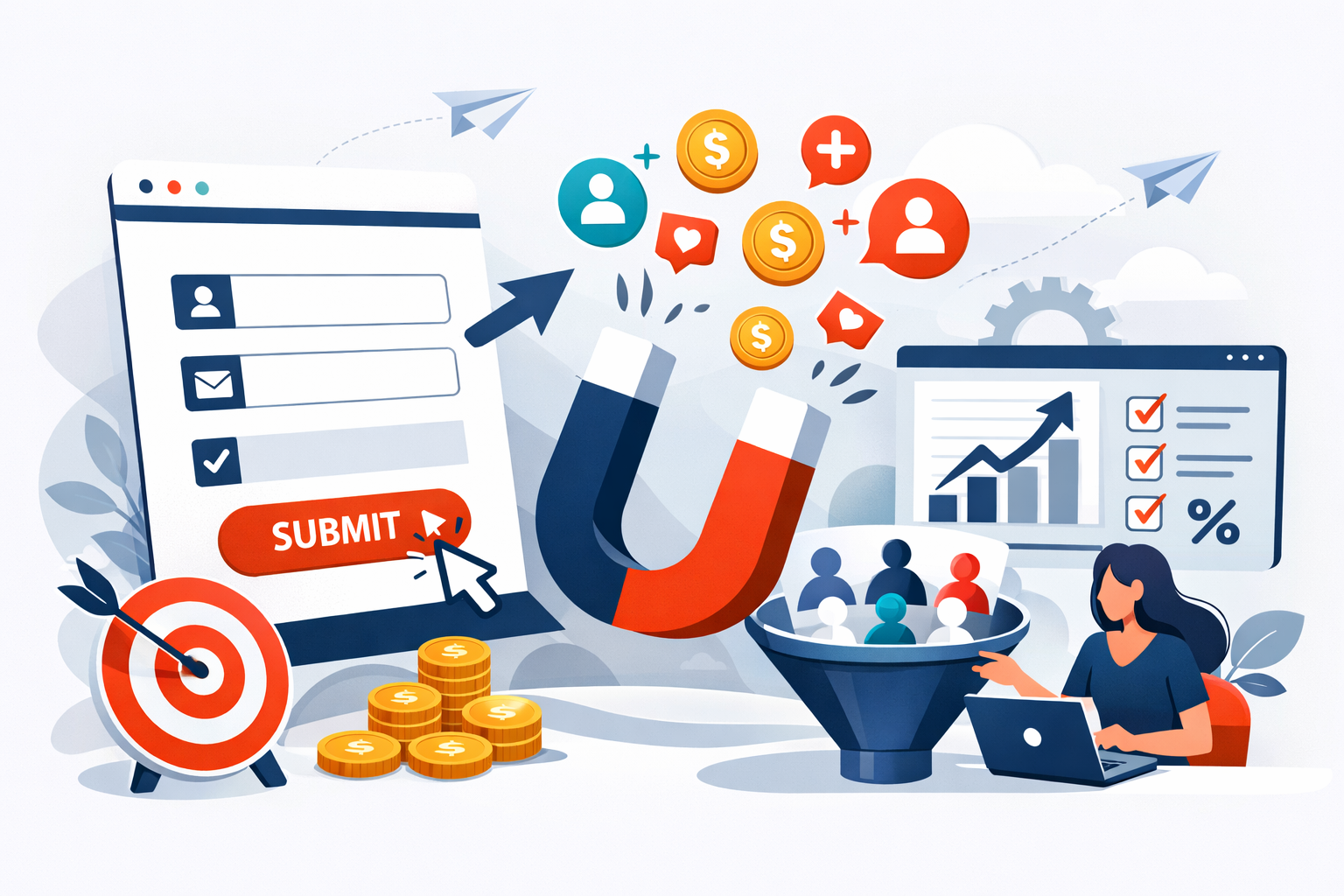


For financial services firms, where every client relationship can be long-term and high-value, lead quality matters more than sheer volume. But how do you separate the tire-kickers from the investors ready to move forward? The answer lies in a smart, structured approach to lead scoring for financial firms.
Lead scoring is no longer just a sales tactic – it is a growth engine. Whether you’re offering wealth management, insurance solutions, business lending, or fintech platforms, lead scoring helps your team prioritize the highest-potential opportunities and stop wasting time on unqualified contacts.
This article explores how financial firms can build high-performance lead scoring models, use behavioral tracking to predict intent, and integrate seamlessly with CRMs like Salesforce and HubSpot. By the end, you’ll know exactly how to take control of your pipeline and convert more leads into loyal clients.
Contents
- 1 What Is Lead Scoring for Financial Firms?
- 2 Why Lead Scoring Matters in Financial Services
- 3 Building an Effective Lead Scoring Model
- 4 Behavior Tracking: Predict Intent and Engagement
- 5 Salesforce and HubSpot Integration: Automate the Workflow
- 6 Real-World Example: A Financial Planning Firm’s Lead Scoring Journey
- 7 Aligning Sales and Marketing Around Lead Scoring
- 8 Lead Scoring Tiers: How to Prioritize Outreach
- 9 Avoiding Common Lead Scoring Mistakes
- 10 Advanced Tactics: Predictive and AI-Driven Lead Scoring
- 11 Ready to Maximize ROI with Smarter Lead Scoring?
What Is Lead Scoring for Financial Firms?
Lead scoring is the process of assigning points to your prospects based on specific data that indicates how likely they are to become a client. This can include:
- Demographics (company size, revenue, industry)
- Firmographics (financial history, location, type of services required)
- Engagement behavior (website visits, email opens, form submissions)
- Sales interaction (calls booked, meetings held)
The higher the score, the hotter the lead. With this system, your advisors and business development reps can prioritize high-value prospects, automate follow-ups, and align sales and marketing around shared definitions of a “qualified lead.”
Why Lead Scoring Matters in Financial Services
In finance, timing and trust are everything. Most clients don’t convert after one interaction. They research, compare, and slowly build confidence. During this discovery window, lead scoring allows your firm to track interest, detect buying signals, and engage at the right moment.
Benefits of lead scoring for financial firms include:
- Faster sales cycles: Know who to contact right now based on their digital behavior.
- Better marketing ROI: Focus your campaigns on leads that actually convert.
- Improved sales efficiency: Let your team spend less time chasing cold leads.
- Smarter automation: Trigger drip campaigns, alerts, and CRM workflows based on lead scores.
According to Forrester, businesses using lead scoring experience a 77% increase in lead generation ROI. In financial services, that translates directly to revenue.
Building an Effective Lead Scoring Model
The foundation of a successful lead scoring system is a model that reflects your firm’s ideal client profile and sales process. While every firm is different, here’s a basic framework to start with.
Step 1: Define Your ICP (Ideal Client Profile)
Start by asking:
- What types of clients bring the most lifetime value?
- What industries or demographics do we serve best?
- What buying signals do our top clients show early on?
Your ICP might include:
- High-net-worth individuals (HNWIs) for wealth management
- Business owners seeking commercial lending
- CFOs of mid-market companies
- Startups seeking financial planning services
Step 2: Choose Scoring Criteria
Demographic & Firmographic Scores:
- Job title: +10 if CFO or VP of Finance
- Company size: +15 if over 50 employees
- Revenue: +20 if $10M+ in annual revenue
- Location: +10 if in target region
Behavioral Scores:
- Visited pricing page: +15
- Opened 3+ marketing emails: +10
- Attended a webinar: +20
- Downloaded a financial planning guide: +10
- Requested a consultation: +30
Negative Scores:
- Unsubscribed from email: -10
- Bounced email: -15
- Visited careers page only: -5
The goal is to create a balance of explicit (data-based) and implicit (behavior-based) scoring that reflects both fit and interest.
Behavior Tracking: Predict Intent and Engagement
The real power of lead scoring lies in behavioral tracking. Financial buyers leave digital breadcrumbs long before they’re ready to talk. Your job is to follow the trail.
Key Behaviors to Track:
- Time on site and number of pages viewed
- Repeated visits to service-specific pages (e.g., retirement planning)
- Clicks on email links or CTAs
- Form completions or live chat engagement
- Engagement with calculators or assessment tools
These behaviors indicate buying intent. When paired with demographic data, they allow your team to segment leads by readiness and route them to the right person or nurture path.
Tools like HubSpot, Salesforce Pardot, Marketo, and ActiveCampaign offer built-in tracking capabilities that integrate with scoring rules and workflows.
Salesforce and HubSpot Integration: Automate the Workflow
Both Salesforce and HubSpot allow financial firms to build custom lead scoring systems that integrate seamlessly with sales and marketing automation.
With Salesforce:
- Use Einstein Lead Scoring for AI-based scoring models
- Create custom fields for demographic/firmographic attributes
- Build Process Builder flows to assign leads based on score
- Integrate with Pardot or third-party marketing platforms for behavior tracking
With HubSpot:
- Use the lead scoring tool inside Marketing or Sales Hub
- Combine filters like “Contact visited X page” or “Job title contains ‘VP'”
- Trigger automated email sequences when leads hit score thresholds
- Route leads to reps or queues based on readiness
This integration ensures that no hot lead slips through the cracks, and that each contact receives the right message at the right time.
Real-World Example: A Financial Planning Firm’s Lead Scoring Journey
A regional financial planning firm serving professionals and retirees wanted to improve its conversion rates from website leads. They implemented a scoring model that combined demographic fit (age, assets under management, zip code) with behavior (webinar attendance, email clicks, guide downloads).
Results in 90 days:
- 24% increase in booked meetings
- 40% decrease in time-to-close for scored leads
- 19% increase in email engagement through personalized workflows
Most importantly, their sales team stopped wasting time on leads that were never going to convert – and doubled down on those who were ready to talk.
Aligning Sales and Marketing Around Lead Scoring
Lead scoring is not just a marketing function. For it to be successful, both sales and marketing must agree on:
- What defines a qualified lead
- How scores are calculated
- When a lead is handed off to sales
- What happens to lower-scoring leads (nurture vs. disqualify)
Establish a feedback loop where sales can return cold leads to marketing for further nurturing, and marketers can refine scoring models based on win/loss data.
When both teams align, conversion rates increase and friction disappears from the pipeline.
Lead Scoring Tiers: How to Prioritize Outreach
Lead scores should guide action. By categorizing leads into tiers, your team can deliver the right response at the right time.
- Tier 1 (Score 80–100): Hot leads. Immediate outreach from a sales rep.
- Tier 2 (Score 50–79): Warm leads. Enroll in a nurturing workflow. Re-assess weekly.
- Tier 3 (Score <50): Low-priority. Keep in database for occasional newsletters.
You can also create fast lanes for Tier 1 leads, such as instant SMS alerts or direct calendar booking links for your top advisors.
Avoiding Common Lead Scoring Mistakes
Even with great tools, poor execution can lead to missed opportunities. Here are common pitfalls:
- Over-relying on form fills: Not all form submissions mean interest.
- Using the same model for every service: Lending and wealth management buyers behave differently.
- Failing to update scores: Models must evolve with your strategy and performance data.
- Lack of negative scoring: Disengaged leads should be deprioritized, not kept at the top.
A lead scoring audit every quarter helps prevent these issues and keeps your system working as intended.
Advanced Tactics: Predictive and AI-Driven Lead Scoring
For firms looking to go further, AI and machine learning can add a predictive layer to your scoring. Platforms like Salesforce Einstein and HubSpot’s predictive lead scoring analyze historical data to forecast which leads are most likely to convert.
Benefits include:
- Less manual rule-setting
- Continuous optimization based on closed-won deals
- Better prioritization of early-stage leads
Predictive models work best when you have large datasets and consistent CRM hygiene.
Ready to Maximize ROI with Smarter Lead Scoring?
Lead scoring for financial firms is not just about numbers – it’s about prioritizing relationships that drive revenue. With the right model, tools, and integrations, your team can spend less time qualifying and more time closing.
If your current lead process feels inconsistent or unclear, we can help.
Request a lead-scoring audit today and get actionable insights to improve your pipeline efficiency, marketing ROI, and sales alignment.

Madison Hendrix
Madison has worked in SEO and content writing at Abstrakt for over 5 years and has become a certified lead generation expert through her hours upon hours of research to identify the best possible strategies for companies to grow within our niche industry target audiences. An early adopter of AIO (A.I. Optimization) with many organic search accolades - she brings a unique level of expertise to Abstrakt providing helpful info to all of our core audiences.

Jeff Winters
Jeff Winters is the Chief Revenue Officer (CRO) of Abstrakt and former CEO of Sapper Consulting, acquired by Abstrakt in 2021. A seasoned entrepreneur, Jeff founded Sapper in 2013 and led it to a successful acquisition. With expertise in sales and revenue growth, he drives strategies that deliver results. As co-host of The Grow Show, Jeff shares practical insights and real stories from experienced leaders to help entrepreneurs grow. Tune in weekly on Spotify, Apple Podcasts, and more!